
AI-Powered Course Content Creation in Canvas: Speeding Up Development with Quality
Explore practical strategies and AI tools to accelerate the creation of engaging and high-quality course content directly within Canvas LMS. This guide will help instructional designers and educators leverage AI for content generation, outline best practices for integrating AI-generated material, and provide tips for maintaining academic integrity and quality control.
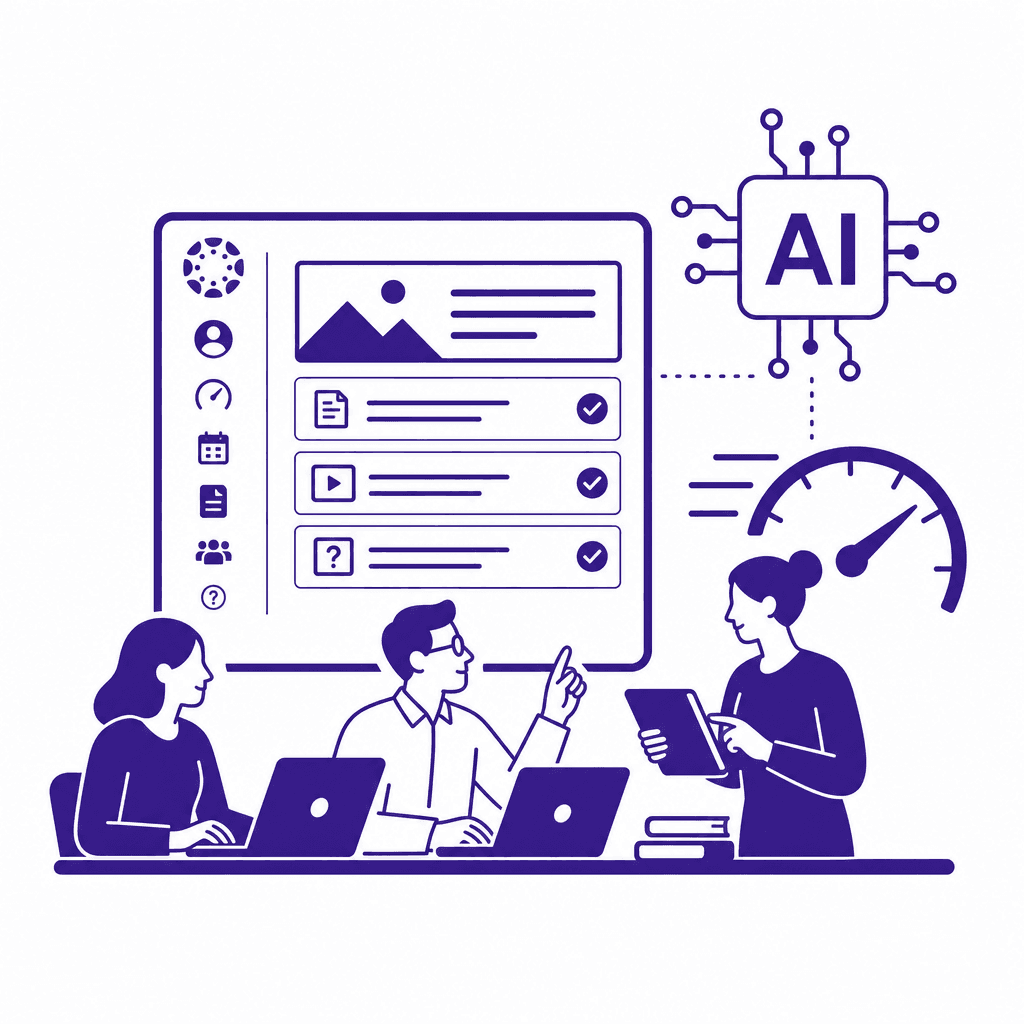
In today's rapidly evolving educational landscape, leveraging AI for course content creation is becoming essential for instructional designers and educators. This article explores how AI tools can significantly accelerate the development of quality course materials within Canvas LMS, highlighting effective strategies for integration and maintaining high academic standards.
Understanding AI in Course Design
As educators increasingly seek to enhance their course offerings, the Canvas Learning Management System (LMS) serves as a robust platform for effective course creation. Canvas provides a rich array of features designed to simplify course development, making it easier for instructional designers to create engaging and interactive content. Among its standout tools are course templates, which streamline the design process by providing pre-structured layouts that reduce the time needed to launch a course. In addition, multimedia integration capabilities allow educators to seamlessly incorporate videos, interactive simulations, and other digital resources that enrich the learning experience. Enhanced communication tools, like discussion boards and integrated messaging systems, foster collaboration between students and educators, creating a supportive and interactive learning environment. When coupled with AI technologies such as natural language processing and machine learning, these features can significantly optimize course design workflows. For instance, AI can assist in automatic content generation or suggest personalized resources based on learner performance and preferences. By harnessing both Canvas' capabilities and AI's potential, educators can streamline course development while enhancing the educational experience for both instructors and students, ensuring that high-quality, engaging content is delivered efficiently.
The Canvas LMS: Features for Effective Course Creation
The Canvas LMS is designed with features that significantly enhance course creation, making it easier for instructional designers and educators to develop high-quality content efficiently. Among its key functionalities are course templates that allow educators to establish a consistent and structured framework for their courses. These templates can be tailored to meet specific pedagogical goals, enabling a focused approach to course delivery.
Integration of multimedia elements is another standout feature of Canvas. The platform supports video, audio, and interactive content, which can be effortlessly incorporated into lessons. This multimedia capacity provides avenues for more engaging educational experiences, particularly when combined with AI technologies that can recommend relevant resources based on course context.
Communication tools within Canvas, such as discussion boards and announcements, promote collaboration between students and instructors, enriching the learning environment. By leveraging these communication channels alongside AI-generated content, educators can foster a vibrant community of learning.
Ultimately, the capabilities of Canvas LMS, when combined with AI innovations, streamline course design workflows and ensure that educational experiences are not only efficient but also effective, enhancing engagement and learner outcomes.
Leveraging AI Tools for Content Generation
AI tools have revolutionized content generation, bringing a new dimension to course design within Canvas. Automated writing assistants, such as OpenAI's ChatGPT and Jasper, can produce lecture notes, summaries, and instructional materials efficiently. By inputting specific prompts related to course topics, educators can receive tailored content designed to engage learners. Content suggestion engines, like Quillionz, help create quiz questions or interactive assessments by analyzing provided resources. These tools utilize AI to generate multiple-choice questions or short-answer prompts aligned with learning objectives, significantly speeding up the assessment creation process. Moreover, AI can enhance personalized learning paths. Tools like Squirrel AI adapt content based on real-time student performance and learning styles, allowing educators to address individual needs effectively. Such adaptations not only keep students engaged but also ensure they receive the support necessary for their success. In combining these AI-driven capabilities with Canvas's robust features, educators can develop a rich, diverse curriculum that resonates with students while maintaining a focus on academic integrity and quality assurance. By integrating AI tools thoughtfully, instructional designers can ensure a high standard of educational content.
Best Practices for Integrating AI-Generated Material
Incorporating AI-generated content into course materials requires a strategic approach to ensure that it effectively supports educational goals. Begin by aligning AI outputs with established learning objectives and standards. This alignment is essential to maintain the course's pedagogical integrity and ensure that the materials genuinely address intended skills and knowledge. A critical best practice is to customize AI-produced content rather than using it as-is. Tailor the generated material to meet the specific context of your course, making it relevant to the learners and the subject matter. This can be achieved by editing the content to reflect the instructor’s voice and personal teaching style, which creates a more engaging and authentic learning experience. Maintaining instructor presence is vital; consider integrating instructor commentary or supplemental materials alongside AI-generated content. This approach personalizes the learning journey, enhancing connection and support for students. Lastly, a continuous evaluation process is necessary. Regularly revisit and revise AI-generated materials based on student performance and feedback, ensuring that content remains current and effective. This iterative process fosters a responsive learning environment, where course materials evolve to meet student needs dynamically.
Ensuring Quality Assurance in AI-Driven Courses
Ensuring quality assurance in AI-driven courses is crucial for maintaining educational standards while harnessing technology. To effectively review AI-generated content, a structured approach should be implemented, focusing on accuracy, relevance, and alignment with pedagogical strategies. Establish a comprehensive content review process that involves both subject matter experts and instructional designers. These professionals should evaluate AI-generated materials for factual correctness and educational relevance, ensuring they meet the desired learning outcomes. Incorporating diverse perspectives during this phase helps to identify any gaps or inaccuracies within the content that AI may produce. Incorporating feedback loops from both instructors and students is essential for continuous improvement. Regularly soliciting input from learners can provide valuable insights into how the content resonates and its effectiveness in achieving learning objectives. Furthermore, instructors can offer qualitative feedback based on their teaching experience, highlighting any areas for enhancement. Ongoing quality control should include revisions and updates to AI-generated materials based on feedback received. This iterative process not only maintains high standards but also fosters an adaptable learning environment where course content evolves to meet the needs of learners more effectively.
Maintaining Academic Integrity with AI Tools
Incorporating AI tools into course content development opens up new avenues for creativity and efficiency, but it also raises essential questions about academic integrity. To maintain the highest standards of originality and ethical use of AI-generated content, educators must actively engage with several strategies. First, establish a clear framework that defines the acceptable use of AI in coursework. Educators should communicate to students how AI can be used as a supplementary resource rather than a replacement for critical thinking and creative expression. This understanding is crucial for fostering a learning environment that values originality. Next, implementing plagiarism detection tools is vital in assessing any student submissions that may include AI-generated content. These tools help identify instances of unoriginal work while encouraging students to produce their own insights and analyses. Additionally, integrating AI prompts that stimulate student engagement can guide learners in the creation process, ensuring that the final output reflects their understanding and learning. Encourage peer reviews and collaborative learning experiences that involve discussions about the sources and influences behind their work. Lastly, cultivating a culture of integrity requires open dialogues about the ethical implications of using AI in education. Regular training and workshops can help students navigate these tools responsibly while emphasizing the importance of maintaining academic honesty. By prioritizing these strategies, educators can effectively balance the innovative capabilities of AI with the essential values of scholarship and integrity.
Conclusions
Utilizing AI in course content creation not only enhances the efficiency of instructional designers but also ensures the production of engaging and quality resources. By implementing the strategies discussed, educators can harness the power of AI in education while upholding standards of integrity and academic excellence.