Applying Overlearning in Canvas Strategies for Boosting Long-Term Knowledge Retention
Explore the science of overlearning and discover practical strategies for incorporating overlearning principles into your Canvas courses. This guide will help instructional designers and educators create content and activities that enhance long-term knowledge retention and mastery for students.
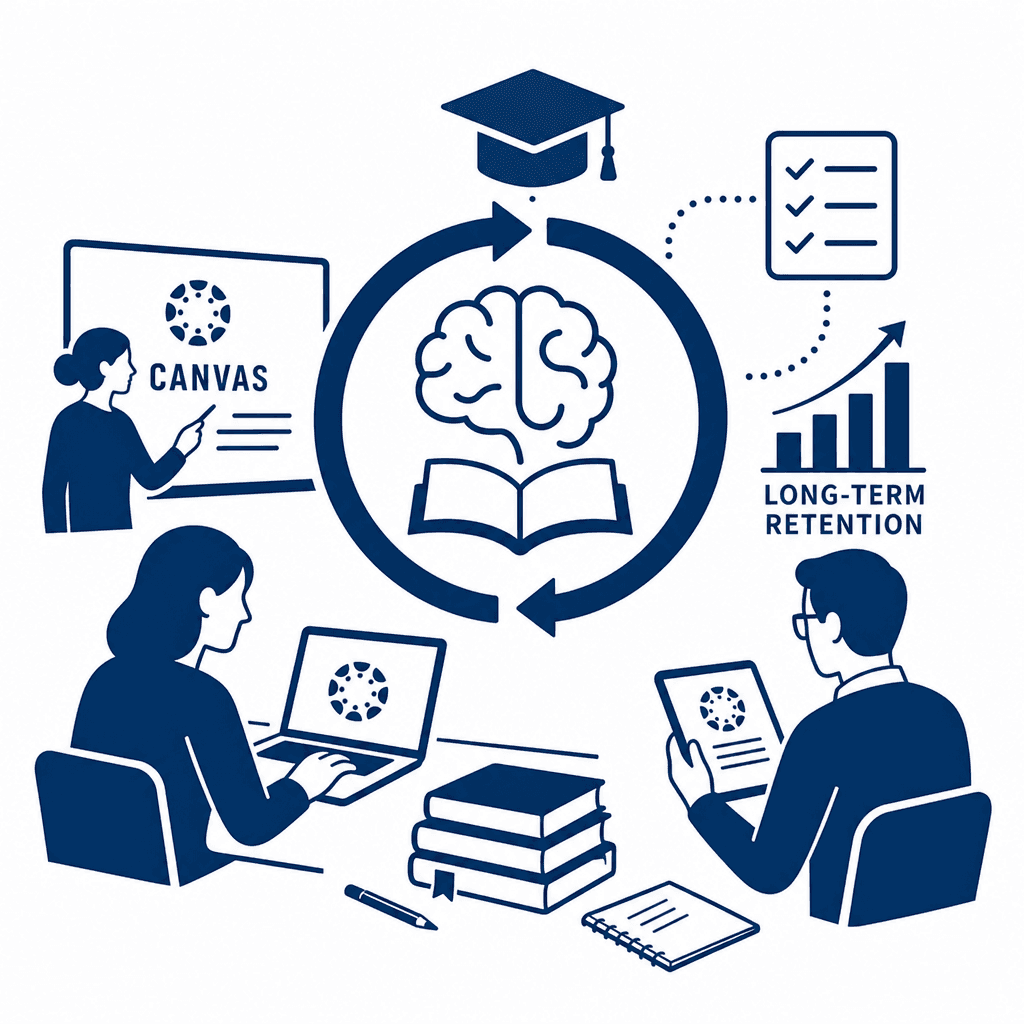
Overlearning is a powerful educational strategy that significantly enhances knowledge retention and mastery. This article delves into the science behind overlearning and offers practical strategies to integrate it within Canvas, the popular learning management system. Through expert insights and actionable tips, educators can cultivate a more effective learning environment for their students.
Understanding Overlearning
Overlearning is a learning strategy that extends beyond initial mastery, where learners engage with material beyond the point of mere understanding. This practice is grounded in cognitive psychology, where the concept suggests that repeated exposure to information enhances memory consolidation. The psychological basis for overlearning lies in the creation of stronger neural pathways; as learners repeatedly engage with content, they solidify their knowledge, making retrieval more certain and efficient. Research indicates that overlearning can significantly boost long-term retention. For example, a study published in the Journal of Experimental Psychology found that overlearning leads to a 50% increase in retention rates over both short and long-term periods compared to standard learning practices. This approach not only fortifies memory but also aids in the transfer of knowledge to new contexts by reinforcing associations. Differentiated from standard learning, which often focuses on achieving a basic understanding, overlearning offers enhanced preparedness for application and problem-solving when faced with complex tasks. Therefore, for instructional designers utilizing Canvas strategies, integrating overlearning techniques—such as extended practice, cumulative reviews, and advanced questioning—can profoundly impact student success and retention rates.
The Science of Knowledge Retention
Understanding the cognitive processes involved in knowledge retention is fundamental for enhancing student learning outcomes. At the heart of memory are mechanisms such as rehearsal, spaced repetition, and retrieval practice. Rehearsal strengthens information through repeated exposure, while spaced repetition enhances long-term retention by strategically increasing intervals between practice sessions. This approach prevents cramming and allows time for information to be processed more deeply, making it more likely to transition from short-term to long-term memory. Retrieval practice further solidifies learning by encouraging learners to recall information actively, reinforcing neural pathways associated with that knowledge. Each attempt at retrieval leads to a more robust memory trace. Overlearning takes these principles a step further by ensuring that students practice beyond initial mastery, solidifying their knowledge to a point where it becomes nearly automatic. This connection between memory science and overlearning reveals that the more effortful the retrieval and rehearsal, the stronger the neural connections formed. By applying these cognitive principles, instructional designers can create curricula that not only focus on content mastery but also ensure that knowledge remains accessible and durable in the long term.
Creating Effective Canvas Course Content
Creating effective course content in Canvas that promotes overlearning involves a strategic blend of multimedia formats, interactive assignments, and continuous assessments. **Multimedia elements**, such as videos, infographics, and podcasts, can cater to varying learning styles, making complex concepts easier to grasp and promoting repeated exposure to the content. This varied delivery enhances engagement and caters to different preferences, helping to solidify learning. **Interactive assignments** are crucial for reinforcing knowledge through application. Incorporate activities such as discussion boards, group projects, and simulations that require students to actively apply what they have learned, thereby deepening their understanding. Through repetition and variation of tasks, students are more likely to experience overlearning, which bolsters retention. To facilitate overlearning, consider the **sequencing of content**. Start with foundational concepts and gradually increase complexity, allowing students to connect new information to previously learned material. This scaffolded approach encourages students to revisit and master earlier concepts, reinforcing neural connections. Frequent **formative assessments** can serve as checkpoints, offering immediate feedback and opportunities for reflection, which are essential for long-term retention. By thoughtfully designing course content in Canvas with these strategies, educators can cultivate an environment conducive to overlearning and sustained academic success.
Engaging Activities for Overlearning
Incorporating engaging activities into Canvas courses is vital for fostering overlearning and solidifying long-term knowledge retention. One effective method is the use of **gamified quizzes**. By integrating elements such as leaderboards, badges, and time-based challenges, educators create a sense of competition and engagement that encourages students to revisit content multiple times, reinforcing their mastery of the material across varied formats. Another strategy is **peer teaching**, where students become instructors and share their knowledge with classmates. This active engagement not only promotes overlearning but also caters to diverse learning styles, as students may relate better to explanations from their peers. **Projects requiring repeated application of concepts** can also enhance overlearning. For example, a course could incorporate practical assignments that necessitate using core concepts in different contexts, ensuring that students engage with the material from multiple angles. Implementing reflective activities alongside them can help students articulate their understanding and difficulties. Each of these activities can be tailored to suit various course objectives, allowing for flexibility in meeting individual learning needs. By embracing such dynamic approaches within Canvas, educators can significantly improve knowledge retention and promote mastery among students.
Assessment Strategies to Reinforce Retention
Incorporating effective assessment strategies is vital in enhancing overlearning and reinforcing long-term knowledge retention within Canvas. Both formative and summative assessments can be designed to promote the repeated practice of concepts crucial for mastery. For instance, using low-stakes quizzes frequently throughout the course not only assesses knowledge but also encourages self-testing, a key component for overlearning. These quizzes allow students to repeatedly encounter material, effectively moving information from short-term to long-term memory. Another effective technique is the use of reflective assignments where students articulate what they’ve learned, how they’ve applied it, and areas where further understanding is needed. Incorporating peer assessments encourages collaborative learning and offers diverse perspectives, further solidifying knowledge through discussion and critique. Slide presentations or concept maps can serve as summative assessments that require students to synthesize information holistically. Feedback is crucial throughout these processes. Timely and specific feedback not only clarifies misconceptions but also reinforces correct concepts, encouraging students to revisit and deepen their understanding. Utilizing a variety of assessment types fosters continuous engagement, allowing students to appreciate the relevance of the content while practicing overlearning.
Implementing Overlearning Principles in Your Teaching Practice
Implementing overlearning principles into everyday teaching practices requires a thoughtful approach that integrates research-based strategies with practical application. First, educators should understand that overlearning occurs when students rehearse material beyond initial mastery. This not only solidifies knowledge but also enhances its retrieval over time. In practice, faculty can develop course content using spiraled learning techniques in Canvas, where concepts are revisited at increasing intervals, allowing for deeper processing. Moreover, faculty development programs play a crucial role in this implementation. Institutions should offer workshops that focus on the principles of learning science, alongside hands-on experience with Canvas tools to facilitate overlearning. Engaging educators in collaborative planning meetings can foster innovation, enabling them to share successful strategies that have previously worked in their courses. To measure the effectiveness of overlearning strategies, instructors can analyze student performance across multiple assessments, both formative and summative. Utilizing tools like analytics within Canvas allows for tracking student engagement and learning outcomes. Additionally, soliciting qualitative feedback from students about their retention experiences provides invaluable insights that can inform future course iterations, ensuring that overlearning remains a central focus in instructional design.
Conclusions
Incorporating overlearning strategies within Canvas courses can vastly improve student retention and mastery of knowledge. By understanding the principles of learning science and implementing content-rich activities, instructional designers and educators can create a long-lasting impact on students' learning journeys. Embrace overlearning as a tool to enhance education and foster deeper understanding.
Understanding Overlearning
Overlearning is a learning strategy that extends beyond initial mastery, where learners engage with material beyond the point of mere understanding. This practice is grounded in cognitive psychology, where the concept suggests that repeated exposure to information enhances memory consolidation. The psychological basis for overlearning lies in the creation of stronger neural pathways; as learners repeatedly engage with content, they solidify their knowledge, making retrieval more certain and efficient. Research indicates that overlearning can significantly boost long-term retention. For example, a study published in the Journal of Experimental Psychology found that overlearning leads to a 50% increase in retention rates over both short and long-term periods compared to standard learning practices. This approach not only fortifies memory but also aids in the transfer of knowledge to new contexts by reinforcing associations. Differentiated from standard learning, which often focuses on achieving a basic understanding, overlearning offers enhanced preparedness for application and problem-solving when faced with complex tasks. Therefore, for instructional designers utilizing Canvas strategies, integrating overlearning techniques—such as extended practice, cumulative reviews, and advanced questioning—can profoundly impact student success and retention rates.
The Science of Knowledge Retention
Understanding the cognitive processes involved in knowledge retention is fundamental for enhancing student learning outcomes. At the heart of memory are mechanisms such as rehearsal, spaced repetition, and retrieval practice. Rehearsal strengthens information through repeated exposure, while spaced repetition enhances long-term retention by strategically increasing intervals between practice sessions. This approach prevents cramming and allows time for information to be processed more deeply, making it more likely to transition from short-term to long-term memory. Retrieval practice further solidifies learning by encouraging learners to recall information actively, reinforcing neural pathways associated with that knowledge. Each attempt at retrieval leads to a more robust memory trace. Overlearning takes these principles a step further by ensuring that students practice beyond initial mastery, solidifying their knowledge to a point where it becomes nearly automatic. This connection between memory science and overlearning reveals that the more effortful the retrieval and rehearsal, the stronger the neural connections formed. By applying these cognitive principles, instructional designers can create curricula that not only focus on content mastery but also ensure that knowledge remains accessible and durable in the long term.
Creating Effective Canvas Course Content
Creating effective course content in Canvas that promotes overlearning involves a strategic blend of multimedia formats, interactive assignments, and continuous assessments. **Multimedia elements**, such as videos, infographics, and podcasts, can cater to varying learning styles, making complex concepts easier to grasp and promoting repeated exposure to the content. This varied delivery enhances engagement and caters to different preferences, helping to solidify learning. **Interactive assignments** are crucial for reinforcing knowledge through application. Incorporate activities such as discussion boards, group projects, and simulations that require students to actively apply what they have learned, thereby deepening their understanding. Through repetition and variation of tasks, students are more likely to experience overlearning, which bolsters retention. To facilitate overlearning, consider the **sequencing of content**. Start with foundational concepts and gradually increase complexity, allowing students to connect new information to previously learned material. This scaffolded approach encourages students to revisit and master earlier concepts, reinforcing neural connections. Frequent **formative assessments** can serve as checkpoints, offering immediate feedback and opportunities for reflection, which are essential for long-term retention. By thoughtfully designing course content in Canvas with these strategies, educators can cultivate an environment conducive to overlearning and sustained academic success.
Engaging Activities for Overlearning
Incorporating engaging activities into Canvas courses is vital for fostering overlearning and solidifying long-term knowledge retention. One effective method is the use of **gamified quizzes**. By integrating elements such as leaderboards, badges, and time-based challenges, educators create a sense of competition and engagement that encourages students to revisit content multiple times, reinforcing their mastery of the material across varied formats. Another strategy is **peer teaching**, where students become instructors and share their knowledge with classmates. This active engagement not only promotes overlearning but also caters to diverse learning styles, as students may relate better to explanations from their peers. **Projects requiring repeated application of concepts** can also enhance overlearning. For example, a course could incorporate practical assignments that necessitate using core concepts in different contexts, ensuring that students engage with the material from multiple angles. Implementing reflective activities alongside them can help students articulate their understanding and difficulties. Each of these activities can be tailored to suit various course objectives, allowing for flexibility in meeting individual learning needs. By embracing such dynamic approaches within Canvas, educators can significantly improve knowledge retention and promote mastery among students.
Assessment Strategies to Reinforce Retention
Incorporating effective assessment strategies is vital in enhancing overlearning and reinforcing long-term knowledge retention within Canvas. Both formative and summative assessments can be designed to promote the repeated practice of concepts crucial for mastery. For instance, using low-stakes quizzes frequently throughout the course not only assesses knowledge but also encourages self-testing, a key component for overlearning. These quizzes allow students to repeatedly encounter material, effectively moving information from short-term to long-term memory. Another effective technique is the use of reflective assignments where students articulate what they’ve learned, how they’ve applied it, and areas where further understanding is needed. Incorporating peer assessments encourages collaborative learning and offers diverse perspectives, further solidifying knowledge through discussion and critique. Slide presentations or concept maps can serve as summative assessments that require students to synthesize information holistically. Feedback is crucial throughout these processes. Timely and specific feedback not only clarifies misconceptions but also reinforces correct concepts, encouraging students to revisit and deepen their understanding. Utilizing a variety of assessment types fosters continuous engagement, allowing students to appreciate the relevance of the content while practicing overlearning.
Implementing Overlearning Principles in Your Teaching Practice
Implementing overlearning principles into everyday teaching practices requires a thoughtful approach that integrates research-based strategies with practical application. First, educators should understand that overlearning occurs when students rehearse material beyond initial mastery. This not only solidifies knowledge but also enhances its retrieval over time. In practice, faculty can develop course content using spiraled learning techniques in Canvas, where concepts are revisited at increasing intervals, allowing for deeper processing. Moreover, faculty development programs play a crucial role in this implementation. Institutions should offer workshops that focus on the principles of learning science, alongside hands-on experience with Canvas tools to facilitate overlearning. Engaging educators in collaborative planning meetings can foster innovation, enabling them to share successful strategies that have previously worked in their courses. To measure the effectiveness of overlearning strategies, instructors can analyze student performance across multiple assessments, both formative and summative. Utilizing tools like analytics within Canvas allows for tracking student engagement and learning outcomes. Additionally, soliciting qualitative feedback from students about their retention experiences provides invaluable insights that can inform future course iterations, ensuring that overlearning remains a central focus in instructional design.
Conclusions
Incorporating overlearning strategies within Canvas courses can vastly improve student retention and mastery of knowledge. By understanding the principles of learning science and implementing content-rich activities, instructional designers and educators can create a long-lasting impact on students' learning journeys. Embrace overlearning as a tool to enhance education and foster deeper understanding.