
Beyond Recognition: Designing Effective Multiple-Choice Quizzes in Canvas for True Learning Assessment
Explore common pitfalls in multiple-choice quiz design that lead to overstating student learning. This article provides practical strategies and Canvas-specific tips for creating assessments that genuinely measure comprehension, critical thinking, and long-term retention, moving beyond simple recognition to promote deeper engagement.
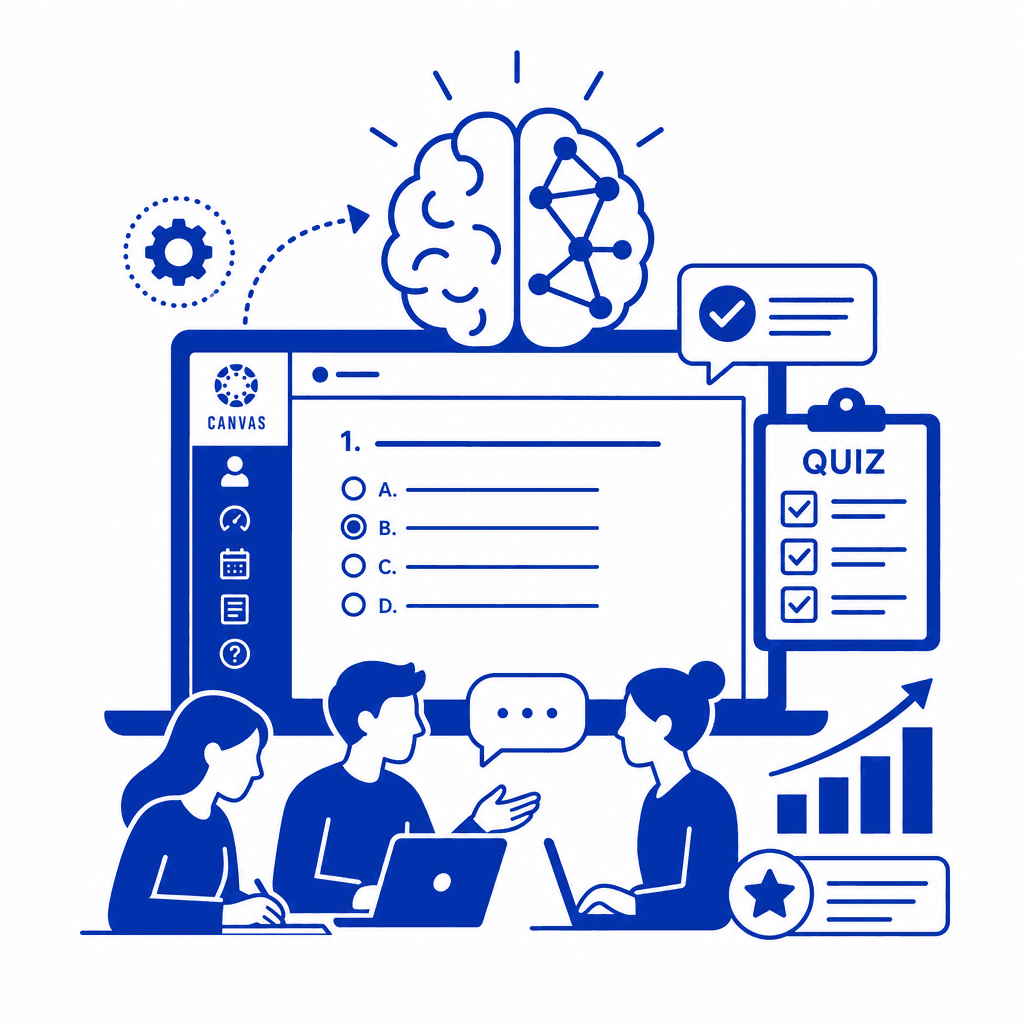
In educational contexts, multiple-choice quizzes often suffer from poor design that fails to accurately assess student learning. This article delves into effective strategies for creating meaningful assessments in Canvas, emphasizing the importance of understanding student comprehension and fostering critical thinking skills beyond mere recognition. By addressing common pitfalls, educators can enhance learning outcomes.
Understanding Multiple-Choice Quizzes
Multiple-choice quizzes are a staple of many educational settings, praised for their ability to quickly gauge student learning and comprehension. However, despite their popularity, these assessments frequently fall short of accurately measuring true understanding. Common pitfalls can arise during quiz design that lead to misleading interpretations of student knowledge. One frequent mistake is crafting ambiguous questions. For instance, a question like "Which of the following is always true?" can leave students confused, particularly if they are unsure of the terminologies used. Additionally, using overly complex language can alienate students, causing them to second-guess their knowledge rather than demonstrate their comprehension. A quiz designed to assess understanding should use clear and direct language. Furthermore, an overreliance on rote memorization undermines deeper learning. Questions that require mere recall, such as "What year did X occur?" may not reflect a student's understanding of the associated concepts. These poorly constructed questions may skew results, indicating student knowledge where it's simply recognition. Consequently, it's vital for educators to carefully consider the structure and language of their multiple-choice quizzes, ensuring they truly reflect student learning and fostering a more meaningful engagement with the material.
Common Pitfalls in Quiz Design
When crafting multiple-choice quizzes, educators often encounter several common pitfalls that lead to inaccurate assessments of student knowledge. One major issue is ambiguity in questions. For instance, a question like "What is the significance of the theory?" lacks specificity and can confuse students, leading them to select answers based on guesswork rather than true understanding. Moreover, using overly complex language can alienate students who may know the content but struggle with phrasing. An example could be, "Which of the following elucidates the mechanisms underlying the phenomenon?" This could misdirect students’ focus from understanding the core concept to decoding the question itself. Another frequent mistake is the reliance on rote memorization rather than the application of knowledge. Questions such as "What is the date of the Civil War?" may assess superficial recall rather than comprehension of its implications and causes. This emphasis on memorization neglects critical thinking, undermining the quiz's ability to gauge deeper learning. These pitfalls compromise the effectiveness of assessments, potentially leading educators to overstate student competency and hinder genuine learning progression. By recognizing and addressing these issues, educators can create quizzes that are more aligned with true comprehension.
Strategies for Effective Question Design
When designing effective multiple-choice questions, clarity and alignment with learning objectives are paramount. The language used should be straightforward, avoiding jargon or complex terminology that could confuse students. Each question must focus on assessing comprehension rather than rote memorization, thus requiring students to apply knowledge critically. One effective technique is to avoid using "all of the above" as an answer option. This choice tends to trivialize the assessment, as it encourages guessing rather than revealing true understanding. Instead, questions should be structured so that each option presents a distinct answer, compelling students to think critically about their choices. Moreover, balancing the lengths of answer options is crucial. When one option is noticeably longer than others, it may inadvertently signal the correct answer, biasing student responses. All options should be of similar length and complexity to ensure that students are evaluating content, not form. Aligning questions directly with learning objectives enhances the assessment's validity. By doing so, educators can gauge student understanding in a meaningful way. Questions crafted in this manner not only assess knowledge but also promote deeper engagement, encouraging learners to demonstrate their critical thinking skills effectively.
Leveraging Canvas for Interactive Quizzing
The Canvas Learning Management System (LMS) offers a plethora of features that enhance the design and execution of multiple-choice quizzes, allowing educators to create assessments that truly foster engagement and critical thinking. One of the standout tools in Canvas is the **question bank** feature, which enables instructors to store and organize a diverse set of questions. By utilizing question banks, educators can easily compile quizzes tailored to specific learning objectives, ensuring a broader range of content coverage that challenges students beyond mere recognition. Another pivotal feature is the capability for **randomized questions**. This function not only mitigates the likelihood of answer sharing among students but also promotes deeper understanding by presenting quizzes in varied formats. Learners are thus encouraged to grasp the underlying concepts rather than rely on memorization. Finally, the integration of **immediate feedback mechanisms** within Canvas is instrumental in enhancing the learning process. Upon answering a question, students can receive instant feedback that highlights the correct answer and provides context or rationale. This immediate response fosters a reflective learning environment where students can identify misconceptions and revise their understanding promptly, paving the way for a more nuanced grasp of the material. By leveraging these Canvas features, educators can create interactive quizzes that engage students in critical thinking and foster meaningful learning experiences.
Formative Assessment and Student Engagement
Formative assessment plays a pivotal role in maximizing the effectiveness of multiple-choice quizzes, especially when utilized within the Canvas Learning Management System. Frequent, low-stakes quizzes stimulate student engagement by creating a routine of self-assessment that positions learning as an ongoing process rather than a series of isolated events. Such assessments can help learners take ownership of their progress, understand their strengths and weaknesses, and direct their study efforts more effectively. Strategies to enhance the formative nature of quizzes include providing timely, constructive feedback based on quiz results. Educators can use Canvas's capabilities to analyze question performance and give personalized comments that guide students on what to improve. For instance, after a quiz, teachers can highlight common misconceptions observed in the answers, reinforcing the material and fostering a growth mindset. Moreover, quiz results can inform instructional decisions, enabling educators to identify topics that may require additional review or different teaching strategies. By integrating formative assessment practices with multiple-choice quizzes, instructors can cultivate an engaging learning environment that emphasizes comprehension and long-term retention, ultimately enriching the educational experience.
Evaluating Quiz Effectiveness
As we look to refine multiple-choice quizzes within the Canvas LMS, effective evaluation methods become crucial to ensuring that these assessments genuinely reflect student understanding. One fundamental approach is conducting an **item analysis** on quiz questions. This involves reviewing metrics such as difficulty index and discrimination index that reveal how well each question distinguishes between students who understand the material and those who do not. For example, a question that most students answer correctly may not be well-designed for assessing comprehension, while one that only a few answer correctly might indicate confusion or ambiguity. In addition to quantitative metrics, student feedback provides valuable qualitative insights into the quiz experience. Encourage students to share their thoughts on the clarity of questions and the relevance of the content. This feedback can reveal whether questions align with instructional objectives and classroom discussions, addressing gaps in comprehension. Lastly, continuously refine quiz design based on these assessments by iterating questions and incorporating insights gleaned from item analyses and student feedback. This ongoing process not only enhances the quality of quizzes but also fosters a culture of adaptive teaching that supports deep learning and long-term retention in students.
Conclusions
In conclusion, designing effective multiple-choice quizzes in Canvas requires a thoughtful approach that prioritizes genuine comprehension and critical thinking. By avoiding common pitfalls, educators can create assessments that truly measure student learning, promoting deeper engagement and long-term retention. Implementing these strategies will ultimately lead to more effective learning environments.
Understanding Multiple-Choice Quizzes
Multiple-choice quizzes are a staple of many educational settings, praised for their ability to quickly gauge student learning and comprehension. However, despite their popularity, these assessments frequently fall short of accurately measuring true understanding. Common pitfalls can arise during quiz design that lead to misleading interpretations of student knowledge. One frequent mistake is crafting ambiguous questions. For instance, a question like "Which of the following is always true?" can leave students confused, particularly if they are unsure of the terminologies used. Additionally, using overly complex language can alienate students, causing them to second-guess their knowledge rather than demonstrate their comprehension. A quiz designed to assess understanding should use clear and direct language. Furthermore, an overreliance on rote memorization undermines deeper learning. Questions that require mere recall, such as "What year did X occur?" may not reflect a student's understanding of the associated concepts. These poorly constructed questions may skew results, indicating student knowledge where it's simply recognition. Consequently, it's vital for educators to carefully consider the structure and language of their multiple-choice quizzes, ensuring they truly reflect student learning and fostering a more meaningful engagement with the material.
Common Pitfalls in Quiz Design
When crafting multiple-choice quizzes, educators often encounter several common pitfalls that lead to inaccurate assessments of student knowledge. One major issue is ambiguity in questions. For instance, a question like "What is the significance of the theory?" lacks specificity and can confuse students, leading them to select answers based on guesswork rather than true understanding. Moreover, using overly complex language can alienate students who may know the content but struggle with phrasing. An example could be, "Which of the following elucidates the mechanisms underlying the phenomenon?" This could misdirect students’ focus from understanding the core concept to decoding the question itself. Another frequent mistake is the reliance on rote memorization rather than the application of knowledge. Questions such as "What is the date of the Civil War?" may assess superficial recall rather than comprehension of its implications and causes. This emphasis on memorization neglects critical thinking, undermining the quiz's ability to gauge deeper learning. These pitfalls compromise the effectiveness of assessments, potentially leading educators to overstate student competency and hinder genuine learning progression. By recognizing and addressing these issues, educators can create quizzes that are more aligned with true comprehension.
Strategies for Effective Question Design
When designing effective multiple-choice questions, clarity and alignment with learning objectives are paramount. The language used should be straightforward, avoiding jargon or complex terminology that could confuse students. Each question must focus on assessing comprehension rather than rote memorization, thus requiring students to apply knowledge critically. One effective technique is to avoid using "all of the above" as an answer option. This choice tends to trivialize the assessment, as it encourages guessing rather than revealing true understanding. Instead, questions should be structured so that each option presents a distinct answer, compelling students to think critically about their choices. Moreover, balancing the lengths of answer options is crucial. When one option is noticeably longer than others, it may inadvertently signal the correct answer, biasing student responses. All options should be of similar length and complexity to ensure that students are evaluating content, not form. Aligning questions directly with learning objectives enhances the assessment's validity. By doing so, educators can gauge student understanding in a meaningful way. Questions crafted in this manner not only assess knowledge but also promote deeper engagement, encouraging learners to demonstrate their critical thinking skills effectively.
Leveraging Canvas for Interactive Quizzing
The Canvas Learning Management System (LMS) offers a plethora of features that enhance the design and execution of multiple-choice quizzes, allowing educators to create assessments that truly foster engagement and critical thinking. One of the standout tools in Canvas is the **question bank** feature, which enables instructors to store and organize a diverse set of questions. By utilizing question banks, educators can easily compile quizzes tailored to specific learning objectives, ensuring a broader range of content coverage that challenges students beyond mere recognition. Another pivotal feature is the capability for **randomized questions**. This function not only mitigates the likelihood of answer sharing among students but also promotes deeper understanding by presenting quizzes in varied formats. Learners are thus encouraged to grasp the underlying concepts rather than rely on memorization. Finally, the integration of **immediate feedback mechanisms** within Canvas is instrumental in enhancing the learning process. Upon answering a question, students can receive instant feedback that highlights the correct answer and provides context or rationale. This immediate response fosters a reflective learning environment where students can identify misconceptions and revise their understanding promptly, paving the way for a more nuanced grasp of the material. By leveraging these Canvas features, educators can create interactive quizzes that engage students in critical thinking and foster meaningful learning experiences.
Formative Assessment and Student Engagement
Formative assessment plays a pivotal role in maximizing the effectiveness of multiple-choice quizzes, especially when utilized within the Canvas Learning Management System. Frequent, low-stakes quizzes stimulate student engagement by creating a routine of self-assessment that positions learning as an ongoing process rather than a series of isolated events. Such assessments can help learners take ownership of their progress, understand their strengths and weaknesses, and direct their study efforts more effectively. Strategies to enhance the formative nature of quizzes include providing timely, constructive feedback based on quiz results. Educators can use Canvas's capabilities to analyze question performance and give personalized comments that guide students on what to improve. For instance, after a quiz, teachers can highlight common misconceptions observed in the answers, reinforcing the material and fostering a growth mindset. Moreover, quiz results can inform instructional decisions, enabling educators to identify topics that may require additional review or different teaching strategies. By integrating formative assessment practices with multiple-choice quizzes, instructors can cultivate an engaging learning environment that emphasizes comprehension and long-term retention, ultimately enriching the educational experience.
Evaluating Quiz Effectiveness
As we look to refine multiple-choice quizzes within the Canvas LMS, effective evaluation methods become crucial to ensuring that these assessments genuinely reflect student understanding. One fundamental approach is conducting an **item analysis** on quiz questions. This involves reviewing metrics such as difficulty index and discrimination index that reveal how well each question distinguishes between students who understand the material and those who do not. For example, a question that most students answer correctly may not be well-designed for assessing comprehension, while one that only a few answer correctly might indicate confusion or ambiguity. In addition to quantitative metrics, student feedback provides valuable qualitative insights into the quiz experience. Encourage students to share their thoughts on the clarity of questions and the relevance of the content. This feedback can reveal whether questions align with instructional objectives and classroom discussions, addressing gaps in comprehension. Lastly, continuously refine quiz design based on these assessments by iterating questions and incorporating insights gleaned from item analyses and student feedback. This ongoing process not only enhances the quality of quizzes but also fosters a culture of adaptive teaching that supports deep learning and long-term retention in students.
Conclusions
In conclusion, designing effective multiple-choice quizzes in Canvas requires a thoughtful approach that prioritizes genuine comprehension and critical thinking. By avoiding common pitfalls, educators can create assessments that truly measure student learning, promoting deeper engagement and long-term retention. Implementing these strategies will ultimately lead to more effective learning environments.