
Beyond the Bots: Pedagogical Strategies for Elevating AI-Generated Content in Canvas
As AI tools accelerate content creation in Canvas, the risk of producing 'cheap and fast' rather than 'good and effective' learning materials increases. This article explores essential pedagogical strategies for educators and instructional designers to augment AI-generated content, ensuring it moves beyond superficiality to foster deep engagement and meaningful learning experiences within the Canvas LMS. Discover how to critically evaluate, enrich, and transform AI outputs into high-quality, pedagogically sound course components.
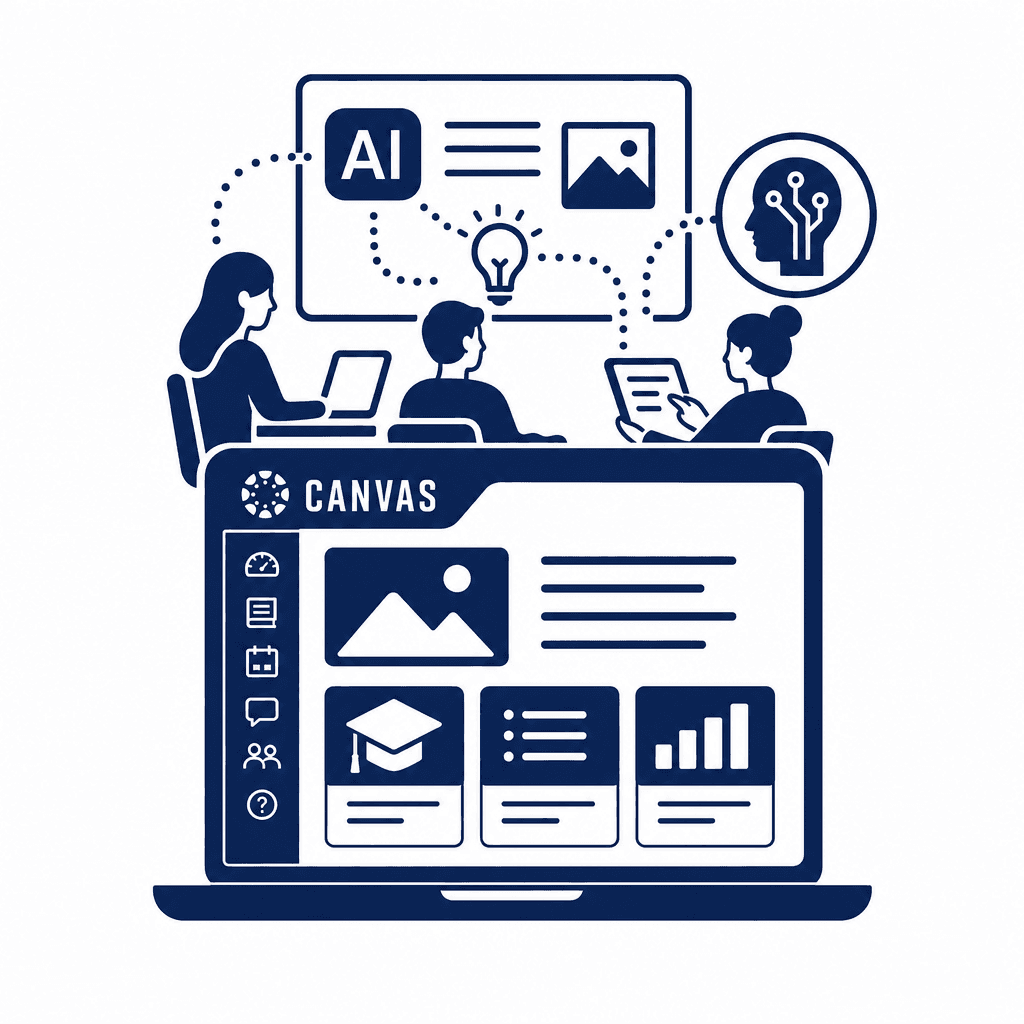
The integration of AI tools in education has transformed content creation, particularly within learning management systems like Canvas. This article delves into pedagogical strategies that help educators and instructional designers elevate AI-generated content, emphasizing the importance of quality over quantity in educational materials to enhance learner engagement and foster meaningful learning experiences.
Understanding AI in Education
Incorporating AI technology into educational design necessitates a robust pedagogical framework that prioritizes meaningful learning experiences. Effective instructional design methodologies, such as Constructivism, Universal Design for Learning (UDL), and Backward Design, play a crucial role. These established frameworks emphasize learner-centered approaches, diversity in learning styles, and alignment between assessments and objectives, all essential for enhancing learning outcomes. A key component of these frameworks is the intentional integration of AI-generated content. By utilizing such tools, educators can offer tailored resources that target individual learning needs. However, the potential for superficial understanding increases if AI content is not carefully curated and aligned with pedagogical strategies. For instance, implementing the principles of UDL allows educators to present information in multiple formats, catering to varied learner preferences and ensuring content accessibility. Moreover, Backward Design urges educators to begin with desired learning outcomes, utilizing AI-generated resources to scaffold learning effectively. This strategic approach reinforces foundational knowledge, encourages critical thinking, and enhances student engagement. Thus, the thoughtful application of pedagogical strategies is essential when integrating AI content, ensuring that quality education remains the focus in an evolving digital landscape.
The Importance of Pedagogical Strategies
Pedagogical strategies play a crucial role in educational design, ensuring that learning experiences are not only informative but transformative. Established frameworks such as Mayer's Principles of Multimedia Learning and Gagne's Nine Events of Instruction provide a structured approach to instructional design that can significantly enhance learning outcomes. These frameworks encourage educators to consider how information is presented, the importance of feedback, and the alignment of learning activities with desired objectives. In the context of integrating AI-generated content, these pedagogical strategies serve as a robust foundation. They guide educators in revising and contextualizing AI outputs, thus ensuring that educational goals remain front and center. For instance, employing Gagne's principles can help educators design activities that leverage AI-generated material to facilitate deeper learning through exploration, application, and reflection. Moreover, integrating best practices like Constructivist Learning Theory empowers students to engage meaningfully with content by facilitating active participation and collaboration. This approach encourages critical thinking and enables students to draw connections between new information and their pre-existing knowledge. By embedding these strategies within Canvas LMS, educators can create rich, interactive learning experiences that elevate the quality and effectiveness of AI-generated content, thus fostering authentic engagement and deeper learning.
Evaluating AI-Generated Content
As AI-generated content proliferates within the Canvas LMS, educators must adopt robust methods for evaluating this material. Critical assessment starts with a few key criteria: relevance, accuracy, and pedagogical soundness. Relevance ensures that the content directly addresses the course objectives and resonates with students' needs and backgrounds, fostering deeper connections and engagement. Accuracy is paramount; educators need to confirm that AI outputs are factually correct and reflect current academic standards. Misinformation can easily undermine the learning process and erode students' trust in educational materials. Furthermore, examining the pedagogical soundness of AI-generated content is crucial. This involves assessing whether the material adheres to established educational frameworks, facilitates active learning, and promotes critical thinking. Engaging students in this evaluation process can also enhance their analytical skills. By discussing the strengths and weaknesses of AI-generated content, educators not only model critical thinking but also empower students to become discerning consumers of information. Establishing these evaluation methods not only aligns content with learning objectives but also fosters an environment where both educators and students prioritize quality, ultimately enhancing the efficacy of educational experiences within the Canvas LMS.
Transforming AI Outputs into Quality Learning Materials
As educators seek to harness AI-generated content within the Canvas LMS, the challenge lies in transforming these materials into rich, engaging learning experiences. Techniques for refining AI outputs include the deliberate incorporation of additional resources, such as curated readings, multimedia elements, and real-world case studies that align with course objectives. By presenting multiple perspectives, these resources can deepen understanding and stimulate critical thinking. Active learning activities serve as another critical enhancement. Educators can create interactive discussions or collaborative projects that require students to apply concepts derived from AI materials. This integration fosters engagement and strengthens the connection between theoretical knowledge and practical application. Furthermore, integrating formative assessments allows educators to gauge students' understanding and adapt instruction accordingly. Quizzes, reflective assignments, or peer-review processes can offer timely feedback and reinforce learning. Collaboration among educators is essential for refining AI-generated content. By sharing insights, discussing implementation strategies, and co-creating resources, educators can elevate the quality of materials available to students. This community approach ensures that AI outputs are not only relevant but also pedagogically robust, culminating in a cohesive educational experience that supports deep learning and engagement.
Fostering Deep Learning Through Engagement
As educators increasingly incorporate AI-generated materials into their courses, fostering deep learning through engagement becomes paramount. Active learning techniques, which require students to actively participate in their own learning process, can significantly enhance the effectiveness of AI-generated content. Techniques such as problem-based learning or case studies encourage students to apply theoretical concepts to real-world scenarios, promoting critical thinking and collaboration. Integrating interactive elements, such as quizzes and discussion boards within the Canvas LMS, not only reinforces learning but also allows students to engage with the material on a deeper level. By using AI to generate personalized quizzes or reflective prompts, educators can spark meaningful conversations that challenge students to articulate their understanding and make connections between concepts. Community-building practices are equally essential. Creating online study groups or peer review sessions encourages collaboration and a sense of belonging. When students engage with both AI-generated content and their peers, they deepen their understanding of the subject matter while developing essential social and communication skills. Leveraging these strategies can transform AI outputs from mere information repositories into dynamic learning experiences that resonate with students, unlocking their potential for deeper engagement and meaningful connections with the content.
The Future of AI in Course Design
As AI technologies continue to integrate into course design and educational technology, they present transformative possibilities that challenge traditional pedagogical approaches. Emerging trends indicate that AI will enable personalized learning paths, where content can be dynamically adjusted to meet individual learner needs. This shift necessitates a reevaluation of the educator's role; rather than merely disseminators of information, educators will increasingly become facilitators of personalized learning experiences, guiding students in navigating AI-curated content. The potential advancements in AI capabilities could further enrich instructional design by automating the assessment of content quality and engagement metrics. This integration will empower educators to refine and adapt their courses continuously, ensuring that they are not only relevant but also effective. Furthermore, AI can assist in curating multimedia resources that promote critical thinking, thereby deepening learning experiences. In this evolving landscape, pedagogical strategies will need to focus on **collaboration** and **creativity**, encouraging students to engage not just with AI-generated materials, but also with each other. The future will demand a balance in leveraging AI efficiency while maintaining academic rigor, ensuring that educational content transcends superficiality and fosters a profound understanding and appreciation of the subject matter.
Conclusions
In conclusion, while AI-generated content offers efficiency, it should not compromise educational quality. By implementing thoughtful pedagogical strategies, educators can enrich such materials and transform them into impactful learning experiences. Emphasizing critical evaluation and engagement will ensure that AI complements, rather than diminishes, the educational journey within platforms like Canvas.