Boosting Learning Velocity in Canvas - Accelerating Skill Acquisition with AI and Smart Design
Explore practical strategies for educators and instructional designers to enhance learning velocity within Canvas. This guide focuses on optimizing course design, content delivery, and leveraging AI tools to help students more quickly grasp concepts, acquire new skills, and efficiently progress through their learning objectives.
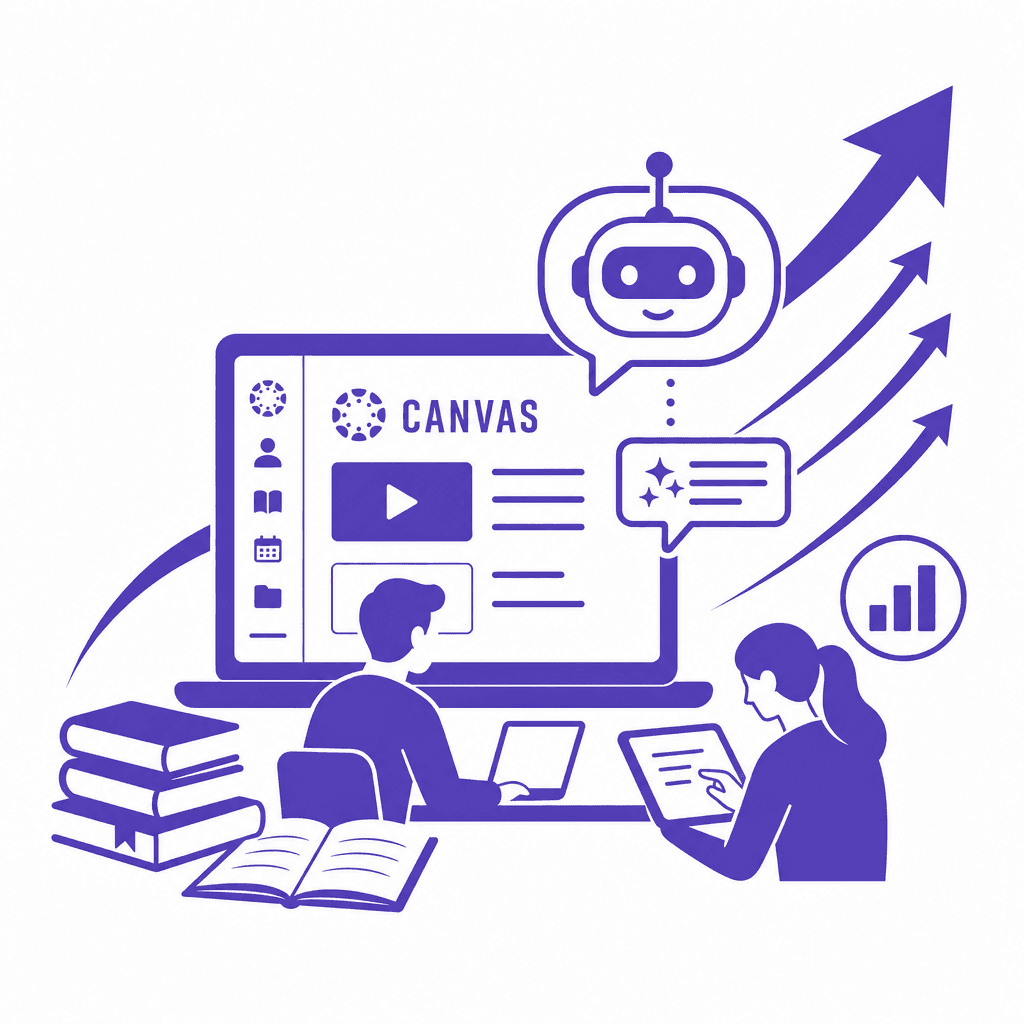
In the age of rapid technological advancement, enhancing learning velocity is critical for educators. This article delves into effective strategies for using Canvas LMS alongside AI tools and thoughtful instructional design to promote quicker skill acquisition and efficient learning experiences.
Understanding Learning Velocity
Understanding learning velocity is essential for educators seeking to enhance student success. Learning velocity refers to the speed at which students grasp concepts, develop skills, and progress through their educational journey. It captures not just the rate of learning but also the quality and depth of understanding acquired in that timeframe. Improving learning velocity can lead to more engaged students, higher retention rates, and ultimately better outcomes in skill acquisition. For instance, in vocational training contexts, where practical skills are paramount, a higher learning velocity allows students to efficiently master techniques and apply them in real-world situations. Similarly, in academic settings, when students can quickly comprehend foundational concepts, they are more likely to engage in advanced discussions and complex problem-solving. Moreover, the rapid pace at which students can learn can significantly affect their motivation and self-confidence. Engaged learners who feel competent are more likely to persist through challenges, thereby reinforcing their skills and knowledge. A focus on increasing learning velocity is not just beneficial for immediate educational goals; it sets the stage for lifelong learning, enabling students to adapt to the evolving demands of the world around them.
The Role of Canvas LMS in Learning Design
Canvas LMS is uniquely positioned to foster efficient learning design by providing a suite of tools and features that cater to diverse educational needs. One of its key strengths lies in its user-friendly interface, which allows educators to create structured courses that are not only aesthetically appealing but also intuitive. By organizing content into modules and pages, instructors can design a clear learning path that guides students through their learning objectives with little friction. Moreover, Canvas promotes interactivity through features such as discussion forums, quizzes, and peer review assignments. These tools encourage active participation, which is essential for deeper understanding and skill acquisition. For instance, utilizing graded discussions allows students to articulate their thoughts while also learning from peers, creating a rich collaborative environment. Canvas also integrates various multimedia elements that can enhance the learning experience. Videos, podcasts, and interactive assignments can cater to different learning styles, ensuring that content is accessible to all. The platform’s feedback mechanisms, such as audio comments and quick quizzes, enable timely responses to student inquiries, further accelerating the learning process. By leveraging these features, educators can create dynamic and effective learning environments that enhance learning velocity and support faster skill acquisition.
Incorporating AI Tools into Course Design
Incorporating AI tools into course design offers transformative potential for educators utilizing Canvas LMS, particularly in the realms of personalized learning paths, adaptive assessments, and real-time feedback. A range of AI tools, such as chatbots like IBM Watson and personalized learning systems like DreamBox Learning, can be integrated with Canvas to support these objectives. These tools analyze student interaction and performance data to tailor learning experiences, allowing educators to develop customized pathways that address individual strengths and weaknesses. For instance, AI algorithms can recommend specific resources or activities based on a student’s progress, thereby enhancing engagement and facilitating faster skill acquisition. Adaptive assessment tools, like Smart Sparrow, provide immediate, personalized feedback, enabling learners to understand their mistakes and misconceptions in real-time. This iterative process encourages deeper understanding and retention of concepts, further accelerating learning velocity. Implementing AI in instructional design, however, requires careful consideration of data privacy and accessibility. Educators must ensure that the integration of AI tools enriches the learning experience without compromising student trust or autonomy. By thoughtfully incorporating these technologies, educators can create a dynamic learning environment within Canvas that fosters efficient learning.
Smart Design Strategies for Skill Acquisition
Effective course design is critical for promoting skill acquisition, especially in digital learning environments like Canvas. A key strategy is backward design, which begins with defining desired learning outcomes before determining assessment methods and instructional activities. For example, if the objective is for students to master data analysis, instructors might first outline specific competencies and then work backwards to create assessments and learning resources that align with those competencies. Integration of formative assessments within the course fosters continuous feedback loops, allowing students to identify areas of strength and improvement early in the learning process. Canvas supports this by enabling the creation of quizzes and interactive discussions that help gauge learner understanding in real-time. Scaffolding is another vital principle, providing structured support that gradually diminishes as students gain proficiency. For instance, instructors can design modules in Canvas that start with foundational concepts and progressively introduce more complex scenarios, using resources such as videos, readings, and practice problems. This structured approach enables learners to build skills intentionally, ensuring they can progress confidently through their learning path. By applying these principles, educators can create an adaptive learning experience that not only enhances skill acquisition but also accelerates overall learning velocity, setting the stage for measurable improvement in student outcomes.
Measuring and Assessing Learning Velocity
Measuring learning velocity and assessing student progress in Canvas requires a systematic approach that combines both qualitative and quantitative assessment techniques. Quantitative methods include learning analytics, which provide measurable data on students’ interactions with course materials, such as time spent on assignments, quiz scores, and completion rates. Educators can analyze these metrics to identify trends in student performance, pinpointing areas where learners struggle or excel. Qualitative assessments, on the other hand, enrich the data provided by quantitative measures. Techniques such as open-ended feedback, student reflections, and peer evaluations help gauge deeper understanding and engagement with the content. For instance, embedding reflective journals within Canvas can prompt students to articulate their learning experiences, providing insights that numbers alone cannot convey. Feedback plays a pivotal role in this assessment cycle. Timely and constructive feedback not only informs students of their progress but also guides them in refining their learning strategies. By facilitating ongoing dialogue between instructors and students, feedback fosters a culture of continuous improvement. Ultimately, by employing a combination of assessment techniques and incorporating feedback effectively, educators can enhance learning velocity, ensuring that students acquire skills more efficiently and are well-prepared to advance in their educational journey.
Creating a Collaborative Learning Environment
Collaboration is a cornerstone for enhancing learning velocity, as it fosters a sense of community that accelerates skill acquisition and retention. In Canvas, there are various tools designed to facilitate collaboration among learners, significantly contributing to a richer learning experience. Features like discussion boards, group assignments, and collaborative documents can be strategically employed to create environments where students actively engage with each other. To leverage these tools effectively, educators can implement structured group activities that promote peer-to-peer interaction. For example, utilizing Canvas's group feature allows instructors to create smaller, focused teams where learners can tackle complex problems collectively. This not only encourages the sharing of diverse perspectives but also cultivates critical thinking skills necessary for mastery. Providing clear guidelines and expectations for collaboration is also vital. Educators should create rubrics that emphasize collective effort, communication, and feedback, ensuring that learners understand the value of their contributions. Additionally, integrating asynchronous communication tools, such as Canvas’s paired video or audio feedback options, helps maintain engagement and connection, even in remote learning contexts. By facilitating a collaborative learning environment, educators actively promote a community where learners can thrive together, enhancing their overall educational experience. This communal approach not only accelerates the acquisition of new skills but also deepens understanding, ultimately driving superior learning outcomes.
Conclusions
Ultimately, consolidating effective course design, AI integration, and instructional innovation within Canvas creates an environment that significantly accelerates skill acquisition. By employing these methods, educators can transform learning into an efficient and engaging experience, setting students on a path to success.
Understanding Learning Velocity
Understanding learning velocity is essential for educators seeking to enhance student success. Learning velocity refers to the speed at which students grasp concepts, develop skills, and progress through their educational journey. It captures not just the rate of learning but also the quality and depth of understanding acquired in that timeframe. Improving learning velocity can lead to more engaged students, higher retention rates, and ultimately better outcomes in skill acquisition. For instance, in vocational training contexts, where practical skills are paramount, a higher learning velocity allows students to efficiently master techniques and apply them in real-world situations. Similarly, in academic settings, when students can quickly comprehend foundational concepts, they are more likely to engage in advanced discussions and complex problem-solving. Moreover, the rapid pace at which students can learn can significantly affect their motivation and self-confidence. Engaged learners who feel competent are more likely to persist through challenges, thereby reinforcing their skills and knowledge. A focus on increasing learning velocity is not just beneficial for immediate educational goals; it sets the stage for lifelong learning, enabling students to adapt to the evolving demands of the world around them.
The Role of Canvas LMS in Learning Design
Canvas LMS is uniquely positioned to foster efficient learning design by providing a suite of tools and features that cater to diverse educational needs. One of its key strengths lies in its user-friendly interface, which allows educators to create structured courses that are not only aesthetically appealing but also intuitive. By organizing content into modules and pages, instructors can design a clear learning path that guides students through their learning objectives with little friction. Moreover, Canvas promotes interactivity through features such as discussion forums, quizzes, and peer review assignments. These tools encourage active participation, which is essential for deeper understanding and skill acquisition. For instance, utilizing graded discussions allows students to articulate their thoughts while also learning from peers, creating a rich collaborative environment. Canvas also integrates various multimedia elements that can enhance the learning experience. Videos, podcasts, and interactive assignments can cater to different learning styles, ensuring that content is accessible to all. The platform’s feedback mechanisms, such as audio comments and quick quizzes, enable timely responses to student inquiries, further accelerating the learning process. By leveraging these features, educators can create dynamic and effective learning environments that enhance learning velocity and support faster skill acquisition.
Incorporating AI Tools into Course Design
Incorporating AI tools into course design offers transformative potential for educators utilizing Canvas LMS, particularly in the realms of personalized learning paths, adaptive assessments, and real-time feedback. A range of AI tools, such as chatbots like IBM Watson and personalized learning systems like DreamBox Learning, can be integrated with Canvas to support these objectives. These tools analyze student interaction and performance data to tailor learning experiences, allowing educators to develop customized pathways that address individual strengths and weaknesses. For instance, AI algorithms can recommend specific resources or activities based on a student’s progress, thereby enhancing engagement and facilitating faster skill acquisition. Adaptive assessment tools, like Smart Sparrow, provide immediate, personalized feedback, enabling learners to understand their mistakes and misconceptions in real-time. This iterative process encourages deeper understanding and retention of concepts, further accelerating learning velocity. Implementing AI in instructional design, however, requires careful consideration of data privacy and accessibility. Educators must ensure that the integration of AI tools enriches the learning experience without compromising student trust or autonomy. By thoughtfully incorporating these technologies, educators can create a dynamic learning environment within Canvas that fosters efficient learning.
Smart Design Strategies for Skill Acquisition
Effective course design is critical for promoting skill acquisition, especially in digital learning environments like Canvas. A key strategy is backward design, which begins with defining desired learning outcomes before determining assessment methods and instructional activities. For example, if the objective is for students to master data analysis, instructors might first outline specific competencies and then work backwards to create assessments and learning resources that align with those competencies. Integration of formative assessments within the course fosters continuous feedback loops, allowing students to identify areas of strength and improvement early in the learning process. Canvas supports this by enabling the creation of quizzes and interactive discussions that help gauge learner understanding in real-time. Scaffolding is another vital principle, providing structured support that gradually diminishes as students gain proficiency. For instance, instructors can design modules in Canvas that start with foundational concepts and progressively introduce more complex scenarios, using resources such as videos, readings, and practice problems. This structured approach enables learners to build skills intentionally, ensuring they can progress confidently through their learning path. By applying these principles, educators can create an adaptive learning experience that not only enhances skill acquisition but also accelerates overall learning velocity, setting the stage for measurable improvement in student outcomes.
Measuring and Assessing Learning Velocity
Measuring learning velocity and assessing student progress in Canvas requires a systematic approach that combines both qualitative and quantitative assessment techniques. Quantitative methods include learning analytics, which provide measurable data on students’ interactions with course materials, such as time spent on assignments, quiz scores, and completion rates. Educators can analyze these metrics to identify trends in student performance, pinpointing areas where learners struggle or excel. Qualitative assessments, on the other hand, enrich the data provided by quantitative measures. Techniques such as open-ended feedback, student reflections, and peer evaluations help gauge deeper understanding and engagement with the content. For instance, embedding reflective journals within Canvas can prompt students to articulate their learning experiences, providing insights that numbers alone cannot convey. Feedback plays a pivotal role in this assessment cycle. Timely and constructive feedback not only informs students of their progress but also guides them in refining their learning strategies. By facilitating ongoing dialogue between instructors and students, feedback fosters a culture of continuous improvement. Ultimately, by employing a combination of assessment techniques and incorporating feedback effectively, educators can enhance learning velocity, ensuring that students acquire skills more efficiently and are well-prepared to advance in their educational journey.
Creating a Collaborative Learning Environment
Collaboration is a cornerstone for enhancing learning velocity, as it fosters a sense of community that accelerates skill acquisition and retention. In Canvas, there are various tools designed to facilitate collaboration among learners, significantly contributing to a richer learning experience. Features like discussion boards, group assignments, and collaborative documents can be strategically employed to create environments where students actively engage with each other. To leverage these tools effectively, educators can implement structured group activities that promote peer-to-peer interaction. For example, utilizing Canvas's group feature allows instructors to create smaller, focused teams where learners can tackle complex problems collectively. This not only encourages the sharing of diverse perspectives but also cultivates critical thinking skills necessary for mastery. Providing clear guidelines and expectations for collaboration is also vital. Educators should create rubrics that emphasize collective effort, communication, and feedback, ensuring that learners understand the value of their contributions. Additionally, integrating asynchronous communication tools, such as Canvas’s paired video or audio feedback options, helps maintain engagement and connection, even in remote learning contexts. By facilitating a collaborative learning environment, educators actively promote a community where learners can thrive together, enhancing their overall educational experience. This communal approach not only accelerates the acquisition of new skills but also deepens understanding, ultimately driving superior learning outcomes.
Conclusions
Ultimately, consolidating effective course design, AI integration, and instructional innovation within Canvas creates an environment that significantly accelerates skill acquisition. By employing these methods, educators can transform learning into an efficient and engaging experience, setting students on a path to success.