
Crafting Dynamic Assessments in Canvas with AI
Explore practical strategies for K-12 and higher-ed educators to leverage AI tools for generating diverse assessment questions, creating engaging scenarios, and developing effective rubrics within Canvas LMS, enhancing both efficiency and learning outcomes.
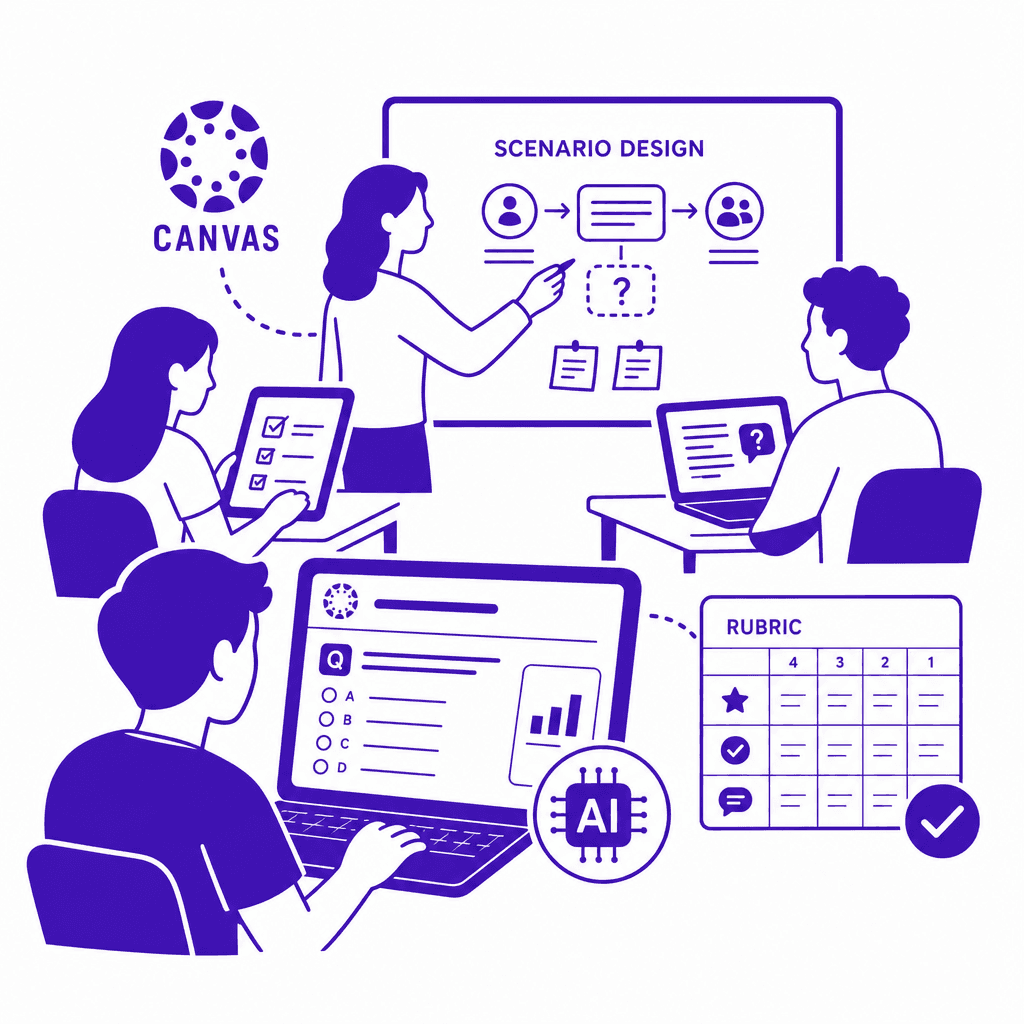
This article delves into the transformative potential of AI in education, specifically focusing on assessment strategies within Canvas LMS. By harnessing AI tools, educators can enhance question generation, scenario design, and rubric development, ultimately improving both student engagement and learning outcomes. Explore practical approaches for both K-12 and higher education environments to optimize assessments effectively.
The Role of AI in Education
The role of artificial intelligence in education is rapidly expanding, particularly in the realm of assessment. AI technologies enhance educators' capabilities by providing personalized feedback and tailored assessments, thus fostering a more engaged learning environment. Through adaptive learning platforms, AI analyzes student performance and adjusts difficulty levels and question types accordingly, ensuring that each learner's unique needs are met. AI's efficiency in generating assessment questions is significant, allowing educators to create varied question formats—from multiple-choice to open-ended responses—quickly and effortlessly. For example, AI-driven tools can automatically generate questions based on learning objectives, significantly reducing the time educators spend on test preparation. Moreover, AI can facilitate formative assessments by offering real-time analytics that inform instruction and help identify areas where students may be struggling. Summative assessments benefit from AI's ability to evaluate large datasets, uncovering trends and helping educators make data-driven decisions to enhance outcomes. As AI continues to evolve, its potential in crafting dynamic assessments remains promising, equipping educators with innovative methods to elevate student learning and foster academic success.
Understanding Canvas LMS
Canvas LMS is a robust learning management system (LMS) that stands out for its user-friendly interface and comprehensive features tailored for both K-12 and higher education settings. One of its primary advantages is the support for diverse learning and assessment types, enabling educators to create a variety of assessment formats such as quizzes, essays, and project-based evaluations. This versatility accommodates different learning styles and pedagogical approaches, ensuring that all students are engaged and evaluated appropriately. Furthermore, Canvas provides an integrated approach that allows educators to streamline their assessment processes. Features such as customizable rubrics, real-time analytics, and tools for feedback promote efficiency and help educators focus more on teaching rather than administrative tasks. This integrated system facilitates both formative and summative assessment by enabling teachers to track student progress over time, adjust instructional strategies, and measure learning outcomes effectively. With the incorporation of AI technologies, educators can enhance their use of Canvas by generating diverse assessment scenarios and questions that align closely with curriculum goals. This synergy between AI tools and Canvas elevates the educational experience, fostering a more personalized and impactful learning environment for students.
AI-Driven Question Generation
Leveraging AI tools for question generation within Canvas LMS opens up new avenues for creating varied and dynamic assessments, greatly enhancing both formative and summative evaluation strategies. Using AI algorithms, educators can swiftly generate a multitude of questions that align not only with curriculum standards but also with specific learning outcomes. This adaptive capability ensures that assignments remain engaging and challenging for all student levels, promoting an inclusive learning environment. The benefits of AI-generated questions are manifold. First, the diversity of question types—ranging from multiple-choice to short response—allows educators to address different learning styles effectively. Second, AI can adjust the difficulty of questions based on real-time student performance, ensuring that assessments are appropriately challenging. By integrating such tailored assessments into Canvas, educators can gather valuable insights into student understanding, facilitating targeted interventions when necessary. Both formative and summative assessments can be transformed through this technology. In formative assessments, AI-generated questions can provide immediate feedback, helping educators to rapidly identify areas where students may struggle. For summative assessments, the increased complexity and variety of questions contribute to a more holistic evaluation of student learning, ultimately elevating educational outcomes across K-12 and higher education.
Crafting Engaging Scenarios
Leveraging AI to design engaging learning scenarios can profoundly enhance student involvement and critical thinking. By employing AI tools, educators can craft realistic situations that mirror real-world challenges, leading students to apply theoretical knowledge in practical contexts. These immersive scenarios not only stimulate engagement but also foster deeper understanding. For example, in a high school science class, an AI-generated scenario might involve students working as environmental consultants tasked with assessing the impact of pollution on local waterways. Students could analyze data, collaborate in virtual teams, and propose solutions based on scientific principles, which emphasizes not just science content but also skills like teamwork and problem-solving. In a social studies context, an elementary school scenario might require students to negotiate peace treaties between fictional nations, encouraging them to research historical conflicts and utilize persuasive writing. This scenario not only makes learning relevant but also cultivates negotiation skills. Mathematics educators might create a scenario involving a school budget, wherein students apply mathematical concepts to allocate funds effectively. By integrating these realistic contexts, students are motivated to engage deeply, enhancing both learning outcomes and retention while also preparing them for complex, real-world situations.
Developing Effective Rubrics
Effective rubrics are essential in any assessment framework, acting as a transparent guide for both educators and students. They provide a consistent standard for evaluating performance, helping to clarify expectations and promote fairness. When designing rubrics for both formative and summative assessments within Canvas LMS, clarity and objectivity are paramount. Utilizing AI can significantly streamline this process. AI tools can analyze both educational objectives and student outcomes to generate tailored rubric criteria. By inputting specific learning goals, educators can receive suggestions for performance indicators that align with desired outcomes. This ensures that rubrics are comprehensive and cater to diverse learning styles. For example, when assessing a project, AI can recommend criteria such as creativity, comprehension, and technical accuracy based on the assignment's objectives. As a result, educators can create detailed rubrics that break down expectations into measurable components, facilitating constructive feedback. Furthermore, AI can help in refining existing rubrics by analyzing student performance data, highlighting which areas students find challenging. This feedback empowers educators to adjust rubrics accordingly, ensuring that assessments remain relevant and focused on enhancing student learning.
Implementing AI Assessments in Practice
Implementing AI-based assessments within Canvas requires a thoughtful approach that emphasizes both strategy and execution. A practical first step is to initiate a pilot program where selected educators can experiment with AI tools tailored for question generation and scenario design. Educators should focus on integrating these tools with the Canvas LMS, encouraging the creation of diverse assessment items that align with curricular goals. Gathering feedback is essential during this process. Educators should establish a feedback loop where students and faculty can share their experiences with AI-generated assessments. Utilizing surveys and focus groups can provide insights into the effectiveness and engagement level of the assessments. This feedback must be analyzed and used to make iterative adjustments to both the assessments and the implementation process. Professional development plays a crucial role in this transition. Educators need structured training on AI tools, emphasizing hands-on practice with assessment design within Canvas. Providing ongoing support, such as workshops and collaborative sessions, can foster a community of practice that enhances the collective understanding and application of AI in assessments. By fostering continual learning, educators will feel more empowered to embrace AI tools and optimize their use for improving student outcomes.
Conclusions
In conclusion, integrating AI into assessment practices within Canvas can significantly enhance educational efficiency and effectiveness. By employing strategies for question generation, scenario design, and rubric development, educators can create more engaging and valuable learning experiences. Embracing these innovations will undoubtedly lead to improved learning outcomes in both K-12 and higher education settings.
The Role of AI in Education
The role of artificial intelligence in education is rapidly expanding, particularly in the realm of assessment. AI technologies enhance educators' capabilities by providing personalized feedback and tailored assessments, thus fostering a more engaged learning environment. Through adaptive learning platforms, AI analyzes student performance and adjusts difficulty levels and question types accordingly, ensuring that each learner's unique needs are met. AI's efficiency in generating assessment questions is significant, allowing educators to create varied question formats—from multiple-choice to open-ended responses—quickly and effortlessly. For example, AI-driven tools can automatically generate questions based on learning objectives, significantly reducing the time educators spend on test preparation. Moreover, AI can facilitate formative assessments by offering real-time analytics that inform instruction and help identify areas where students may be struggling. Summative assessments benefit from AI's ability to evaluate large datasets, uncovering trends and helping educators make data-driven decisions to enhance outcomes. As AI continues to evolve, its potential in crafting dynamic assessments remains promising, equipping educators with innovative methods to elevate student learning and foster academic success.
Understanding Canvas LMS
Canvas LMS is a robust learning management system (LMS) that stands out for its user-friendly interface and comprehensive features tailored for both K-12 and higher education settings. One of its primary advantages is the support for diverse learning and assessment types, enabling educators to create a variety of assessment formats such as quizzes, essays, and project-based evaluations. This versatility accommodates different learning styles and pedagogical approaches, ensuring that all students are engaged and evaluated appropriately. Furthermore, Canvas provides an integrated approach that allows educators to streamline their assessment processes. Features such as customizable rubrics, real-time analytics, and tools for feedback promote efficiency and help educators focus more on teaching rather than administrative tasks. This integrated system facilitates both formative and summative assessment by enabling teachers to track student progress over time, adjust instructional strategies, and measure learning outcomes effectively. With the incorporation of AI technologies, educators can enhance their use of Canvas by generating diverse assessment scenarios and questions that align closely with curriculum goals. This synergy between AI tools and Canvas elevates the educational experience, fostering a more personalized and impactful learning environment for students.
AI-Driven Question Generation
Leveraging AI tools for question generation within Canvas LMS opens up new avenues for creating varied and dynamic assessments, greatly enhancing both formative and summative evaluation strategies. Using AI algorithms, educators can swiftly generate a multitude of questions that align not only with curriculum standards but also with specific learning outcomes. This adaptive capability ensures that assignments remain engaging and challenging for all student levels, promoting an inclusive learning environment. The benefits of AI-generated questions are manifold. First, the diversity of question types—ranging from multiple-choice to short response—allows educators to address different learning styles effectively. Second, AI can adjust the difficulty of questions based on real-time student performance, ensuring that assessments are appropriately challenging. By integrating such tailored assessments into Canvas, educators can gather valuable insights into student understanding, facilitating targeted interventions when necessary. Both formative and summative assessments can be transformed through this technology. In formative assessments, AI-generated questions can provide immediate feedback, helping educators to rapidly identify areas where students may struggle. For summative assessments, the increased complexity and variety of questions contribute to a more holistic evaluation of student learning, ultimately elevating educational outcomes across K-12 and higher education.
Crafting Engaging Scenarios
Leveraging AI to design engaging learning scenarios can profoundly enhance student involvement and critical thinking. By employing AI tools, educators can craft realistic situations that mirror real-world challenges, leading students to apply theoretical knowledge in practical contexts. These immersive scenarios not only stimulate engagement but also foster deeper understanding. For example, in a high school science class, an AI-generated scenario might involve students working as environmental consultants tasked with assessing the impact of pollution on local waterways. Students could analyze data, collaborate in virtual teams, and propose solutions based on scientific principles, which emphasizes not just science content but also skills like teamwork and problem-solving. In a social studies context, an elementary school scenario might require students to negotiate peace treaties between fictional nations, encouraging them to research historical conflicts and utilize persuasive writing. This scenario not only makes learning relevant but also cultivates negotiation skills. Mathematics educators might create a scenario involving a school budget, wherein students apply mathematical concepts to allocate funds effectively. By integrating these realistic contexts, students are motivated to engage deeply, enhancing both learning outcomes and retention while also preparing them for complex, real-world situations.
Developing Effective Rubrics
Effective rubrics are essential in any assessment framework, acting as a transparent guide for both educators and students. They provide a consistent standard for evaluating performance, helping to clarify expectations and promote fairness. When designing rubrics for both formative and summative assessments within Canvas LMS, clarity and objectivity are paramount. Utilizing AI can significantly streamline this process. AI tools can analyze both educational objectives and student outcomes to generate tailored rubric criteria. By inputting specific learning goals, educators can receive suggestions for performance indicators that align with desired outcomes. This ensures that rubrics are comprehensive and cater to diverse learning styles. For example, when assessing a project, AI can recommend criteria such as creativity, comprehension, and technical accuracy based on the assignment's objectives. As a result, educators can create detailed rubrics that break down expectations into measurable components, facilitating constructive feedback. Furthermore, AI can help in refining existing rubrics by analyzing student performance data, highlighting which areas students find challenging. This feedback empowers educators to adjust rubrics accordingly, ensuring that assessments remain relevant and focused on enhancing student learning.
Implementing AI Assessments in Practice
Implementing AI-based assessments within Canvas requires a thoughtful approach that emphasizes both strategy and execution. A practical first step is to initiate a pilot program where selected educators can experiment with AI tools tailored for question generation and scenario design. Educators should focus on integrating these tools with the Canvas LMS, encouraging the creation of diverse assessment items that align with curricular goals. Gathering feedback is essential during this process. Educators should establish a feedback loop where students and faculty can share their experiences with AI-generated assessments. Utilizing surveys and focus groups can provide insights into the effectiveness and engagement level of the assessments. This feedback must be analyzed and used to make iterative adjustments to both the assessments and the implementation process. Professional development plays a crucial role in this transition. Educators need structured training on AI tools, emphasizing hands-on practice with assessment design within Canvas. Providing ongoing support, such as workshops and collaborative sessions, can foster a community of practice that enhances the collective understanding and application of AI in assessments. By fostering continual learning, educators will feel more empowered to embrace AI tools and optimize their use for improving student outcomes.
Conclusions
In conclusion, integrating AI into assessment practices within Canvas can significantly enhance educational efficiency and effectiveness. By employing strategies for question generation, scenario design, and rubric development, educators can create more engaging and valuable learning experiences. Embracing these innovations will undoubtedly lead to improved learning outcomes in both K-12 and higher education settings.