Crafting Personalized Learning Pathways in Canvas for Differentiated Instruction
Explore practical strategies and Canvas LMS features to design and implement personalized learning pathways, catering to diverse student needs and promoting differentiated instruction in online and blended courses.
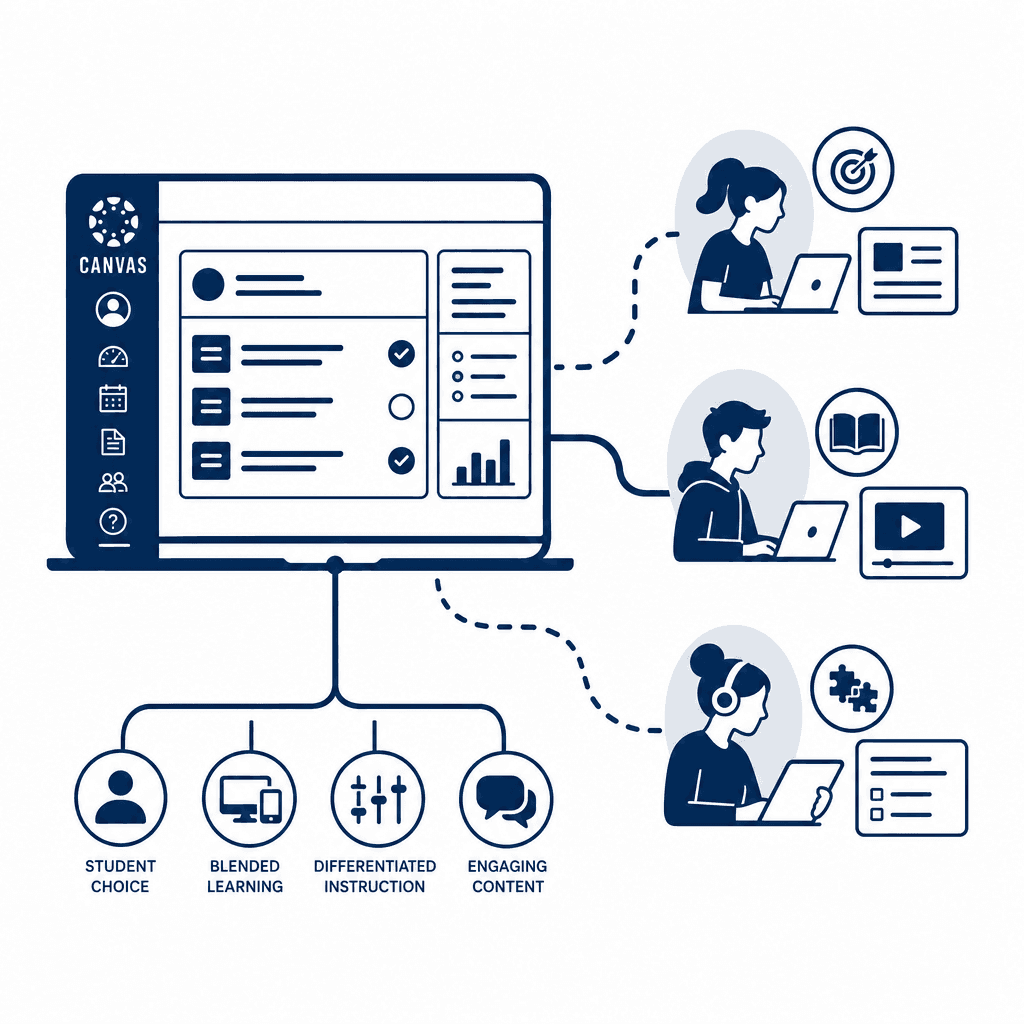
Personalized learning pathways have emerged as an essential strategy within educational settings, especially in online and blended environments. This article discusses how to leverage Canvas LMS features to create customized learning experiences that address the diverse needs of students. We will explore practical strategies that enhance engagement and promote differentiated instruction.
Understanding Personalized Learning in Education
Personalized learning is a pedagogical approach that tailors educational experiences to meet individual student needs, interests, and learning paces. This method stands in contrast to traditional instructional techniques, which often adopt a one-size-fits-all model, where a single pathway is provided to all students regardless of their unique capabilities or preferences. Personalized learning recognizes that each learner is distinct, and therefore, the significance of this approach lies in its ability to cultivate a more engaging and effective learning environment. At the heart of personalized learning are several core principles: valuing student agency, fostering intrinsic motivation, and promoting mastery of content at a personalized pace. By emphasizing student choice and voice, personalized learning helps learners take ownership of their educational journey. This individualized focus not only caters to varying cognitive abilities but also addresses diverse interests and social-emotional needs. When students are allowed to progress at their own pace, they can delve deeper into subjects that resonate with them, ensuring that learning is both meaningful and relevant. In the subsequent sections, we will explore how these principles can be effectively implemented within the Canvas LMS, empowering educators to craft personalized learning pathways that enhance student engagement and facilitate differentiated instruction in both online and blended courses.
Leveraging Canvas LMS for Differentiation
The Canvas LMS is an innovative platform that offers powerful tools tailored for personalized learning and differentiated instruction. One of its fundamental features is the customizable course structure, which allows educators to create pathways that can serve diverse student needs effectively. Educators can organize content in modules, enabling students to progress through material at their own pace, thereby promoting individual learning journeys. Another significant feature is the integration of multimedia resources. Canvas supports various formats such as videos, podcasts, and interactive simulations, catering to different learning styles. For instance, a science module might include video demonstrations for visual learners, while providing text-based readings for those who prefer written content. This multimodal approach not only enhances comprehension but also keeps students engaged. Assessment methods in Canvas can also be varied to accommodate diverse learners. Instructors can employ quizzes, peer reviews, and alternative assessments based on individual learning pathways. By harnessing these tools, educators can create a responsive learning environment that adjusts based on continuous feedback and student performance, thereby reinforcing personalized and differentiated instruction seamlessly within online and blended courses.
Designing Engaging and Flexible Course Content
Designing course content within Canvas requires a thoughtful approach to accommodate diverse learning styles and preferences. By implementing a variety of instructional materials, educators can foster an engaging learning environment that promotes active student participation. Incorporating **multimedia resources** such as videos, podcasts, and interactive simulations allows students to consume content in formats that resonate with them, catering to visual, auditory, and kinesthetic learners alike.
In addition, providing varied reading materials—ranging from articles to ebooks—enables learners to explore topics at different depths. For instance, offering optional supplemental readings can facilitate deeper engagement for students who wish to expand their understanding. Canvas’s rich text editor and file upload features support the integration of these diverse resources seamlessly into the course structure.
Incorporating **interactive activities**, like quizzes, discussions, and collaborative projects, encourages students to engage with the content actively. These activities can be tailored to different proficiency levels, allowing students to choose challenges that suit their abilities and interests. By designing flexible course components that invite students to navigate their learning paths, educators not only enhance student engagement but also promote a deeper connection with the material, setting the stage for successful personalized learning experiences.
Creating and Managing Learning Pathways
Creating personalized learning pathways within Canvas involves a strategic approach to align course objectives with individual student goals. By clearly mapping out learning outcomes, educators can tailor experiences that resonate with diverse learner profiles. One effective method is to use Canvas's MasteryPaths feature, which enables instructors to create differentiated pathways based on students' demonstrated mastery of material. Tracking progress is essential in this personalized approach. Canvas allows educators to monitor student engagement through built-in analytics, providing valuable insights into participation and performance. Assignments can be organized into modules, where students can progress at their own pace, allowing for flexible retention of knowledge. This modular design fosters a sense of autonomy, enabling students to take ownership of their learning journey. Feedback is another crucial component of personalized pathways. Utilizing the SpeedGrader tool within Canvas, instructors can provide timely, individualized feedback that guides students on their journey. Encouraging self-reflection through peer reviews or discussion prompts can further enhance engagement and comprehension. By consistently managing these elements and supporting individual needs, educators can create an inclusive environment that nurtures diverse learning pathways, ultimately enhancing student engagement and success in both online and blended learning environments.
Incorporating Assessments to Drive Learning
Incorporating assessments into personalized learning pathways is crucial for understanding student progress and tailoring instruction to meet diverse needs. Formative assessments should be woven throughout the learning experience, allowing educators to gauge understanding in real-time and adjust practice accordingly. For instance, quizzes and quick checks can be integrated within modules in Canvas, providing immediate feedback not only to students but also to instructors. This ongoing feedback loop fosters a more responsive learning environment. On the other hand, summative assessments serve to evaluate overall competency at the conclusion of a learning phase. These can be customized in Canvas's assignment settings to accommodate varied student levels and learning paces. By offering choices in the format—such as projects, presentations, or traditional tests—educators can align assessments with individual strengths and interests. Utilizing Canvas’s analytics tools further enhances assessment effectiveness. Instructors can monitor each student's performance data to identify trends and areas needing improvement. This data-driven approach enables educators to make informed decisions—whether adjusting instruction, providing additional resources, or facilitating peer-supported learning opportunities—thereby enriching the personalized learning experience and ensuring all students remain on track toward their goals.
Strategies for Sustaining Student Engagement
Maintaining student engagement throughout personalized learning pathways is crucial for fulfilling the goals of differentiated instruction. In a Canvas LMS environment, strategies that foster a supportive learning community and encourage peer collaboration can significantly enhance student motivation. One effective technique is to implement structured group projects where students can work together, utilizing diverse perspectives and strengths. This collaboration cultivates a sense of belonging, making students more likely to participate actively in their learning. Additionally, encouraging self-directed learning is vital. Providing students with options in their learning pathways allows them to pursue interests and set personal goals, making the learning experience feel more relevant and meaningful. Using Canvas features such as discussion boards and multimedia projects empowers students to reflect on their learning, share insights, and receive feedback from peers, deepening their engagement. Implementing regular check-ins or reflection activities, where students assess their progress and articulate their challenges, keeps the personalized learning journey dynamic. Incorporating gamified elements, such as badges for milestones accomplished within their pathways, can also serve as effective motivators, ensuring that learners remain invested in their educational experience while cultivating intrinsic motivation.
Conclusions
In conclusion, designing personalized learning pathways using Canvas LMS significantly enriches the learning experience for students. By integrating various features and strategies for differentiated instruction, educators can foster a more inclusive classroom that caters to individual learning styles, ultimately enhancing student engagement and achievement.