Crafting Post-AI Detector Assessments in Canvas
With AI detection tools becoming less reliable, educators need new approaches to assessment. This guide explores innovative strategies for designing authentic, AI-resilient assessments within Canvas that truly measure student learning and critical thinking, moving beyond detection to focus on meaningful engagement and evaluation.
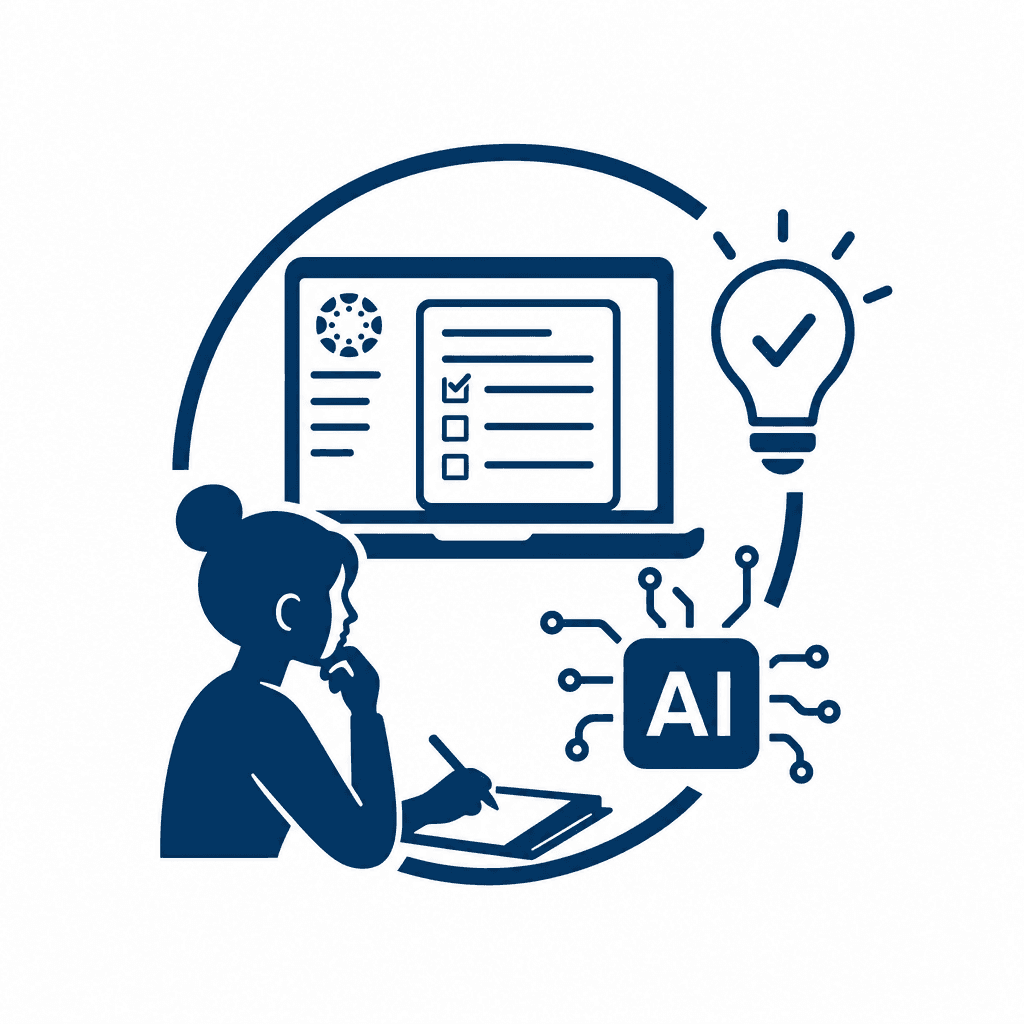
As AI detection tools struggle with reliability, educators must adapt their assessment strategies to ensure academic integrity and meaningful evaluations. This article explores practical methods for creating authentic assessments within Canvas, emphasizing critical thinking and genuine student engagement while addressing the challenges posed by advancing AI technologies.
The Changing Landscape of Education and AI
The integration of AI technology in education has transformed traditional assessment practices, necessitating a shift toward more authentic evaluation methods. As AI detection tools become increasingly unreliable, educators are tasked with rethinking how they measure student learning and academic integrity. The pressure to ensure that assessments are not only rigorous but also resistant to manipulation by AI prompts a reevaluation of standard techniques. Traditional assessments often focus on rote memorization and standardized formats that can be easily replicated or bypassed by AI. In contrast, authentic assessments prioritize real-world relevance and the application of knowledge, fostering an environment where critical thinking thrives. These assessments require students to engage thoroughly with material, demonstrating their understanding through projects, presentations, and portfolios that reflect genuine learning experiences. Moreover, the emphasis on student-centered learning in authentic assessment encourages collaboration and creativity, essential elements for developing critical thinking skills. As educators navigate the changing landscape of education, innovative assessment strategies will be paramount. Moving beyond simple detection of AI involvement, teachers can cultivate meaningful learning experiences that reinforce student engagement and upholding academic integrity in an era distinctly influenced by artificial intelligence.
Understanding Authentic Assessment
Authentic assessment encompasses evaluation methods that reflect real-world challenges, ensuring that learning translates to practical applications outside the classroom. This educational paradigm emphasizes the importance of assessing higher-order thinking skills, such as analysis, synthesis, and evaluation. Unlike traditional assessments, which often rely on rote memorization and standardized testing, authentic assessments require students to engage deeply with the material, fostering a deeper understanding and application of concepts. Characteristics of authentic assessments include a focus on real-world relevance, where tasks mimic situations that learners are likely to encounter in their careers or personal lives. This relevance not only motivates students but also encourages them to take ownership of their learning. Additionally, these assessments are inherently student-centered, allowing for choices in how students demonstrate their understanding, which enhances engagement and personal investment in the learning process. Contrasting sharply with traditional assessments, authentic assessments offer a richer evaluation of critical thinking and problem-solving abilities. They prioritize understanding over mere content recall, thus providing educators with a more holistic view of a student's capabilities and readiness to navigate complex challenges in real-world contexts. Integrating authentic assessments into education, particularly in platforms like Canvas, can cultivate an environment where academic integrity thrives and learners flourish.
Designing AI-Resilient Assessments in Canvas
In designing AI-resilient assessments within Canvas, educators can implement varied strategies that promote deeper engagement and learning. One effective approach is to use diverse question types. Incorporating multiple-choice questions alongside short answers, essays, or multimedia responses not only challenges students to articulate their understanding but also complicates the potential for AI-generated replies. Project-based learning stands out as another robust method. By assigning projects that require real-world applications, students engage with the material more authentically. This encourages critical thinking, as they must analyze, create, and relate information to real-life contexts, thereby reducing reliance on AI tools. In addition, reflective prompts can significantly enhance the assessment experience. When students are asked to reflect on their learning process or the implications of their work, they must articulate thoughts that are inherently personal and unique. This type of inquiry fosters higher-order thinking skills and challenges standard AI outputs, emphasizing the importance of academic integrity. Ultimately, these innovative strategies encourage students to engage thoughtfully with their assessments, fostering an educational environment where genuine learning prevails. In doing so, educators craft assessments that are more than just a test of knowledge—they become a celebration of student growth and inquiry.
Integrating Collaboration and Communication in Assessments
Incorporating collaborative assessments in Canvas is essential for fostering communication and teamwork skills that are increasingly vital in modern education. Group projects and peer evaluations not only stimulate authentic interaction among students but also cultivate collective critical thinking—skills they will rely upon in future professional collaborations. Using Canvas, instructors can design group projects where students tackle real-world problems, allowing them to combine their diverse perspectives and expertise. These projects can be enhanced through discussion boards and collaborative documents, enabling students to communicate effectively and share their ideas in a structured manner. Assigning roles within groups ensures that every member participates actively and takes ownership of their learning. Peer assessments serve as another innovative method to promote interaction. By requiring students to evaluate each other's contributions based on a rubric, they will practice articulating constructive feedback, gain exposure to varied viewpoints, and reflect on their learning process. This reciprocal evaluation fosters a deep understanding of shared goals and enhances accountability. By emphasizing collaboration and communication, educators not only assess content knowledge but also prepare students for the complexities of team dynamics in the real world, moving beyond traditional assessments to embrace a more holistic approach to learning.
Evaluating Critical Thinking in Student Responses
In evaluating critical thinking within student submissions, educators can implement diverse methods that prioritize depth of understanding. One of the most effective approaches is the development of comprehensive rubrics specifically tailored for assessing critical thinking skills. These rubrics should incorporate criteria that emphasize analysis, synthesis, and evaluation of information rather than simple recall of facts. Educators may adopt frameworks such as Bloom’s Taxonomy to help structure assessments. This framework allows for the identification of different levels of thinking, encouraging students to engage in higher-order thinking tasks. For instance, assessments can involve written assignments, discussions, and projects that require students to analyze case studies, evaluate differing viewpoints, and synthesize diverse sources. Additionally, implementing reflective assessments can further gauge critical thinking. By prompting students to articulate their thought processes, educators can gain insights into their analytical reasoning and problem-solving abilities. Peer assessments within these frameworks also cultivate critical thinking, as they compel students to evaluate each other’s work and justify their evaluations. Ultimately, the goal is to cultivate a learning environment in which students demonstrate their cognitive abilities, creating authentic assessments that effectively measure true engagement with the learning material.
Fostering a Culture of Academic Integrity
In the evolving academic landscape, fostering a culture of academic integrity has never been more vital. As educators grapple with the implications of AI on assessment, it is essential to embed the principles of honesty and accountability deeply into the learning processes. One effective strategy is to integrate discussions about ethics into the curriculum, encouraging students to reflect on the ramifications of their choices and the value of originality in their academic work. Educators can facilitate workshops that explore scenarios where ethical dilemmas may arise, prompting students to interrogate their motivations and decision-making processes. By utilizing real-life examples of ethical breaches and their consequences, students can better appreciate the importance of integrity in their academic journey. Moreover, designing assessments that require personal reflection or unique applications of knowledge can further deter academic dishonesty. Assignments that encourage students to connect their learning to their own experiences can help cultivate intrinsic motivation, fostering a sense of ownership over their work. To sustain a culture of authenticity, institutions should implement clear policies that articulate expectations regarding academic misconduct while simultaneously offering support systems that value growth and learning over punitive measures.
Conclusions
In conclusion, evolving assessment strategies to withstand AI detection challenges is essential for fostering academic integrity and authentic learning. By implementing innovative assessment designs within Canvas, educators can effectively measure student understanding while promoting critical thinking, ultimately enhancing the educational experience in a rapidly changing technological landscape.
The Changing Landscape of Education and AI
The integration of AI technology in education has transformed traditional assessment practices, necessitating a shift toward more authentic evaluation methods. As AI detection tools become increasingly unreliable, educators are tasked with rethinking how they measure student learning and academic integrity. The pressure to ensure that assessments are not only rigorous but also resistant to manipulation by AI prompts a reevaluation of standard techniques. Traditional assessments often focus on rote memorization and standardized formats that can be easily replicated or bypassed by AI. In contrast, authentic assessments prioritize real-world relevance and the application of knowledge, fostering an environment where critical thinking thrives. These assessments require students to engage thoroughly with material, demonstrating their understanding through projects, presentations, and portfolios that reflect genuine learning experiences. Moreover, the emphasis on student-centered learning in authentic assessment encourages collaboration and creativity, essential elements for developing critical thinking skills. As educators navigate the changing landscape of education, innovative assessment strategies will be paramount. Moving beyond simple detection of AI involvement, teachers can cultivate meaningful learning experiences that reinforce student engagement and upholding academic integrity in an era distinctly influenced by artificial intelligence.
Understanding Authentic Assessment
Authentic assessment encompasses evaluation methods that reflect real-world challenges, ensuring that learning translates to practical applications outside the classroom. This educational paradigm emphasizes the importance of assessing higher-order thinking skills, such as analysis, synthesis, and evaluation. Unlike traditional assessments, which often rely on rote memorization and standardized testing, authentic assessments require students to engage deeply with the material, fostering a deeper understanding and application of concepts. Characteristics of authentic assessments include a focus on real-world relevance, where tasks mimic situations that learners are likely to encounter in their careers or personal lives. This relevance not only motivates students but also encourages them to take ownership of their learning. Additionally, these assessments are inherently student-centered, allowing for choices in how students demonstrate their understanding, which enhances engagement and personal investment in the learning process. Contrasting sharply with traditional assessments, authentic assessments offer a richer evaluation of critical thinking and problem-solving abilities. They prioritize understanding over mere content recall, thus providing educators with a more holistic view of a student's capabilities and readiness to navigate complex challenges in real-world contexts. Integrating authentic assessments into education, particularly in platforms like Canvas, can cultivate an environment where academic integrity thrives and learners flourish.
Designing AI-Resilient Assessments in Canvas
In designing AI-resilient assessments within Canvas, educators can implement varied strategies that promote deeper engagement and learning. One effective approach is to use diverse question types. Incorporating multiple-choice questions alongside short answers, essays, or multimedia responses not only challenges students to articulate their understanding but also complicates the potential for AI-generated replies. Project-based learning stands out as another robust method. By assigning projects that require real-world applications, students engage with the material more authentically. This encourages critical thinking, as they must analyze, create, and relate information to real-life contexts, thereby reducing reliance on AI tools. In addition, reflective prompts can significantly enhance the assessment experience. When students are asked to reflect on their learning process or the implications of their work, they must articulate thoughts that are inherently personal and unique. This type of inquiry fosters higher-order thinking skills and challenges standard AI outputs, emphasizing the importance of academic integrity. Ultimately, these innovative strategies encourage students to engage thoughtfully with their assessments, fostering an educational environment where genuine learning prevails. In doing so, educators craft assessments that are more than just a test of knowledge—they become a celebration of student growth and inquiry.
Integrating Collaboration and Communication in Assessments
Incorporating collaborative assessments in Canvas is essential for fostering communication and teamwork skills that are increasingly vital in modern education. Group projects and peer evaluations not only stimulate authentic interaction among students but also cultivate collective critical thinking—skills they will rely upon in future professional collaborations. Using Canvas, instructors can design group projects where students tackle real-world problems, allowing them to combine their diverse perspectives and expertise. These projects can be enhanced through discussion boards and collaborative documents, enabling students to communicate effectively and share their ideas in a structured manner. Assigning roles within groups ensures that every member participates actively and takes ownership of their learning. Peer assessments serve as another innovative method to promote interaction. By requiring students to evaluate each other's contributions based on a rubric, they will practice articulating constructive feedback, gain exposure to varied viewpoints, and reflect on their learning process. This reciprocal evaluation fosters a deep understanding of shared goals and enhances accountability. By emphasizing collaboration and communication, educators not only assess content knowledge but also prepare students for the complexities of team dynamics in the real world, moving beyond traditional assessments to embrace a more holistic approach to learning.
Evaluating Critical Thinking in Student Responses
In evaluating critical thinking within student submissions, educators can implement diverse methods that prioritize depth of understanding. One of the most effective approaches is the development of comprehensive rubrics specifically tailored for assessing critical thinking skills. These rubrics should incorporate criteria that emphasize analysis, synthesis, and evaluation of information rather than simple recall of facts. Educators may adopt frameworks such as Bloom’s Taxonomy to help structure assessments. This framework allows for the identification of different levels of thinking, encouraging students to engage in higher-order thinking tasks. For instance, assessments can involve written assignments, discussions, and projects that require students to analyze case studies, evaluate differing viewpoints, and synthesize diverse sources. Additionally, implementing reflective assessments can further gauge critical thinking. By prompting students to articulate their thought processes, educators can gain insights into their analytical reasoning and problem-solving abilities. Peer assessments within these frameworks also cultivate critical thinking, as they compel students to evaluate each other’s work and justify their evaluations. Ultimately, the goal is to cultivate a learning environment in which students demonstrate their cognitive abilities, creating authentic assessments that effectively measure true engagement with the learning material.
Fostering a Culture of Academic Integrity
In the evolving academic landscape, fostering a culture of academic integrity has never been more vital. As educators grapple with the implications of AI on assessment, it is essential to embed the principles of honesty and accountability deeply into the learning processes. One effective strategy is to integrate discussions about ethics into the curriculum, encouraging students to reflect on the ramifications of their choices and the value of originality in their academic work. Educators can facilitate workshops that explore scenarios where ethical dilemmas may arise, prompting students to interrogate their motivations and decision-making processes. By utilizing real-life examples of ethical breaches and their consequences, students can better appreciate the importance of integrity in their academic journey. Moreover, designing assessments that require personal reflection or unique applications of knowledge can further deter academic dishonesty. Assignments that encourage students to connect their learning to their own experiences can help cultivate intrinsic motivation, fostering a sense of ownership over their work. To sustain a culture of authenticity, institutions should implement clear policies that articulate expectations regarding academic misconduct while simultaneously offering support systems that value growth and learning over punitive measures.
Conclusions
In conclusion, evolving assessment strategies to withstand AI detection challenges is essential for fostering academic integrity and authentic learning. By implementing innovative assessment designs within Canvas, educators can effectively measure student understanding while promoting critical thinking, ultimately enhancing the educational experience in a rapidly changing technological landscape.