
Crafting Your Canvas AI Use Policy: A Guide for Educators and Administrators
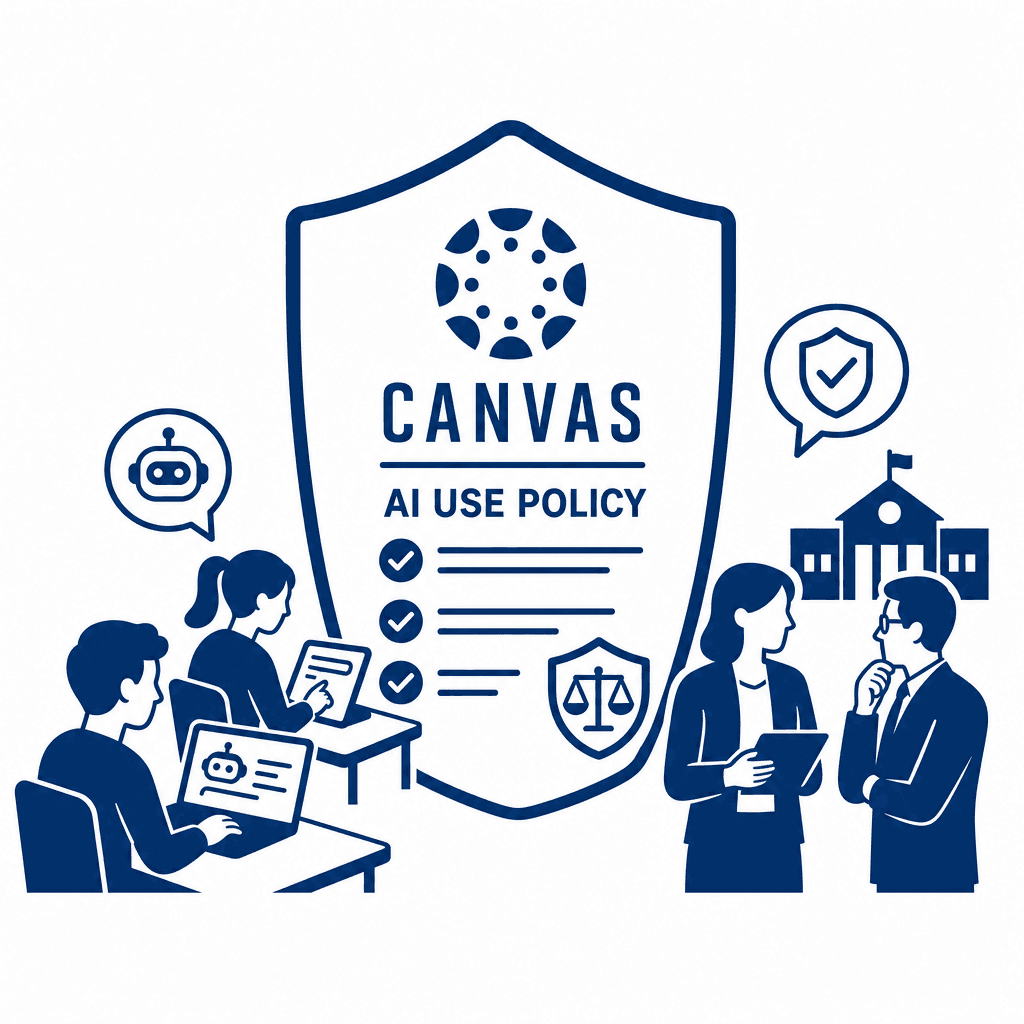
As AI tools become more prevalent, establishing clear guidelines for their use in the classroom is crucial. This article provides a practical framework for educators and Canvas LMS administrators to develop and implement a comprehensive AI use policy for their courses and institutions. We'll cover academic integrity, student disclosure, instructor expectations, and how to integrate these policies within Canvas to promote responsible and ethical AI engagement.
Understanding AI Tools in Education
As AI tools permeate the educational landscape, maintaining academic integrity becomes increasingly essential. Originality, honesty, and accountability are fundamental values in student work, and the integration of AI can drastically impact these principles. While AI has the potential to assist students by providing resources, enhancing research capabilities, and facilitating learning, it can also pose challenges to academic honesty. Students may be tempted to over-rely on AI-generated content, yielding finished work that lacks personal insight and critical engagement. This can lead to instances of plagiarism or superficial assignments that do not reflect a student's true understanding of course material. To combat these issues, it is crucial for educators to establish clear guidelines around AI use that emphasize the importance of originality in student submissions. Implementing explicit instructions on how AI tools may be used—and where they cross ethical boundaries—can support students in understanding their responsibilities. Educators should also engage students in discussions about AI's implications, encouraging them to think critically about how they incorporate technology in their work. By fostering a culture of accountability, institutions can uphold academic integrity while leveraging AI's educational benefits.
The Importance of Academic Integrity
As AI tools become integral to the educational landscape, the significance of academic integrity cannot be overstated. Originality, honesty, and accountability form the bedrock of educational values, and this remains true even in the context of AI utilization. While AI can enhance learning experiences by offering innovative perspectives and personalized feedback, it also poses risks that can undermine these core principles. For instance, students might be tempted to use AI-generated content without proper understanding or attribution, leading to instances of plagiarism or misrepresentation of their skills.
To ensure that students grasp the implications of their AI interactions, educators should instill a robust understanding of academic integrity guidelines. Strategies for promoting integrity include:
- Workshops and seminars on the ethical use of AI tools and their implications for originality.
- Incorporating discussions about the value of personal expression and effort in assignments.
- Providing clear definitions of acceptable versus unacceptable AI use in coursework.
By fostering an environment that celebrates ethical AI engagement, educators can help students appreciate the importance of maintaining academic integrity while navigating the evolving landscape of technology-enhanced education.
Establishing Student Disclosure Guidelines
Establishing guidelines for student disclosure when utilizing AI tools is vital in nurturing an environment of transparency and trust. Students must be educated on the importance of clearly indicating when AI contributes to their assignments or projects. By fostering an atmosphere where disclosure is normalized, educators can enhance the integrity of the learning process. Students should be encouraged to disclose AI usage through designated methods, such as annotation, reflective statements, or specific disclosure forms attached to their submissions.
This approach not only emphasizes ethical engagement but also helps students understand the implications of intellectual property rights. They must recognize that while AI can assist in their work, it should not replace their original thinking or effort. Transparency in using AI tools further impacts the assessment of their projects, as educators can better evaluate the development of the student's thought process alongside their understanding of the content.
Ultimately, these guidelines should be detailed in course syllabi and reinforced during classroom discussions to ensure that students grasp the significance of such disclosures. By clearly outlining these expectations, institutions can better navigate the complexities of AI governance while maintaining a commitment to academic integrity.
Setting Instructor Expectations
Establishing clear expectations for educators regarding AI usage is paramount in fostering a responsible academic environment. Instructors should leverage AI tools to enhance their teaching strategies while maintaining their academic integrity. This involves a commitment to continuous professional development aimed at understanding the evolving landscape of AI technologies. Educators should actively seek training opportunities that cover the ethical implications and pedagogical applications of AI, allowing them to utilize these tools effectively without compromising their values. As AI integration in the classroom becomes more prevalent, instructors must also provide guidance and support to students. This includes creating a nurturing environment where students can discuss their use of AI tools openly. Educators should formulate specific expectations around the responsible use of AI, ensuring students understand the distinction between AI-assisted work and independent thought. To reinforce ethical AI use, instructors can implement reflective practices in their coursework. Encouraging students to critically analyze how AI impacts their learning and creation processes will foster a deeper understanding of academic integrity. Ultimately, clear guidelines will empower educators to model ethical AI usage, promoting transparency and accountability in their teaching methodologies.
Integrating AI Policies within Canvas LMS
Integrating AI use policies within the Canvas LMS requires a thoughtful approach that ensures students understand and adhere to established guidelines throughout their learning experience. Begin by embedding AI policies directly into course syllabi. Clearly define what constitutes acceptable AI usage, emphasizing the importance of academic integrity. This ensures that students are not only aware of the rules but also understand the reasons behind them. Utilize communication channels within Canvas, such as announcements and the inbox feature, to reinforce these policies consistently. Periodic reminders about AI policy can help create a culture of accountability. Additionally, consider hosting virtual sessions to discuss AI ethics and responsible usage, encouraging an open dialogue where students can ask questions and express concerns. Incorporate settings within Canvas that facilitate adherence to the AI use policy. For example, implementing plagiarism detection tools can help identify misuse and reinforce the importance of originality. Providing examples of appropriate and inappropriate AI applications can be a powerful teaching tool, helping students navigate their ethical responsibilities. By making these policies visible and accessible, educators can foster an environment that promotes ethical AI engagement while maintaining the integrity of the educational process.
Promoting Responsible and Ethical AI Engagement
Promoting a culture of responsible and ethical AI use requires ongoing assessment and engagement from both educators and students. As AI technologies evolve, so too must our understanding of their implications within academic settings. A crucial aspect of this process is the continuous review of AI integration strategies within courses. Regular assessments can help identify areas where AI tools may inadvertently undermine academic integrity or deviate from established educational goals. Encouraging student feedback serves as a cornerstone for this ongoing evaluation. By creating open channels of communication where students can share their experiences and challenges related to AI use, educators can gain valuable insights into the effectiveness of their policies. This feedback loop not only fosters a sense of ownership among students but also promotes transparency in how AI is applied across different contexts. Furthermore, a collaborative approach that includes input from diverse stakeholders—such as faculty, students, and administrative bodies—will enrich the AI governance framework. In this way, institutions can cultivate a learning environment where ethical engagement with AI is prioritized, ensuring that all users can harness these technologies responsibly and effectively for their educational pursuits.
Conclusions
In conclusion, creating a well-defined AI use policy is essential for maintaining academic integrity and fostering responsible use of technology in educational settings. By addressing critical areas like student disclosure and instructor expectations, educators and administrators can integrate these policies within the Canvas LMS, ensuring ethical engagement with AI tools as they continue to evolve in the educational landscape.