
Cultivating Human Skills in Canvas: Designing Courses for the AI Era
Explore instructional design strategies and Canvas features to foster critical human skills like creativity, critical thinking, collaboration, and emotional intelligence, which are increasingly vital alongside AI. Provide practical examples and activity ideas for educators.
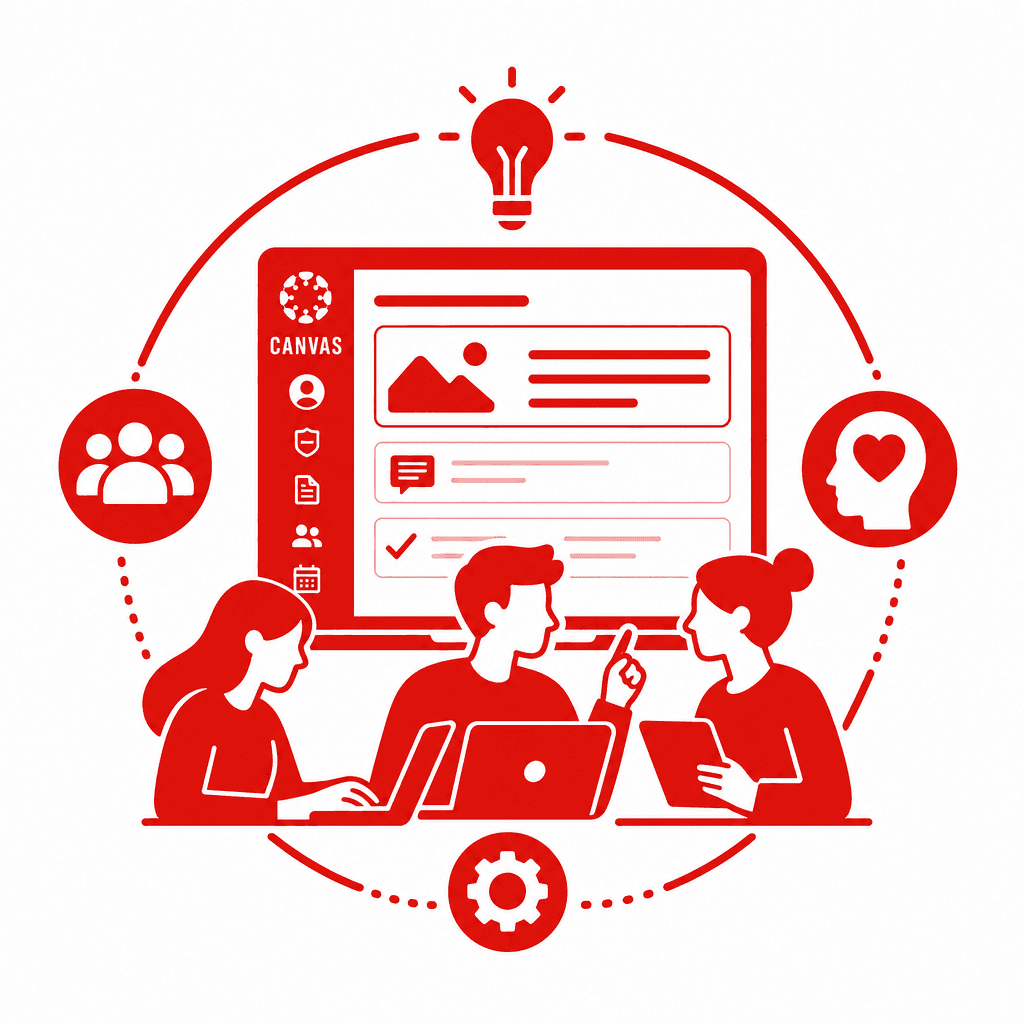
As artificial intelligence reshapes education, the need to cultivate essential human skills becomes paramount. This article delves into effective course design strategies within the Canvas LMS, emphasizing the integration of critical thinking, collaboration, creativity, and emotional intelligence. By leveraging Canvas features, educators can guide students to thrive in an AI-driven world.
Understanding Human Skills in the AI Era
The increasing integration of artificial intelligence (AI) into various sectors highlights the necessity of cultivating essential human skills, as they remain the distinguishing factor that sets humans apart from machines. In the context of education, human skills encompass creativity, critical thinking, collaboration, and emotional intelligence. These skills are vital in helping individuals navigate an ever-evolving job market that increasingly favors roles where human ingenuity and interpersonal capabilities are invaluable. Recent trends indicate that by 2030, approximately 85 million jobs may be displaced by AI, while 97 million new roles could emerge that prioritize distinctly human abilities. For instance, creativity is necessary for problem-solving and innovation in workplaces that AI cannot replicate. Critical thinking enables learners to analyze information, evaluate sources, and make informed decisions that are fundamental in a world flooded with data. Collaboration skills foster teamwork and enhance productivity, as many modern roles require working in diverse groups. Emotional intelligence allows individuals to empathize, manage interpersonal relationships judiciously, and adapt to various social and professional environments. As educators prepare students for the future, integrating these human skills into curricula—not just as add-ons, but as core components—ensures that learners are equipped to thrive in an AI-driven landscape.
The Role of Instructional Design in Course Development
In the realm of course development, the principles of instructional design serve as a foundation for creating effective educational experiences. A well-structured approach, such as the ADDIE model—Analysis, Design, Development, Implementation, and Evaluation—ensures that educators can systematically address learner needs while incorporating human skills crucial for success in the AI era. By integrating human skills into instructional design, educators can elevate learner engagement and enhance retention. For example, during the Design phase of ADDIE, educators can incorporate scenarios that require creativity and critical thinking. This can be achieved by developing assignments that challenge students to solve real-world problems, fostering analytical skills. Furthermore, by utilizing Universal Design for Learning (UDL) principles, educators can create a variety of learning pathways, accommodating diverse learning styles and enhancing emotional intelligence as students navigate different perspectives. Effective collaboration can be further nurtured by designing group activities that allow students to work together in Canvas, promoting teamwork and communication. Instructional design focused on human skills not only prepares students for academic success but also equips them with lifelong competencies essential for thriving in the increasingly automated landscape. By prioritizing these skills in course development, we prepare learners to excel both personally and professionally.
Leveraging Canvas LMS Features for Skill Development
Leveraging the Canvas LMS features can significantly enhance the development of critical human skills among students in the AI era. One of the standout tools is the **discussion feature**, which allows students to engage in asynchronous conversations, promoting critical thinking and collaboration. For instance, educators can pose thought-provoking questions related to course content, encouraging students to articulate their perspectives and engage with their peers’ ideas. This not only sharpens critical thinking but also cultivates emotional intelligence as students reflect on differing viewpoints. **Group assignments** in Canvas are another vital feature that fosters collaboration and creativity. Educators can create projects where small groups brainstorm solutions to real-world problems, leveraging the collaborative tools available. By integrating multimedia elements—such as videos or interactive presentations—students can also express their creativity, sharing varied interpretations of the same content. **Multimedia assignments** enhance engagement as students explore different formats to present their ideas. For example, they can create podcasts or infographics, allowing for a rich display of creativity while encouraging critical analysis of the material. In doing so, educators can create a vibrant learning environment that mirrors real-world dynamics, preparing students for an increasingly AI-integrated society.
Creating Collaborative Learning Activities
Creating collaborative learning activities within the Canvas environment can significantly enhance students' teamwork, communication, and emotional intelligence. One effective method is implementing peer review assignments, where students provide constructive feedback on each other’s work. This process not only solidifies their understanding of the subject matter but also fosters a sense of responsibility for recognizing and appreciating diverse perspectives. Canvas's peer review tool facilitates this interaction seamlessly, allowing for anonymity and structured feedback templates. Group projects also play a critical role in cultivating collaboration. By assigning tasks that require students to work together, educators can encourage the sharing of ideas and distribution of responsibilities. Canvas’s group assignment feature allows instructors to create multi-part projects, where students can collaboratively contribute through documents and discussion boards, promoting a shared learning experience. Online discussions are another vital component. Structured, topic-focused discussions in Canvas can nurture open dialogue, encouraging students to express their thoughts while respecting differing viewpoints. This enhances their emotional intelligence by cultivating skills in empathy and conflict resolution. Together, these collaborative activities not only improve learning outcomes but also prepare students to thrive in an increasingly cooperative world, where human skills complement AI capabilities.
Developing Critical Thinking Through Course Design
Embedding critical thinking within Canvas requires intentional course design that promotes deep analysis and evaluative reasoning. One effective strategy is to incorporate case studies into assignments. By presenting students with real-world scenarios, educators can challenge them to analyze complex problems, synthesize information, and develop strategic solutions. For instance, a nursing course could present a case study on patient care dilemmas, prompting students to evaluate various approaches and defend their chosen interventions. Another valuable method is organizing structured debates. This not only fosters critical thinking but also encourages students to articulate and defend their viewpoints. Instructors can create discussion boards within Canvas where students post arguments and respond to opposing views. This setup not only aids in honing persuasive communication but also reinforces the importance of evidence-based reasoning. Reflective journaling is another powerful tool for developing critical thinking. Students can document their learning processes, question assumptions, and reflect on their decision-making. By using Canvas’s ePortfolio feature, students can maintain a digital journal that showcases their growth over time. By integrating these activities, educators enable students to cultivate their analytical skills, preparing them to tackle the complexities of the AI era with confidence.
Assessing and Reflecting on Human Skills
Assessing the development of human skills within the Canvas LMS is crucial as educators strive to foster creativity, collaboration, and emotional intelligence in tandem with academic knowledge. Formative assessments, such as self-assessments and peer feedback, play a significant role in this process. By incorporating tools like Canvas quizzes and discussion boards, educators can facilitate self-reflection and encourage students to evaluate their growth in human skills. For instance, a reflective journal assignment could prompt students to consider their collaboration effectiveness in group projects, allowing them to articulate their contributions and identify areas for improvement. Summative assessments can be structured around real-world scenarios where students must apply their creative and collaborative skills. Educators could utilize Canvas's rubric feature to provide clear criteria for assessing group projects, ensuring that students understand the expectations for communication, teamwork, and emotional intelligence. Peer feedback can further enhance learning, as students provide and receive constructive critiques on their performance, cultivating a culture of support and continuous improvement. Regularly facilitating structured reflection sessions, both individually and in groups, enables students to synthesize their experiences and insights into their human skills development. This multifaceted approach not only embeds assessment within the learning process but also primes students for the complex challenges of the AI era.
Conclusions
The integration of human skills in educational frameworks is essential for preparing students for the complexities of an AI-infused environment. By adopting innovative design strategies and leveraging Canvas features, educators can foster creativity, collaboration, and critical thinking, equipping learners with the skills necessary to navigate an increasingly automated world.
Understanding Human Skills in the AI Era
The increasing integration of artificial intelligence (AI) into various sectors highlights the necessity of cultivating essential human skills, as they remain the distinguishing factor that sets humans apart from machines. In the context of education, human skills encompass creativity, critical thinking, collaboration, and emotional intelligence. These skills are vital in helping individuals navigate an ever-evolving job market that increasingly favors roles where human ingenuity and interpersonal capabilities are invaluable. Recent trends indicate that by 2030, approximately 85 million jobs may be displaced by AI, while 97 million new roles could emerge that prioritize distinctly human abilities. For instance, creativity is necessary for problem-solving and innovation in workplaces that AI cannot replicate. Critical thinking enables learners to analyze information, evaluate sources, and make informed decisions that are fundamental in a world flooded with data. Collaboration skills foster teamwork and enhance productivity, as many modern roles require working in diverse groups. Emotional intelligence allows individuals to empathize, manage interpersonal relationships judiciously, and adapt to various social and professional environments. As educators prepare students for the future, integrating these human skills into curricula—not just as add-ons, but as core components—ensures that learners are equipped to thrive in an AI-driven landscape.
The Role of Instructional Design in Course Development
In the realm of course development, the principles of instructional design serve as a foundation for creating effective educational experiences. A well-structured approach, such as the ADDIE model—Analysis, Design, Development, Implementation, and Evaluation—ensures that educators can systematically address learner needs while incorporating human skills crucial for success in the AI era. By integrating human skills into instructional design, educators can elevate learner engagement and enhance retention. For example, during the Design phase of ADDIE, educators can incorporate scenarios that require creativity and critical thinking. This can be achieved by developing assignments that challenge students to solve real-world problems, fostering analytical skills. Furthermore, by utilizing Universal Design for Learning (UDL) principles, educators can create a variety of learning pathways, accommodating diverse learning styles and enhancing emotional intelligence as students navigate different perspectives. Effective collaboration can be further nurtured by designing group activities that allow students to work together in Canvas, promoting teamwork and communication. Instructional design focused on human skills not only prepares students for academic success but also equips them with lifelong competencies essential for thriving in the increasingly automated landscape. By prioritizing these skills in course development, we prepare learners to excel both personally and professionally.
Leveraging Canvas LMS Features for Skill Development
Leveraging the Canvas LMS features can significantly enhance the development of critical human skills among students in the AI era. One of the standout tools is the **discussion feature**, which allows students to engage in asynchronous conversations, promoting critical thinking and collaboration. For instance, educators can pose thought-provoking questions related to course content, encouraging students to articulate their perspectives and engage with their peers’ ideas. This not only sharpens critical thinking but also cultivates emotional intelligence as students reflect on differing viewpoints. **Group assignments** in Canvas are another vital feature that fosters collaboration and creativity. Educators can create projects where small groups brainstorm solutions to real-world problems, leveraging the collaborative tools available. By integrating multimedia elements—such as videos or interactive presentations—students can also express their creativity, sharing varied interpretations of the same content. **Multimedia assignments** enhance engagement as students explore different formats to present their ideas. For example, they can create podcasts or infographics, allowing for a rich display of creativity while encouraging critical analysis of the material. In doing so, educators can create a vibrant learning environment that mirrors real-world dynamics, preparing students for an increasingly AI-integrated society.
Creating Collaborative Learning Activities
Creating collaborative learning activities within the Canvas environment can significantly enhance students' teamwork, communication, and emotional intelligence. One effective method is implementing peer review assignments, where students provide constructive feedback on each other’s work. This process not only solidifies their understanding of the subject matter but also fosters a sense of responsibility for recognizing and appreciating diverse perspectives. Canvas's peer review tool facilitates this interaction seamlessly, allowing for anonymity and structured feedback templates. Group projects also play a critical role in cultivating collaboration. By assigning tasks that require students to work together, educators can encourage the sharing of ideas and distribution of responsibilities. Canvas’s group assignment feature allows instructors to create multi-part projects, where students can collaboratively contribute through documents and discussion boards, promoting a shared learning experience. Online discussions are another vital component. Structured, topic-focused discussions in Canvas can nurture open dialogue, encouraging students to express their thoughts while respecting differing viewpoints. This enhances their emotional intelligence by cultivating skills in empathy and conflict resolution. Together, these collaborative activities not only improve learning outcomes but also prepare students to thrive in an increasingly cooperative world, where human skills complement AI capabilities.
Developing Critical Thinking Through Course Design
Embedding critical thinking within Canvas requires intentional course design that promotes deep analysis and evaluative reasoning. One effective strategy is to incorporate case studies into assignments. By presenting students with real-world scenarios, educators can challenge them to analyze complex problems, synthesize information, and develop strategic solutions. For instance, a nursing course could present a case study on patient care dilemmas, prompting students to evaluate various approaches and defend their chosen interventions. Another valuable method is organizing structured debates. This not only fosters critical thinking but also encourages students to articulate and defend their viewpoints. Instructors can create discussion boards within Canvas where students post arguments and respond to opposing views. This setup not only aids in honing persuasive communication but also reinforces the importance of evidence-based reasoning. Reflective journaling is another powerful tool for developing critical thinking. Students can document their learning processes, question assumptions, and reflect on their decision-making. By using Canvas’s ePortfolio feature, students can maintain a digital journal that showcases their growth over time. By integrating these activities, educators enable students to cultivate their analytical skills, preparing them to tackle the complexities of the AI era with confidence.
Assessing and Reflecting on Human Skills
Assessing the development of human skills within the Canvas LMS is crucial as educators strive to foster creativity, collaboration, and emotional intelligence in tandem with academic knowledge. Formative assessments, such as self-assessments and peer feedback, play a significant role in this process. By incorporating tools like Canvas quizzes and discussion boards, educators can facilitate self-reflection and encourage students to evaluate their growth in human skills. For instance, a reflective journal assignment could prompt students to consider their collaboration effectiveness in group projects, allowing them to articulate their contributions and identify areas for improvement. Summative assessments can be structured around real-world scenarios where students must apply their creative and collaborative skills. Educators could utilize Canvas's rubric feature to provide clear criteria for assessing group projects, ensuring that students understand the expectations for communication, teamwork, and emotional intelligence. Peer feedback can further enhance learning, as students provide and receive constructive critiques on their performance, cultivating a culture of support and continuous improvement. Regularly facilitating structured reflection sessions, both individually and in groups, enables students to synthesize their experiences and insights into their human skills development. This multifaceted approach not only embeds assessment within the learning process but also primes students for the complex challenges of the AI era.
Conclusions
The integration of human skills in educational frameworks is essential for preparing students for the complexities of an AI-infused environment. By adopting innovative design strategies and leveraging Canvas features, educators can foster creativity, collaboration, and critical thinking, equipping learners with the skills necessary to navigate an increasingly automated world.