
Designing AI-Powered Scenario-Based Learning for Decision-Making Practice in Canvas
Explore how educators and instructional designers can create and integrate AI-enhanced scenario-based learning experiences within Canvas to help students practice critical decision-making and problem-solving skills. This article will cover strategies for developing compelling scenarios, leveraging AI tools for adaptive feedback and role-play, and best practices for assessment and integration into Canvas courses.
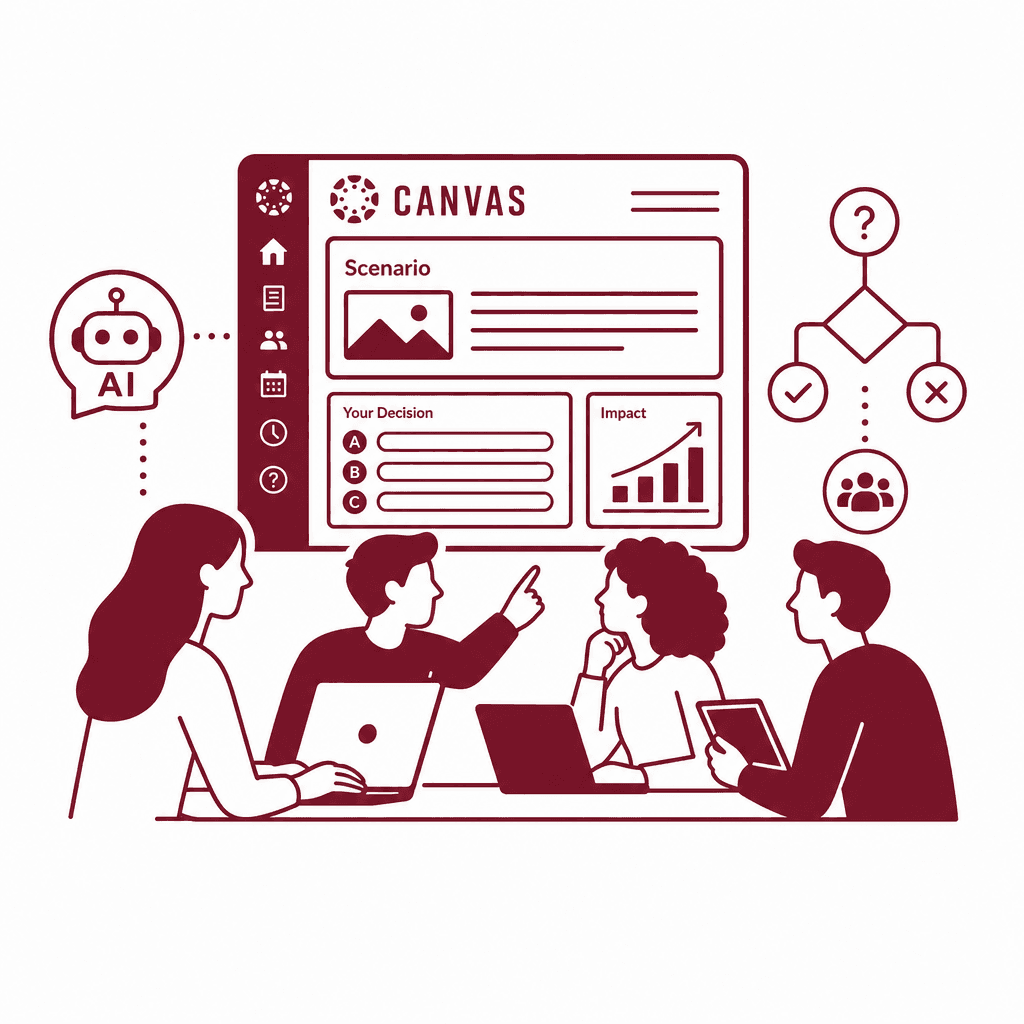
In today's rapidly evolving educational landscape, integrating technology with pedagogy poses unique opportunities for enhancing learning experiences. This article delves into the design of AI-powered scenario-based learning within the Canvas LMS, equipping educators with innovative strategies to foster effective decision-making and problem-solving skills among students.
Understanding Scenario-Based Learning
Scenario-based learning (SBL) transforms traditional educational methods by immersing students in realistic, complex situations that require active engagement in problem-solving and decision-making. The fundamental principles of SBL rest on the premise that learning is most effective when it is contextual and interactive. By simulating real-life challenges, educators stimulate critical thinking and encourage students to apply their knowledge in a practical setting. Through SBL, students encounter scenarios that require them not only to recall information but also to analyze, evaluate, and make informed choices, thereby enhancing their cognitive processes. This experiential approach greatly increases student engagement as learners are more inclined to invest themselves emotionally and intellectually in their tasks. The key advantages of SBL include improved retention of knowledge, as students connect theory with application, and the development of higher-order thinking skills necessary for real-world challenges. Additionally, the collaborative nature of many SBL activities fosters a sense of community among learners, further enhancing the educational experience. Such dynamic and interactive learning environments are essential in preparing students for the complexities of 21st-century decision-making.
The Role of AI in Education
In the rapidly evolving landscape of education, artificial intelligence is becoming an essential tool for enhancing learning experiences. AI technologies play a pivotal role in personalizing education, enabling adaptive feedback, and creating interactive scenarios that foster engagement and critical thinking. By employing AI analytics, educators can gain valuable insights into student performance and learning patterns, allowing for timely interventions and support. AI-driven platforms offer personalized learning pathways, tailoring content to meet individual needs and preferences. This adaptability ensures that students can progress at their own pace, enhancing their understanding of complex concepts and promoting deeper engagement. Additionally, AI tools can facilitate real-time feedback, revolutionizing the instructional design process. As students navigate scenarios, AI can analyze their choices and provide immediate, context-specific guidance, fostering a more dynamic learning environment. Moreover, AI-enhanced scenario-based learning can simulate real-world challenges, immersing students in decision-making experiences that mirror actual situations they will encounter in their careers. This integration of AI elevates instructional quality and cultivates essential skills, preparing students to navigate complexities effectively and confidently. By harnessing the power of AI, educators can significantly enrich scenario-based learning within Canvas, ensuring it resonates with today’s tech-savvy learners.
Designing Effective Scenarios
To design effective scenarios for scenario-based learning within Canvas, it is essential to align the scenarios closely with defined learning objectives and key competencies. This alignment ensures that every scenario is purpose-driven, guiding students through immersive experiences that challenge their decision-making abilities. When crafting these scenarios, consider incorporating engaging elements such as rich narrative structures, well-developed characters, and contextual relevance. A compelling narrative draws students in, allowing them to connect emotionally with the material. For instance, placing students in a simulated crisis—such as a public health emergency—where they must make decisions about resource allocation can effectively illustrate real-world implications of their choices. Character development is another critical factor; students should encounter diverse personas who bring different perspectives, thus enhancing empathy and ethical reasoning. Contextual relevance is achieved by reflecting contemporary issues or industry-specific challenges that make scenarios relatable and timely. Utilizing these elements not only increases student immersion but also fosters critical thinking and active engagement. Scenarios that resonate with learners cultivate a rich environment ripe for exploration, ultimately enhancing the educational experience through meaningful practice in decision-making.
Leveraging AI Tools for Feedback and Role-Play
Leveraging AI tools in scenario-based learning creates a dynamic environment where students can practice decision-making and problem-solving skills with immediate feedback and personalized guidance. By integrating AI capabilities within the Canvas LMS, educators can enhance the learning experience significantly. For instance, AI algorithms can assess student choices in real-time, analyzing their decisions derived from various scenarios. This provides a foundation for adaptive feedback tailored to individual learning paths. If a student makes a poor choice in a role-play scenario, the AI can pinpoint the misstep, simulate potential consequences, and suggest alternative strategies. This not only reinforces learning but fosters critical thinking skills as students navigate through varying outcomes and their implications. In practice, tools like natural language processing can simulate role-play scenarios where students engage with AI-driven characters designed to respond intelligently based on user input. Such interactions add layers of realism, enhancing student engagement. By embedding these AI tools directly into Canvas, educators can create immersive learning experiences that evolve as students progress, ensuring that learning objectives align with real-world decision-making challenges. This approach promotes active learning by encouraging students to reflect on their choices and adapt their strategies accordingly.
Assessing Learning Outcomes
Assessing learning outcomes in scenario-based learning is crucial for understanding how well students grasp critical decision-making and problem-solving skills. The integration of AI tools can enhance assessment processes, allowing educators to evaluate student performance more effectively. Different assessment methods can be tailored for these dynamic learning experiences, fostering a comprehensive view of student capabilities. Formative assessments can play a vital role in providing ongoing feedback. They can be embedded directly into scenarios, prompting students to reflect on their choices immediately, thus reinforcing learning. Educators can also implement peer evaluations, enabling students to assess each other's performance in role-playing scenarios. This not only enhances critical thinking but also promotes collaboration and communication skills among peers, essential components of decision-making processes. Self-reflections are another powerful method, encouraging students to analyze their decisions, understand their thought processes, and identify areas for improvement. Incorporating digital tools within Canvas, such as discussion boards or journal assignments, can streamline these evaluations, allowing for easy collection and analysis of reflection submissions. By employing these varied assessment strategies, educators can create a robust framework that not only measures learning outcomes but also fosters deeper engagement and continuous improvement in scenario-based learning experiences.
Integrating Scenario-Based Learning into Canvas
Integrating scenario-based learning experiences within the Canvas LMS involves a thoughtful approach to both technical and instructional design. Begin by utilizing Canvas’s rich features to create dynamic and immersive scenarios. Instructional designers can leverage tools such as Canvas Studio for video-based scenarios that engage students emotionally, prompting deeper decision-making. Incorporating AI-driven tools can further enhance the learning experience. Adaptive feedback systems can be integrated, allowing students to receive immediate, personalized responses to their choices within a scenario. This feedback mechanism not only fosters critical thinking but also supports differentiated learning paths suited to individual student needs. User experience enhancements are essential for seamless delivery. Ensure a clean, intuitive interface that allows easy navigation through scenarios, with clearly defined objectives at each stage. Integrating discussion boards or collaborative workspaces encourages active engagement and peer interactions, which are vital for scenario-based learning. Finally, embrace a cycle of continuous improvement. Collecting student feedback and analyzing learning analytics within Canvas will help refine scenarios and instructional strategies. This iterative process ensures that scenarios remain relevant and challenging, fostering an environment of ongoing growth and skill development in decision-making.
Conclusions
The integration of AI-powered scenario-based learning within Canvas provides a transformative approach to education, enhancing students' decision-making capabilities in practical contexts. By implementing these strategies, educators can create engaging, adaptive, and meaningful learning experiences that prepare students for real-world challenges.
Understanding Scenario-Based Learning
Scenario-based learning (SBL) transforms traditional educational methods by immersing students in realistic, complex situations that require active engagement in problem-solving and decision-making. The fundamental principles of SBL rest on the premise that learning is most effective when it is contextual and interactive. By simulating real-life challenges, educators stimulate critical thinking and encourage students to apply their knowledge in a practical setting. Through SBL, students encounter scenarios that require them not only to recall information but also to analyze, evaluate, and make informed choices, thereby enhancing their cognitive processes. This experiential approach greatly increases student engagement as learners are more inclined to invest themselves emotionally and intellectually in their tasks. The key advantages of SBL include improved retention of knowledge, as students connect theory with application, and the development of higher-order thinking skills necessary for real-world challenges. Additionally, the collaborative nature of many SBL activities fosters a sense of community among learners, further enhancing the educational experience. Such dynamic and interactive learning environments are essential in preparing students for the complexities of 21st-century decision-making.
The Role of AI in Education
In the rapidly evolving landscape of education, artificial intelligence is becoming an essential tool for enhancing learning experiences. AI technologies play a pivotal role in personalizing education, enabling adaptive feedback, and creating interactive scenarios that foster engagement and critical thinking. By employing AI analytics, educators can gain valuable insights into student performance and learning patterns, allowing for timely interventions and support. AI-driven platforms offer personalized learning pathways, tailoring content to meet individual needs and preferences. This adaptability ensures that students can progress at their own pace, enhancing their understanding of complex concepts and promoting deeper engagement. Additionally, AI tools can facilitate real-time feedback, revolutionizing the instructional design process. As students navigate scenarios, AI can analyze their choices and provide immediate, context-specific guidance, fostering a more dynamic learning environment. Moreover, AI-enhanced scenario-based learning can simulate real-world challenges, immersing students in decision-making experiences that mirror actual situations they will encounter in their careers. This integration of AI elevates instructional quality and cultivates essential skills, preparing students to navigate complexities effectively and confidently. By harnessing the power of AI, educators can significantly enrich scenario-based learning within Canvas, ensuring it resonates with today’s tech-savvy learners.
Designing Effective Scenarios
To design effective scenarios for scenario-based learning within Canvas, it is essential to align the scenarios closely with defined learning objectives and key competencies. This alignment ensures that every scenario is purpose-driven, guiding students through immersive experiences that challenge their decision-making abilities. When crafting these scenarios, consider incorporating engaging elements such as rich narrative structures, well-developed characters, and contextual relevance. A compelling narrative draws students in, allowing them to connect emotionally with the material. For instance, placing students in a simulated crisis—such as a public health emergency—where they must make decisions about resource allocation can effectively illustrate real-world implications of their choices. Character development is another critical factor; students should encounter diverse personas who bring different perspectives, thus enhancing empathy and ethical reasoning. Contextual relevance is achieved by reflecting contemporary issues or industry-specific challenges that make scenarios relatable and timely. Utilizing these elements not only increases student immersion but also fosters critical thinking and active engagement. Scenarios that resonate with learners cultivate a rich environment ripe for exploration, ultimately enhancing the educational experience through meaningful practice in decision-making.
Leveraging AI Tools for Feedback and Role-Play
Leveraging AI tools in scenario-based learning creates a dynamic environment where students can practice decision-making and problem-solving skills with immediate feedback and personalized guidance. By integrating AI capabilities within the Canvas LMS, educators can enhance the learning experience significantly. For instance, AI algorithms can assess student choices in real-time, analyzing their decisions derived from various scenarios. This provides a foundation for adaptive feedback tailored to individual learning paths. If a student makes a poor choice in a role-play scenario, the AI can pinpoint the misstep, simulate potential consequences, and suggest alternative strategies. This not only reinforces learning but fosters critical thinking skills as students navigate through varying outcomes and their implications. In practice, tools like natural language processing can simulate role-play scenarios where students engage with AI-driven characters designed to respond intelligently based on user input. Such interactions add layers of realism, enhancing student engagement. By embedding these AI tools directly into Canvas, educators can create immersive learning experiences that evolve as students progress, ensuring that learning objectives align with real-world decision-making challenges. This approach promotes active learning by encouraging students to reflect on their choices and adapt their strategies accordingly.
Assessing Learning Outcomes
Assessing learning outcomes in scenario-based learning is crucial for understanding how well students grasp critical decision-making and problem-solving skills. The integration of AI tools can enhance assessment processes, allowing educators to evaluate student performance more effectively. Different assessment methods can be tailored for these dynamic learning experiences, fostering a comprehensive view of student capabilities. Formative assessments can play a vital role in providing ongoing feedback. They can be embedded directly into scenarios, prompting students to reflect on their choices immediately, thus reinforcing learning. Educators can also implement peer evaluations, enabling students to assess each other's performance in role-playing scenarios. This not only enhances critical thinking but also promotes collaboration and communication skills among peers, essential components of decision-making processes. Self-reflections are another powerful method, encouraging students to analyze their decisions, understand their thought processes, and identify areas for improvement. Incorporating digital tools within Canvas, such as discussion boards or journal assignments, can streamline these evaluations, allowing for easy collection and analysis of reflection submissions. By employing these varied assessment strategies, educators can create a robust framework that not only measures learning outcomes but also fosters deeper engagement and continuous improvement in scenario-based learning experiences.
Integrating Scenario-Based Learning into Canvas
Integrating scenario-based learning experiences within the Canvas LMS involves a thoughtful approach to both technical and instructional design. Begin by utilizing Canvas’s rich features to create dynamic and immersive scenarios. Instructional designers can leverage tools such as Canvas Studio for video-based scenarios that engage students emotionally, prompting deeper decision-making. Incorporating AI-driven tools can further enhance the learning experience. Adaptive feedback systems can be integrated, allowing students to receive immediate, personalized responses to their choices within a scenario. This feedback mechanism not only fosters critical thinking but also supports differentiated learning paths suited to individual student needs. User experience enhancements are essential for seamless delivery. Ensure a clean, intuitive interface that allows easy navigation through scenarios, with clearly defined objectives at each stage. Integrating discussion boards or collaborative workspaces encourages active engagement and peer interactions, which are vital for scenario-based learning. Finally, embrace a cycle of continuous improvement. Collecting student feedback and analyzing learning analytics within Canvas will help refine scenarios and instructional strategies. This iterative process ensures that scenarios remain relevant and challenging, fostering an environment of ongoing growth and skill development in decision-making.
Conclusions
The integration of AI-powered scenario-based learning within Canvas provides a transformative approach to education, enhancing students' decision-making capabilities in practical contexts. By implementing these strategies, educators can create engaging, adaptive, and meaningful learning experiences that prepare students for real-world challenges.