Designing AI-Resilient Assessments in Canvas
Explore strategies for creating assessments in Canvas that are less susceptible to AI misuse and more focused on higher-order thinking, creativity, and authentic application of knowledge, moving beyond AI detection tools.
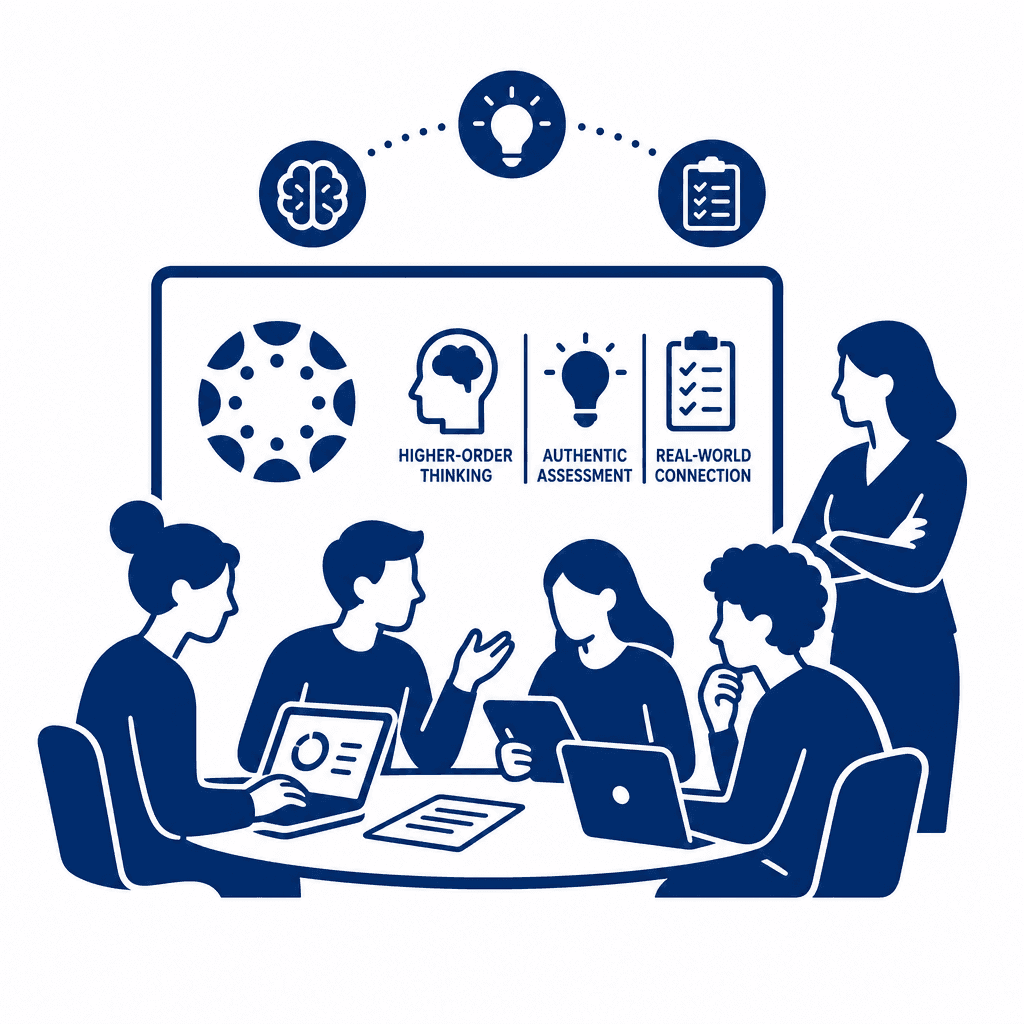
As AI technology continues to evolve, educators face the challenge of ensuring that assessments remain reliable indicators of student learning. This article explores innovative strategies for designing assessments in Canvas that prioritize higher-order thinking and integrity, moving beyond reliance on detection tools and fostering authentic academic engagement.
Understanding AI Challenges in Assessment
The rise of AI technologies in education has introduced a myriad of challenges, particularly in the realm of academic assessments. Traditional assessment methods, heavily reliant on standardized tests and rote memorization, face issues of integrity as students increasingly turn to AI for assistance, sometimes crossing ethical boundaries. These tools can generate responses that mimic genuine understanding, leaving educators questioning the authenticity of student work. This situation undermines the core purpose of assessments: to measure student learning and comprehension effectively. Moreover, the limitations of conventional assessment methods hinder higher-order thinking, as they often focus on remembering facts rather than evaluating, analyzing, or creating new ideas. When students rely on AI to produce course-related content, they miss vital opportunities for critical engagement and personal growth. As a result, the educational landscape necessitates a paradigm shift in assessment design toward frameworks that promote authenticity and creativity. Implementing innovative approaches to assessment, which foster genuine application of knowledge, becomes essential to maintain academic integrity and enhance the learning experience in an AI-dominated era. Thus, understanding these challenges and the necessity for change is vital for educators striving to support student development meaningfully.
The Role of Canvas in Modern Assessment Design
Canvas serves as a versatile learning management system that enhances innovative assessment practices crucial for today’s educational landscape. One of its standout features is the ability to create diverse assessment formats that promote active engagement and critical thinking. Among the tools available, the **Quiz and New Assessment** functions allow educators to craft assessments that challenge students to demonstrate mastery beyond rote memorization. Features like randomized question banks minimize the predictability of questions, effectively reducing the risk of AI misuse. Moreover, Canvas supports various media formats, enabling assessments that integrate videos, audio clips, and interactive elements. This encourages creativity and allows students to express their understanding in multifaceted ways. The **Discussion Boards** also foster collaborative learning, where students can articulate their thoughts and engage with peer perspectives, further mitigating the reliance on AI-generated content. Canvas’s **Rubric** tools enhance transparency in grading while promoting academic integrity by clearly outlining evaluation criteria. With these capabilities, Canvas empowers educators to design assessments that not only evaluate knowledge but also inspire authentic engagement and higher-order thinking, steering the focus away from superficial responses that AI tools might produce.
Shifting Focus to Higher-Order Thinking Skills
Incorporating higher-order thinking skills into assessments is essential for fostering deep learning and critical analysis among students. By moving beyond rote memorization, educators can cultivate an environment where learners engage in deeper levels of cognition. Bloom's taxonomy provides a valuable framework to design assessments that prioritize these higher-order skills, promoting analysis, synthesis, and evaluation. Assessments structured around the upper tiers of Bloom's taxonomy can include project-based learning opportunities where students explore real-world issues, create innovative solutions, and present their findings. For example, a group project could require students to analyze a current societal challenge, synthesize data from multiple sources, and evaluate the effectiveness of proposed solutions. Another effective assessment type is the reflective essay, where students critically assess their learning journey, evaluate their thoughts and feelings about different concepts, and articulate what they would do differently in future situations. Additionally, incorporating case studies into assessments encourages students to apply their knowledge to complex scenarios, enhancing their analytical skills. By designing assessments that challenge students' critical thinking and creativity, educators can reduce the likelihood of AI misuse while enriching the learning experience, ultimately creating a more academically robust environment in Canvas.
Designing Authentic Assessments
Designing authentic assessments involves creating tasks that are reflective of real-world challenges and applications of knowledge, promoting deep engagement and meaningful learning. Authentic assessments reinforce academic integrity by requiring students to showcase their understanding through practical tasks rather than relying on rote memorization or AI-generated responses. To effectively implement authentic assessments within Canvas, instructors can utilize project-based assignments, case studies, or service-learning projects that encourage students to apply their knowledge in relevant settings. For instance, a business course might ask students to develop a marketing plan for a local company, allowing them to demonstrate analytical skills while engaging with the community. Collaboration is another key component; group projects that require peer interaction not only enhance learning but also make it difficult for AI to manipulate outcomes. Utilizing Canvas's multimedia features, instructors can encourage students to create video presentations or podcasts as part of their assessments, enabling diverse expressions of learning. By connecting classroom knowledge with real-world scenarios, authentic assessments can significantly enhance student motivation and foster a deeper understanding of content, effectively preparing them for future challenges.
Incorporating Creativity into Assessments
Integrating creativity into assessments not only fosters higher-order thinking but also encourages students to demonstrate their understanding in unique and meaningful ways. To achieve this, educators can employ various creative assessment methods that align with learning objectives while leveraging the features of Canvas to facilitate innovation. One effective approach is to incorporate project-based assessments where students are tasked with creating a product or solution relevant to real-world scenarios. For instance, instead of a traditional essay, students could produce a video presentation or a digital portfolio showcasing their learning journey. Canvas allows for easy submission of multimedia projects, providing a platform for students to share their creativity. Group projects can also enhance creativity, as collaboration often sparks innovative ideas. Educators can utilize Canvas's collaborative tools, such as discussion boards and group assignments, to facilitate teamwork. Assigning a task that requires students to design a campaign for a social issue not only engages them but also allows them to apply their knowledge creatively. Additionally, incorporating choice into assessments can promote originality. Offering several assessment options, such as creating an infographic, a podcast, or a creative writing piece, lets students express their learning in a way that resonates with them personally, thereby enhancing engagement and integrity in their work.
Evaluating and Reflecting on Assessment Strategies
In evaluating and reflecting on assessment strategies, it is crucial that educators adopt a systematic approach to ensure the effectiveness of AI-resilient assessments in Canvas. First, incorporating student feedback through surveys or focus groups can provide insights into the perceived relevance and engagement of assessments. This feedback acts as a vital mechanism for gauging whether assessments successfully promote higher-order thinking and authentic application of knowledge. Next, educators should analyze performance data meticulously. By comparing results from traditional assessments to innovative assessments designed to mitigate AI misuse, educators can assess which methodologies are more effective in promoting critical thinking and creativity. Additionally, encouraging reflective practices among educators can foster continuous improvement. Educators should regularly revisit their assessment designs, asking themselves questions such as, "Are my assessments encouraging genuine student engagement?" or "How effectively do my assessments align with learning goals?" Finally, collaboration with colleagues can enhance this reflective process, as sharing experiences and strategies can yield richer insights and foster a community of practice dedicated to academic integrity. Emphasizing adaptability will ensure that assessments remain responsive to evolving technological landscapes while supporting deeper learning experiences.
Conclusions
Incorporating AI-resilient assessment strategies in Canvas allows educators to promote higher-order thinking and authentic learning experiences. By shifting focus from detection to innovation, we can cultivate a more engaging and trustworthy educational environment that empowers students to express their knowledge creatively and meaningfully.
Understanding AI Challenges in Assessment
The rise of AI technologies in education has introduced a myriad of challenges, particularly in the realm of academic assessments. Traditional assessment methods, heavily reliant on standardized tests and rote memorization, face issues of integrity as students increasingly turn to AI for assistance, sometimes crossing ethical boundaries. These tools can generate responses that mimic genuine understanding, leaving educators questioning the authenticity of student work. This situation undermines the core purpose of assessments: to measure student learning and comprehension effectively. Moreover, the limitations of conventional assessment methods hinder higher-order thinking, as they often focus on remembering facts rather than evaluating, analyzing, or creating new ideas. When students rely on AI to produce course-related content, they miss vital opportunities for critical engagement and personal growth. As a result, the educational landscape necessitates a paradigm shift in assessment design toward frameworks that promote authenticity and creativity. Implementing innovative approaches to assessment, which foster genuine application of knowledge, becomes essential to maintain academic integrity and enhance the learning experience in an AI-dominated era. Thus, understanding these challenges and the necessity for change is vital for educators striving to support student development meaningfully.
The Role of Canvas in Modern Assessment Design
Canvas serves as a versatile learning management system that enhances innovative assessment practices crucial for today’s educational landscape. One of its standout features is the ability to create diverse assessment formats that promote active engagement and critical thinking. Among the tools available, the **Quiz and New Assessment** functions allow educators to craft assessments that challenge students to demonstrate mastery beyond rote memorization. Features like randomized question banks minimize the predictability of questions, effectively reducing the risk of AI misuse. Moreover, Canvas supports various media formats, enabling assessments that integrate videos, audio clips, and interactive elements. This encourages creativity and allows students to express their understanding in multifaceted ways. The **Discussion Boards** also foster collaborative learning, where students can articulate their thoughts and engage with peer perspectives, further mitigating the reliance on AI-generated content. Canvas’s **Rubric** tools enhance transparency in grading while promoting academic integrity by clearly outlining evaluation criteria. With these capabilities, Canvas empowers educators to design assessments that not only evaluate knowledge but also inspire authentic engagement and higher-order thinking, steering the focus away from superficial responses that AI tools might produce.
Shifting Focus to Higher-Order Thinking Skills
Incorporating higher-order thinking skills into assessments is essential for fostering deep learning and critical analysis among students. By moving beyond rote memorization, educators can cultivate an environment where learners engage in deeper levels of cognition. Bloom's taxonomy provides a valuable framework to design assessments that prioritize these higher-order skills, promoting analysis, synthesis, and evaluation. Assessments structured around the upper tiers of Bloom's taxonomy can include project-based learning opportunities where students explore real-world issues, create innovative solutions, and present their findings. For example, a group project could require students to analyze a current societal challenge, synthesize data from multiple sources, and evaluate the effectiveness of proposed solutions. Another effective assessment type is the reflective essay, where students critically assess their learning journey, evaluate their thoughts and feelings about different concepts, and articulate what they would do differently in future situations. Additionally, incorporating case studies into assessments encourages students to apply their knowledge to complex scenarios, enhancing their analytical skills. By designing assessments that challenge students' critical thinking and creativity, educators can reduce the likelihood of AI misuse while enriching the learning experience, ultimately creating a more academically robust environment in Canvas.
Designing Authentic Assessments
Designing authentic assessments involves creating tasks that are reflective of real-world challenges and applications of knowledge, promoting deep engagement and meaningful learning. Authentic assessments reinforce academic integrity by requiring students to showcase their understanding through practical tasks rather than relying on rote memorization or AI-generated responses. To effectively implement authentic assessments within Canvas, instructors can utilize project-based assignments, case studies, or service-learning projects that encourage students to apply their knowledge in relevant settings. For instance, a business course might ask students to develop a marketing plan for a local company, allowing them to demonstrate analytical skills while engaging with the community. Collaboration is another key component; group projects that require peer interaction not only enhance learning but also make it difficult for AI to manipulate outcomes. Utilizing Canvas's multimedia features, instructors can encourage students to create video presentations or podcasts as part of their assessments, enabling diverse expressions of learning. By connecting classroom knowledge with real-world scenarios, authentic assessments can significantly enhance student motivation and foster a deeper understanding of content, effectively preparing them for future challenges.
Incorporating Creativity into Assessments
Integrating creativity into assessments not only fosters higher-order thinking but also encourages students to demonstrate their understanding in unique and meaningful ways. To achieve this, educators can employ various creative assessment methods that align with learning objectives while leveraging the features of Canvas to facilitate innovation. One effective approach is to incorporate project-based assessments where students are tasked with creating a product or solution relevant to real-world scenarios. For instance, instead of a traditional essay, students could produce a video presentation or a digital portfolio showcasing their learning journey. Canvas allows for easy submission of multimedia projects, providing a platform for students to share their creativity. Group projects can also enhance creativity, as collaboration often sparks innovative ideas. Educators can utilize Canvas's collaborative tools, such as discussion boards and group assignments, to facilitate teamwork. Assigning a task that requires students to design a campaign for a social issue not only engages them but also allows them to apply their knowledge creatively. Additionally, incorporating choice into assessments can promote originality. Offering several assessment options, such as creating an infographic, a podcast, or a creative writing piece, lets students express their learning in a way that resonates with them personally, thereby enhancing engagement and integrity in their work.
Evaluating and Reflecting on Assessment Strategies
In evaluating and reflecting on assessment strategies, it is crucial that educators adopt a systematic approach to ensure the effectiveness of AI-resilient assessments in Canvas. First, incorporating student feedback through surveys or focus groups can provide insights into the perceived relevance and engagement of assessments. This feedback acts as a vital mechanism for gauging whether assessments successfully promote higher-order thinking and authentic application of knowledge. Next, educators should analyze performance data meticulously. By comparing results from traditional assessments to innovative assessments designed to mitigate AI misuse, educators can assess which methodologies are more effective in promoting critical thinking and creativity. Additionally, encouraging reflective practices among educators can foster continuous improvement. Educators should regularly revisit their assessment designs, asking themselves questions such as, "Are my assessments encouraging genuine student engagement?" or "How effectively do my assessments align with learning goals?" Finally, collaboration with colleagues can enhance this reflective process, as sharing experiences and strategies can yield richer insights and foster a community of practice dedicated to academic integrity. Emphasizing adaptability will ensure that assessments remain responsive to evolving technological landscapes while supporting deeper learning experiences.
Conclusions
Incorporating AI-resilient assessment strategies in Canvas allows educators to promote higher-order thinking and authentic learning experiences. By shifting focus from detection to innovation, we can cultivate a more engaging and trustworthy educational environment that empowers students to express their knowledge creatively and meaningfully.