
Guiding AI Course Generation in Canvas: A Pedagogical Framework for Educators
Explore a practical framework that empowers educators and instructional designers to ensure AI-powered course content creation in Canvas aligns with pedagogical best practices. Move beyond basic prompt engineering to strategically guide AI tools in developing engaging, effective, and student-centered learning experiences.
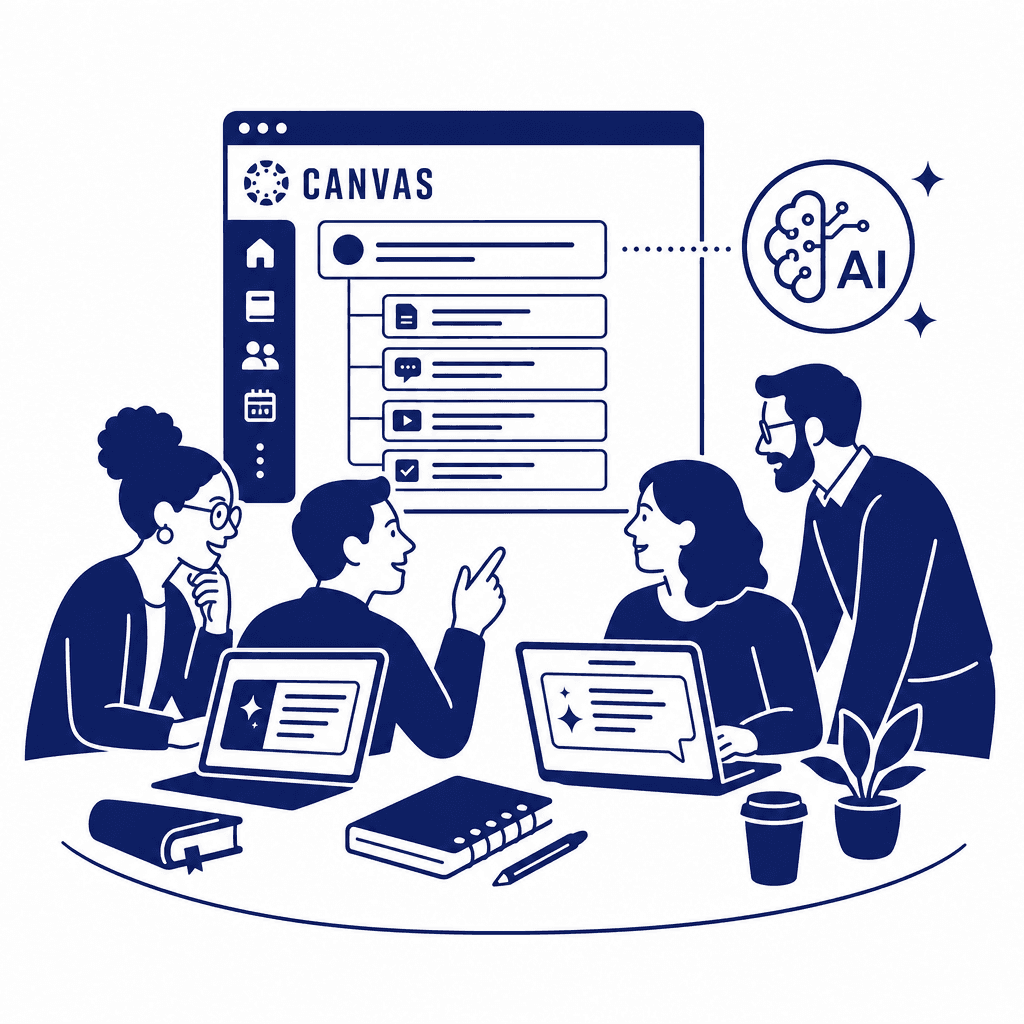
As technology reshapes education, integrating AI tools within platforms like Canvas is crucial for effective course design. This article explores a framework that empowers educators to align AI-generated course content with pedagogical best practices, enhancing engagement and learning outcomes in the digital age.
Understanding AI in Education
AI in education serves as a transformative force, reshaping how educators engage with students and design courses. The integration of AI tools enhances pedagogical approaches, enabling personalized learning experiences that align with individual student needs. For instance, intelligent tutoring systems can analyze learner data to deliver tailored feedback, while AI-driven analytics enable educators to track student progress and identify areas for improvement. However, the implementation of AI also presents challenges. Issues such as data privacy, algorithmic bias, and the potential for over-reliance on technology must be carefully considered. In practice, AI has been effectively utilized in various educational settings. For example, adaptive learning platforms use AI algorithms to adjust content based on students' interactions, thereby supporting differentiated instruction. Furthermore, virtual assistants powered by AI can facilitate administrative tasks, allowing educators more time to focus on pedagogy and student engagement. Ethical implications also warrant attention; educators must ensure that AI tools reinforce equity and access rather than exacerbate existing disparities. By integrating AI thoughtfully into the educational framework, we can create enriching learning environments that prioritize student-centered outcomes.
The Basics of Canvas LMS
Canvas LMS is a leading Learning Management System (LMS) that plays a pivotal role in modern education. Widely adopted across various educational institutions, its features are designed to enhance course design and delivery. With its user-friendly interface, educators can create structured course modules that facilitate organized learning pathways for students. These modules support clear navigation, allowing students to engage deeply with content. Assessments within Canvas are robust, enabling educators to design various evaluation types, such as quizzes, assignments, and peer reviews. This versatility ensures that assessments align with course objectives, fostering a comprehensive understanding of material. The integration of multimedia resources is another significant feature, as instructors can embed videos, podcasts, and interactive elements, catering to diverse learning styles. Collaboration is at the heart of Canvas. The platform's discussion boards, group projects, and real-time feedback tools create an interactive environment where educators and students can share ideas and support one another’s learning journeys. By facilitating communication and cooperation, Canvas fosters a community that not only motivates learners but also enriches the educational experience through shared insights and peer learning. As educators increasingly leverage AI tools within Canvas, understanding these foundational elements becomes essential for creating effective, engaging, and student-centered learning experiences.
Pedagogical Best Practices
Incorporating strong pedagogical principles into course design is essential for creating meaningful and engaging learning experiences. Central to this is the concept of **backward design**, where educators start with the end in mind—defining clear learning objectives, and then constructing assessments and learning activities that lead students to achieve these goals. For instance, if the objective is to enhance critical thinking on specific topics, assessments could involve case studies or discussions that require students to apply these skills in realistic scenarios. Aligning learning objectives with assessments ensures that evaluation measures student understanding accurately. This alignment can be facilitated through the use of AI tools, which can provide data-driven insights into learner engagement and performance. For example, adaptive quizzes generated by AI can gauge student mastery and adjust difficulty levels in real-time, enhancing the learning experience. Engaging learners is another crucial component, achieved by integrating active learning strategies like group projects or peer reviews. In the context of AI, tools can facilitate group collaboration by recommending team members based on shared interests or academic strengths. Thus, employing these pedagogical best practices within Canvas enriches the learning environment and creates a supportive framework for student success, optimizing the potential of AI tools in the educational landscape.
Integrating AI Tools into Course Design
Integrating AI tools in the Canvas course design process can revolutionize how educators create engaging and effective learning experiences. By harnessing AI capabilities, educators can streamline content generation while maintaining academic rigor. When developing course materials, instructors can utilize AI to design quizzes and assignments that are adaptive to student needs, ensuring all learners are adequately challenged. For instance, AI can analyze student performance data to suggest personalized learning pathways. This allows for differentiation in instruction, enabling students to engage with materials at their own level and pace. When generating quizzes, educators can leverage AI tools to create varied question types—multiple choice, short answer, and scenario-based—thus enhancing assessment diversity. However, it is essential to balance AI-generated content with human oversight to maintain quality. Educators should review AI outputs for clarity, relevance, and alignment with learning objectives to ensure they uphold academic standards. Implementing a feedback loop can strengthen this process; instructors can refine the AI prompts based on student outcomes, bringing an iterative approach to course design that is responsive and data-informed. This strategic integration of AI ensures that the learning environment remains student-centered and pedagogically sound, thus enriching the educational experience in Canvas.
Strategic Prompt Engineering for Engaging Content
Prompt engineering plays a pivotal role in harnessing AI's capabilities for producing engaging and effective educational content tailored for Canvas. By articulating precise prompts, educators ensure that AI-generated materials not only meet pedagogical objectives but also resonate with diverse learning styles. To create high-quality content, consider incorporating elements such as specific learning outcomes, student characteristics, and preferred teaching methods into your prompts. For example, instead of prompting AI to "Create a lesson on ecosystems," a more effective approach might be, "Generate an interactive lesson on ecosystems aimed at high school students, emphasizing visual learning and group activities." This specificity guides AI to develop content that is not only relevant but also engaging and aligned with the learners' needs. Furthermore, employing a variety of prompt structures can lead to richer outcomes. Use prompts that encourage AI to include questions, case studies, or real-world applications relevant to the course material. For instance, "Design a project-based assessment on ecosystems that requires students to investigate local biodiversity," encourages a hands-on approach that fosters deeper understanding. Crafting thoughtful prompts aligns with the principles of instructional design, ensuring that AI tools enhance the student-centered learning experience while maintaining academic rigor within the Canvas LMS.
Evaluating AI-Generated Content
Assessing the effectiveness and quality of AI-generated course content is crucial for ensuring that it meets pedagogical best practices and enhances student learning. Educators must establish clear metrics for evaluation, focusing on dimensions such as student engagement, learning outcomes, and feedback. Student engagement can be gauged through analytics in Canvas, such as participation rates in discussions, course completion statistics, and interaction with multimedia resources. Effective AI-generated content should foster active learning, prompting students to engage not just with the material, but also with their peers and instructors. Learning outcomes should align with established course objectives. Educators can use formative assessments, quizzes, and projects to evaluate if the AI-generated materials help achieve the desired skills and knowledge. Continuous feedback loops from students can provide insights into their experience with the course content, revealing areas where AI tools may need refinement. Moreover, implementing a cycle of continuous improvement is essential. By regularly revisiting and iterating on the AI-generated content based on the collected metrics, educators can enhance the effectiveness of the learning experience in Canvas, ultimately leading to more student-centered and impactful educational offerings.
Conclusions
In conclusion, leveraging AI tools within Canvas provides educators with innovative opportunities to create engaging and effective learning experiences. By applying the pedagogical framework outlined in this article, educators can ensure that AI-powered course generation aligns with best practices, fostering a student-centered approach to learning.
Understanding AI in Education
AI in education serves as a transformative force, reshaping how educators engage with students and design courses. The integration of AI tools enhances pedagogical approaches, enabling personalized learning experiences that align with individual student needs. For instance, intelligent tutoring systems can analyze learner data to deliver tailored feedback, while AI-driven analytics enable educators to track student progress and identify areas for improvement. However, the implementation of AI also presents challenges. Issues such as data privacy, algorithmic bias, and the potential for over-reliance on technology must be carefully considered. In practice, AI has been effectively utilized in various educational settings. For example, adaptive learning platforms use AI algorithms to adjust content based on students' interactions, thereby supporting differentiated instruction. Furthermore, virtual assistants powered by AI can facilitate administrative tasks, allowing educators more time to focus on pedagogy and student engagement. Ethical implications also warrant attention; educators must ensure that AI tools reinforce equity and access rather than exacerbate existing disparities. By integrating AI thoughtfully into the educational framework, we can create enriching learning environments that prioritize student-centered outcomes.
The Basics of Canvas LMS
Canvas LMS is a leading Learning Management System (LMS) that plays a pivotal role in modern education. Widely adopted across various educational institutions, its features are designed to enhance course design and delivery. With its user-friendly interface, educators can create structured course modules that facilitate organized learning pathways for students. These modules support clear navigation, allowing students to engage deeply with content. Assessments within Canvas are robust, enabling educators to design various evaluation types, such as quizzes, assignments, and peer reviews. This versatility ensures that assessments align with course objectives, fostering a comprehensive understanding of material. The integration of multimedia resources is another significant feature, as instructors can embed videos, podcasts, and interactive elements, catering to diverse learning styles. Collaboration is at the heart of Canvas. The platform's discussion boards, group projects, and real-time feedback tools create an interactive environment where educators and students can share ideas and support one another’s learning journeys. By facilitating communication and cooperation, Canvas fosters a community that not only motivates learners but also enriches the educational experience through shared insights and peer learning. As educators increasingly leverage AI tools within Canvas, understanding these foundational elements becomes essential for creating effective, engaging, and student-centered learning experiences.
Pedagogical Best Practices
Incorporating strong pedagogical principles into course design is essential for creating meaningful and engaging learning experiences. Central to this is the concept of **backward design**, where educators start with the end in mind—defining clear learning objectives, and then constructing assessments and learning activities that lead students to achieve these goals. For instance, if the objective is to enhance critical thinking on specific topics, assessments could involve case studies or discussions that require students to apply these skills in realistic scenarios. Aligning learning objectives with assessments ensures that evaluation measures student understanding accurately. This alignment can be facilitated through the use of AI tools, which can provide data-driven insights into learner engagement and performance. For example, adaptive quizzes generated by AI can gauge student mastery and adjust difficulty levels in real-time, enhancing the learning experience. Engaging learners is another crucial component, achieved by integrating active learning strategies like group projects or peer reviews. In the context of AI, tools can facilitate group collaboration by recommending team members based on shared interests or academic strengths. Thus, employing these pedagogical best practices within Canvas enriches the learning environment and creates a supportive framework for student success, optimizing the potential of AI tools in the educational landscape.
Integrating AI Tools into Course Design
Integrating AI tools in the Canvas course design process can revolutionize how educators create engaging and effective learning experiences. By harnessing AI capabilities, educators can streamline content generation while maintaining academic rigor. When developing course materials, instructors can utilize AI to design quizzes and assignments that are adaptive to student needs, ensuring all learners are adequately challenged. For instance, AI can analyze student performance data to suggest personalized learning pathways. This allows for differentiation in instruction, enabling students to engage with materials at their own level and pace. When generating quizzes, educators can leverage AI tools to create varied question types—multiple choice, short answer, and scenario-based—thus enhancing assessment diversity. However, it is essential to balance AI-generated content with human oversight to maintain quality. Educators should review AI outputs for clarity, relevance, and alignment with learning objectives to ensure they uphold academic standards. Implementing a feedback loop can strengthen this process; instructors can refine the AI prompts based on student outcomes, bringing an iterative approach to course design that is responsive and data-informed. This strategic integration of AI ensures that the learning environment remains student-centered and pedagogically sound, thus enriching the educational experience in Canvas.
Strategic Prompt Engineering for Engaging Content
Prompt engineering plays a pivotal role in harnessing AI's capabilities for producing engaging and effective educational content tailored for Canvas. By articulating precise prompts, educators ensure that AI-generated materials not only meet pedagogical objectives but also resonate with diverse learning styles. To create high-quality content, consider incorporating elements such as specific learning outcomes, student characteristics, and preferred teaching methods into your prompts. For example, instead of prompting AI to "Create a lesson on ecosystems," a more effective approach might be, "Generate an interactive lesson on ecosystems aimed at high school students, emphasizing visual learning and group activities." This specificity guides AI to develop content that is not only relevant but also engaging and aligned with the learners' needs. Furthermore, employing a variety of prompt structures can lead to richer outcomes. Use prompts that encourage AI to include questions, case studies, or real-world applications relevant to the course material. For instance, "Design a project-based assessment on ecosystems that requires students to investigate local biodiversity," encourages a hands-on approach that fosters deeper understanding. Crafting thoughtful prompts aligns with the principles of instructional design, ensuring that AI tools enhance the student-centered learning experience while maintaining academic rigor within the Canvas LMS.
Evaluating AI-Generated Content
Assessing the effectiveness and quality of AI-generated course content is crucial for ensuring that it meets pedagogical best practices and enhances student learning. Educators must establish clear metrics for evaluation, focusing on dimensions such as student engagement, learning outcomes, and feedback. Student engagement can be gauged through analytics in Canvas, such as participation rates in discussions, course completion statistics, and interaction with multimedia resources. Effective AI-generated content should foster active learning, prompting students to engage not just with the material, but also with their peers and instructors. Learning outcomes should align with established course objectives. Educators can use formative assessments, quizzes, and projects to evaluate if the AI-generated materials help achieve the desired skills and knowledge. Continuous feedback loops from students can provide insights into their experience with the course content, revealing areas where AI tools may need refinement. Moreover, implementing a cycle of continuous improvement is essential. By regularly revisiting and iterating on the AI-generated content based on the collected metrics, educators can enhance the effectiveness of the learning experience in Canvas, ultimately leading to more student-centered and impactful educational offerings.
Conclusions
In conclusion, leveraging AI tools within Canvas provides educators with innovative opportunities to create engaging and effective learning experiences. By applying the pedagogical framework outlined in this article, educators can ensure that AI-powered course generation aligns with best practices, fostering a student-centered approach to learning.