
Implementing AI Across the Canvas Curriculum: A Phased Approach for Educators
Explore practical strategies and a step-by-step guide for integrating AI tools and methodologies throughout various aspects of a Canvas-based curriculum, from assignment design and feedback mechanisms to personalized learning activities and assessment support. This article will help educators move beyond isolated AI tools to a more cohesive and impactful AI-augmented learning environment.
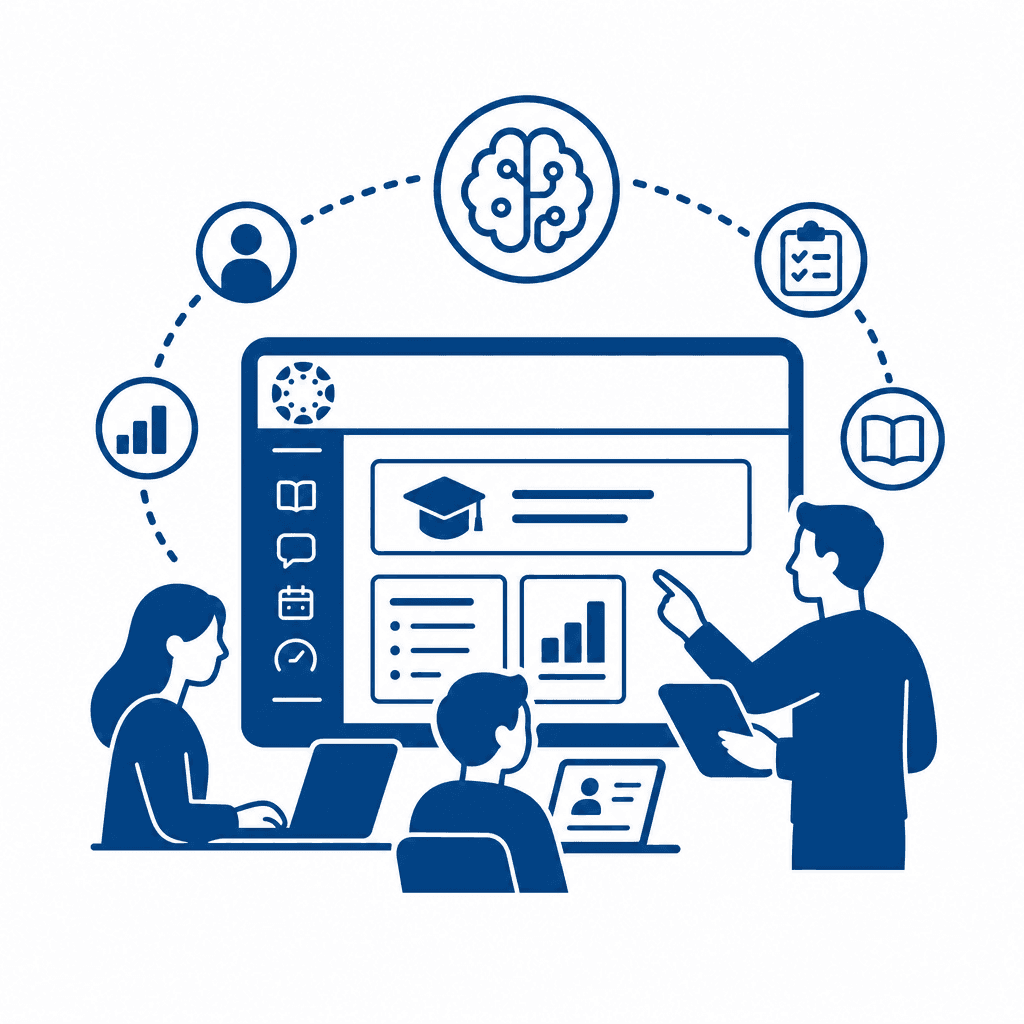
The integration of artificial intelligence in education holds transformative potential, particularly within platforms like Canvas LMS. This article explores a phased approach for educators to effectively embed AI tools into their curriculum design and instructional strategies, leading to enhanced learning experiences and outcomes for students.
Understanding AI in Education
Artificial intelligence is rapidly transforming the educational landscape, enhancing the ways in which educators deliver content and engage students. AI technologies encompass a wide spectrum of applications that can support teaching and learning by providing personalized experiences and automating routine tasks. Key concepts in AI for educational technology include natural language processing, machine learning, and data analytics, all of which serve to create more adaptive learning environments. AI's benefits are numerous, including the ability to tailor educational experiences to meet individual student needs, facilitate timely feedback, and engage learners in innovative ways. For instance, AI-driven platforms like intelligent tutoring systems can offer personalized instructional support, guiding students through challenging concepts at their own pace. Other applications, such as automated grading systems, free up educators' time, allowing them to focus on higher-level instructional strategies. Moreover, the impact of AI on student engagement and achievement can be profound. By employing predictive analytics, educators can identify at-risk students early and intervene proactively. As AI applications continue to be integrated into educational settings, they pave the way for more effective, data-driven strategies that ultimately enhance teaching outcomes and foster student success.
Overview of Canvas LMS
Canvas LMS is a robust learning management system designed to facilitate an engaging and efficient educational experience for both instructors and students. Offering a user-friendly interface, Canvas provides essential features such as course creation, content sharing, grading tools, and communication channels. The platform's ability to integrate multimedia resources enhances curriculum design by allowing educators to create diverse learning materials, including text, video, and interactive elements. In terms of instructional strategies, Canvas supports various pedagogical approaches, including blended learning and fully online courses. Features like discussion boards, quizzes, and peer assessments promote collaborative learning, critical thinking, and continuous feedback. As instructors design curriculum within Canvas, they can leverage its analytics capabilities to track student performance and engagement, informing instructional adjustments as needed. Integrating AI tools into the Canvas framework can significantly amplify educational outcomes. AI-powered features, such as adaptive learning paths and intelligent tutoring systems, can personalize the learning experience, addressing individual student needs effectively. By incorporating AI, educators can create a more cohesive and impactful learning environment, enhancing both instructional delivery and assessment practices, ultimately transforming the way students engage with their coursework.
Phased Approach to AI Integration
Integrating AI into the Canvas curriculum requires a structured, phased approach to ensure a smooth transition and maximize educational impact. The first step is to conduct a **needs analysis**. Educators should assess the specific challenges and objectives of their curriculum, identifying areas where AI could enhance teaching and learning. This provides a clear rationale for integration and helps tailor AI tools to address existing gaps. Once needs are identified, the next phase is **tool selection**. With numerous AI tools available, it is crucial to choose those that align with the curriculum goals and are compatible with Canvas. Evaluate product features, ease of integration, and support resources to ensure the chosen tools will deliver effective solutions for students and educators alike. Following tool selection, initiate **training** sessions for faculty and staff. Providing comprehensive professional development ensures that educators are equipped to use AI tools effectively in their instruction. After training, implement **pilot programs** to test the chosen tools in select courses. Gathering feedback during this phase is essential for understanding user experience and identifying potential issues. Finally, progress to **full-scale deployment**, continually emphasizing the importance of **evaluation and feedback**. Regularly assess the effectiveness of AI tools and their impact on student outcomes, making iterative adjustments based on data and user insights. This ongoing cycle of evaluation ensures that AI integration remains relevant and effective in enhancing the Canvas curriculum.
Designing AI-Enhanced Assignments
Designing assignments that leverage AI tools within the Canvas LMS can significantly enhance the learning experience. By integrating AI into assignment design, educators can create personalized learning tasks and adaptive assessments that cater to individual student needs. For instance, assignments involving data analysis can employ AI algorithms to tailor challenges based on a student's performance history, enabling them to tackle increasingly complex problems as they progress. Another effective strategy is to utilize AI for generating diverse question types within assessments. For example, machine learning algorithms can create adaptive quizzes that adjust in real-time, offering harder questions to advanced learners while providing easier content for those needing additional support. This not only maintains engagement but also fosters a growth mindset by allowing students to learn at their own pace. When designing these AI-enhanced assignments, educators should focus on clear learning objectives and incorporate multimedia elements that resonate with different learning styles. Tools that facilitate creativity, such as AI-driven content generators, can also enrich project-based assignments. By employing these strategies, assignments become more relevant and engaging, ensuring they align with the educational technology landscape and contribute to a comprehensive AI-augmented learning environment.
Feedback Mechanisms and AI
Incorporating AI into feedback mechanisms within the Canvas curriculum can substantially enhance the learning experience by making it more timely and personalized. Automated grading is a pivotal component of this integration, where AI systems can quickly assess assignments and provide immediate scores, thereby reducing grading time for educators. This allows teachers to focus on more intricate aspects of student engagement while ensuring that all submissions are evaluated consistently. Additionally, personalized feedback generated by AI tools can cater to individual student needs. For instance, AI-powered platforms can analyze a student's historical performance and areas of struggle, automatically composing tailored feedback that addresses specific weaknesses and provides actionable advice for improvement. This approach not only fosters a deeper understanding of the material but also motivates students by making them feel valued and understood. Moreover, AI can facilitate effective communication between educators and students. Tools like chatbots can answer frequently asked questions regarding assignments or course expectations, while AI-driven analytics can flag students who may require additional support, allowing educators to intervene promptly. By leveraging these advanced feedback mechanisms, educators can create a more dynamic, responsive learning environment that promotes sustained engagement and academic growth.
Personalized Learning and Assessment Support
Integrating AI into personalized learning and assessment support within a Canvas-based curriculum requires a nuanced understanding of student needs, preferences, and learning styles. AI's capacity to analyze vast amounts of data plays a pivotal role in tailoring educational experiences. By harnessing learning analytics, educators can identify individual learning gaps and adapt instructional strategies accordingly. For instance, AI tools can track student performance in real time, spotlighting areas where learners struggle. This data can inform curricular adjustments, allowing instructors to create targeted interventions. For example, if a student consistently underperforms in a specific topic area—like algebraic concepts—AI can recommend supplemental resources or customized learning modules tailored to that student's needs. Moreover, AI can facilitate adaptive assessments, dynamically adjusting difficulty based on student responses. This ensures that assessments are neither too challenging nor too simplistic, engaging students at their appropriate skill levels. Additionally, educators can leverage AI-driven analytics to review aggregate data trends, refining their teaching practices and making more informed decisions regarding overall curriculum design. Through this data-driven approach, personalized learning shifts from a one-size-fits-all model to a more responsive, individualized experience that fosters student engagement and achievement.
Conclusions
In conclusion, integrating AI across the Canvas curriculum empowers educators to create enriching learning environments that extend beyond traditional methods. By following a phased approach, educators can leverage AI tools to enhance assignment design, provide prompt feedback, personalize learning, and support assessments, ultimately fostering a dynamic and engaging educational experience.
Understanding AI in Education
Artificial intelligence is rapidly transforming the educational landscape, enhancing the ways in which educators deliver content and engage students. AI technologies encompass a wide spectrum of applications that can support teaching and learning by providing personalized experiences and automating routine tasks. Key concepts in AI for educational technology include natural language processing, machine learning, and data analytics, all of which serve to create more adaptive learning environments. AI's benefits are numerous, including the ability to tailor educational experiences to meet individual student needs, facilitate timely feedback, and engage learners in innovative ways. For instance, AI-driven platforms like intelligent tutoring systems can offer personalized instructional support, guiding students through challenging concepts at their own pace. Other applications, such as automated grading systems, free up educators' time, allowing them to focus on higher-level instructional strategies. Moreover, the impact of AI on student engagement and achievement can be profound. By employing predictive analytics, educators can identify at-risk students early and intervene proactively. As AI applications continue to be integrated into educational settings, they pave the way for more effective, data-driven strategies that ultimately enhance teaching outcomes and foster student success.
Overview of Canvas LMS
Canvas LMS is a robust learning management system designed to facilitate an engaging and efficient educational experience for both instructors and students. Offering a user-friendly interface, Canvas provides essential features such as course creation, content sharing, grading tools, and communication channels. The platform's ability to integrate multimedia resources enhances curriculum design by allowing educators to create diverse learning materials, including text, video, and interactive elements. In terms of instructional strategies, Canvas supports various pedagogical approaches, including blended learning and fully online courses. Features like discussion boards, quizzes, and peer assessments promote collaborative learning, critical thinking, and continuous feedback. As instructors design curriculum within Canvas, they can leverage its analytics capabilities to track student performance and engagement, informing instructional adjustments as needed. Integrating AI tools into the Canvas framework can significantly amplify educational outcomes. AI-powered features, such as adaptive learning paths and intelligent tutoring systems, can personalize the learning experience, addressing individual student needs effectively. By incorporating AI, educators can create a more cohesive and impactful learning environment, enhancing both instructional delivery and assessment practices, ultimately transforming the way students engage with their coursework.
Phased Approach to AI Integration
Integrating AI into the Canvas curriculum requires a structured, phased approach to ensure a smooth transition and maximize educational impact. The first step is to conduct a **needs analysis**. Educators should assess the specific challenges and objectives of their curriculum, identifying areas where AI could enhance teaching and learning. This provides a clear rationale for integration and helps tailor AI tools to address existing gaps. Once needs are identified, the next phase is **tool selection**. With numerous AI tools available, it is crucial to choose those that align with the curriculum goals and are compatible with Canvas. Evaluate product features, ease of integration, and support resources to ensure the chosen tools will deliver effective solutions for students and educators alike. Following tool selection, initiate **training** sessions for faculty and staff. Providing comprehensive professional development ensures that educators are equipped to use AI tools effectively in their instruction. After training, implement **pilot programs** to test the chosen tools in select courses. Gathering feedback during this phase is essential for understanding user experience and identifying potential issues. Finally, progress to **full-scale deployment**, continually emphasizing the importance of **evaluation and feedback**. Regularly assess the effectiveness of AI tools and their impact on student outcomes, making iterative adjustments based on data and user insights. This ongoing cycle of evaluation ensures that AI integration remains relevant and effective in enhancing the Canvas curriculum.
Designing AI-Enhanced Assignments
Designing assignments that leverage AI tools within the Canvas LMS can significantly enhance the learning experience. By integrating AI into assignment design, educators can create personalized learning tasks and adaptive assessments that cater to individual student needs. For instance, assignments involving data analysis can employ AI algorithms to tailor challenges based on a student's performance history, enabling them to tackle increasingly complex problems as they progress. Another effective strategy is to utilize AI for generating diverse question types within assessments. For example, machine learning algorithms can create adaptive quizzes that adjust in real-time, offering harder questions to advanced learners while providing easier content for those needing additional support. This not only maintains engagement but also fosters a growth mindset by allowing students to learn at their own pace. When designing these AI-enhanced assignments, educators should focus on clear learning objectives and incorporate multimedia elements that resonate with different learning styles. Tools that facilitate creativity, such as AI-driven content generators, can also enrich project-based assignments. By employing these strategies, assignments become more relevant and engaging, ensuring they align with the educational technology landscape and contribute to a comprehensive AI-augmented learning environment.
Feedback Mechanisms and AI
Incorporating AI into feedback mechanisms within the Canvas curriculum can substantially enhance the learning experience by making it more timely and personalized. Automated grading is a pivotal component of this integration, where AI systems can quickly assess assignments and provide immediate scores, thereby reducing grading time for educators. This allows teachers to focus on more intricate aspects of student engagement while ensuring that all submissions are evaluated consistently. Additionally, personalized feedback generated by AI tools can cater to individual student needs. For instance, AI-powered platforms can analyze a student's historical performance and areas of struggle, automatically composing tailored feedback that addresses specific weaknesses and provides actionable advice for improvement. This approach not only fosters a deeper understanding of the material but also motivates students by making them feel valued and understood. Moreover, AI can facilitate effective communication between educators and students. Tools like chatbots can answer frequently asked questions regarding assignments or course expectations, while AI-driven analytics can flag students who may require additional support, allowing educators to intervene promptly. By leveraging these advanced feedback mechanisms, educators can create a more dynamic, responsive learning environment that promotes sustained engagement and academic growth.
Personalized Learning and Assessment Support
Integrating AI into personalized learning and assessment support within a Canvas-based curriculum requires a nuanced understanding of student needs, preferences, and learning styles. AI's capacity to analyze vast amounts of data plays a pivotal role in tailoring educational experiences. By harnessing learning analytics, educators can identify individual learning gaps and adapt instructional strategies accordingly. For instance, AI tools can track student performance in real time, spotlighting areas where learners struggle. This data can inform curricular adjustments, allowing instructors to create targeted interventions. For example, if a student consistently underperforms in a specific topic area—like algebraic concepts—AI can recommend supplemental resources or customized learning modules tailored to that student's needs. Moreover, AI can facilitate adaptive assessments, dynamically adjusting difficulty based on student responses. This ensures that assessments are neither too challenging nor too simplistic, engaging students at their appropriate skill levels. Additionally, educators can leverage AI-driven analytics to review aggregate data trends, refining their teaching practices and making more informed decisions regarding overall curriculum design. Through this data-driven approach, personalized learning shifts from a one-size-fits-all model to a more responsive, individualized experience that fosters student engagement and achievement.
Conclusions
In conclusion, integrating AI across the Canvas curriculum empowers educators to create enriching learning environments that extend beyond traditional methods. By following a phased approach, educators can leverage AI tools to enhance assignment design, provide prompt feedback, personalize learning, and support assessments, ultimately fostering a dynamic and engaging educational experience.