Implementing Backward Design in Canvas - A Step-by-Step Guide for Course Creators
Learn how to apply the principles of Backward Design to your Canvas courses, starting with clear learning outcomes and designing assessments and activities that truly align. This guide provides practical steps for instructional designers and educators to create cohesive, outcomes-driven learning experiences.
In today's educational landscape, effective course design is crucial for learner success. This guide explores the principles of Backward Design and how they can be applied within Canvas LMS. Focusing on cohesive learning outcomes and aligned assessments, educators will learn to create engaging learning experiences that promote student achievement.
Understanding Backward Design
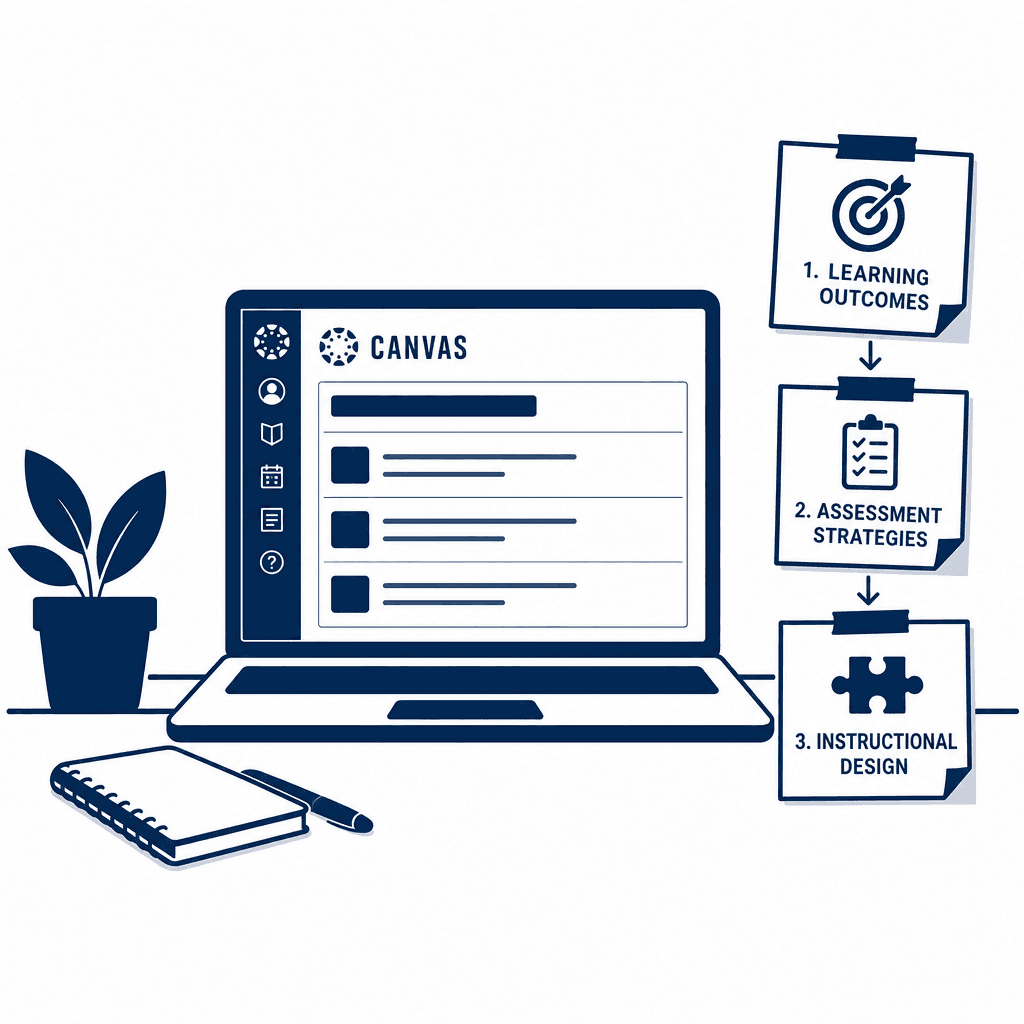
Backward Design is an instructional framework that prioritizes the end goals of education by starting with clear learning outcomes before designing assessments and activities. This approach contrasts significantly with traditional methods, which often begin with course content and lectures. By first defining what students should know and be able to do by the end of a course, educators can create a more focused and cohesive learning experience. The significance of Backward Design lies in its ability to create alignment between learning outcomes, assessments, and instructional strategies. For example, if the desired outcome is for students to analyze complex texts, assessments should include tasks requiring textual analysis rather than rote memorization. This alignment helps ensure that students engage with the material in meaningful ways, increasing their motivation and promoting deeper learning. Implementing Backward Design can lead to enhanced student engagement. When learning activities are crafted with specific outcomes in mind, students can see the relevance of their learning, fostering a more active participation in their education. Ultimately, this approach encourages a clear roadmap for both educators and learners, supporting an effective and impactful educational journey.
Identifying Clear Learning Outcomes
In the process of implementing Backward Design, identifying clear and measurable learning outcomes is essential for guiding the development of a course in Canvas. These outcomes should articulate what students are expected to know, understand, or be able to do by the end of the course. The clarity of these objectives not only enhances student engagement but also aligns with both institutional goals and individual learner needs. To craft effective learning outcomes, begin with the following steps: 1. **Start with Institutional Goals**: Review your institution’s mission and any specific curriculum guidelines to ensure that your outcomes support larger educational aims. 2. **Identify Student Needs**: Consider your learners’ backgrounds, interests, and skill levels. This will help make the objectives relevant and achievable. 3. **Use Action Verbs**: Frame your learning outcomes using specific, measurable action verbs that clearly describe what students will do. For example, instead of saying "understand," use "analyze," "create," or "evaluate." 4. **Draft and Refine**: Write preliminary outcomes and share them with colleagues for feedback. Use this input to refine and clarify them. 5. **Align with Assessments**: Ensure that your outcomes can directly inform the types of assessments and instructional methods you will use, creating a cohesive educational experience. By following these steps, course creators can establish a strong foundation for their Canvas courses, ultimately leading to more focused and impactful learning experiences.
Designing Assessments for Alignment
Assessments serve as the crucial bridge connecting learning outcomes and student performance, providing insights into whether students have achieved the desired objectives. When designing assessments in Canvas, it is vital to ensure they are reflective of the clear and measurable learning outcomes set in the previous chapter. Begin by distinguishing between formative and summative assessments. Formative assessments, such as quizzes or brief reflections, offer continual feedback and insights into student understanding throughout the course, allowing for adjustments in instructional strategies. In contrast, summative assessments, like final projects or exams, evaluate student learning at the end of a unit or course. To create valid and reliable assessments, follow these guidelines: 1. **Align Assessments with Outcomes**: Clearly demonstrate how each assessment directly measures specific learning outcomes. 2. **Utilize a Variety of Formats**: Incorporate diverse assessment types, including multiple-choice questions, essays, and performance tasks, to gauge understanding from multiple angles. 3. **Establish Clear Criteria**: Develop rubrics that outline the expectations and standards for student performance, ensuring transparency and consistency in grading. By adhering to these principles, you can create assessments within Canvas that not only evaluate understanding but also enhance learning by providing opportunities for reflection and growth.
Creating Engaging Learning Activities
Engaging learning activities play a crucial role in achieving desired learning outcomes by providing students with meaningful opportunities to apply their knowledge and skills. Incorporating various instructional strategies within Canvas can enhance student engagement and deepen learning. **Collaborative projects** encourage students to work together, fostering a sense of community and teamwork. By engaging in group tasks, learners can share diverse perspectives, ultimately leading to richer discussions and a deeper understanding of the subject matter. **Discussions** are another effective strategy. Utilizing Canvas discussion boards allows students to reflect on course content, engage with their peers, and articulate their thoughts in a structured environment. These discussions can be designed to prompt critical thinking, encouraging students to analyze and synthesize information. Incorporating **interactive multimedia elements**, such as videos, simulations, and gamified content, can significantly boost engagement. When students interact with diverse media, they often find the material more relatable and easier to grasp, enhancing comprehension. By thoughtfully designing these activities in alignment with established learning outcomes, course creators can cultivate a dynamic and effective learning environment that not only meets educational goals but also inspires and motivates students to actively participate in their own learning journey.
Integrating Technology and Tools in Canvas
Integrating technology and tools effectively within Canvas can elevate course design and enhance learner engagement. Using Canvas’s rich array of tools, such as quizzes, discussion forums, and multimedia resources, allows educators to create a dynamic environment that aligns with desired learning outcomes. Quizzes can be crafted not just as assessment tools, but as learning experiences themselves. By employing varied question types—such as multiple choice, short answer, or essay questions—educators can assess different levels of understanding and encourage critical thinking. Customizing feedback for each quiz question can further align assessments with learning objectives, ensuring students understand where they excelled and where they need improvement. Discussion forums in Canvas offer opportunities for peer-to-peer interaction, enhancing collaborative learning. They can be structured around specific prompts that relate back to course outcomes, encouraging students to engage in meaningful dialogue that deepens their understanding of key concepts. Additionally, integrating multimedia resources—such as videos, podcasts, and interactive simulations—can cater to diverse learning styles and keep students engaged. These elements should be purposefully chosen to complement the activities designed to align with the learning outcomes, ensuring a cohesive learning experience that motivates and inspires students to achieve their objectives.
Reflecting and Revising Course Design
Incorporating reflection and revision into the Backward Design process is essential for creating a high-quality learning experience in Canvas. Continuous reflection on course design allows educators to critically analyze whether the intended learning outcomes are being met. After each course iteration, gathering and evaluating student feedback provides invaluable insights into the effectiveness of the assessments and learning activities implemented. Strategies such as conducting anonymous surveys or engaging in focus group discussions can elicit genuine student perceptions about course content and delivery. Additionally, analyzing assessment results can reveal trends in student understanding or areas where misconceptions arise. By closely examining this data, course creators can identify gaps between learning outcomes and student performance, guiding necessary adjustments. Creating a culture of continuous improvement not only cultivates a responsive learning environment but also empowers educators to make informed instructional decisions. Regularly revisiting and revising course materials encourages adaptability, ensuring that content remains relevant and effective. By embracing this iterative process, educators can foster a dynamic educational experience that consistently aligns with student needs, driving better outcomes and enhancing future course design.
Conclusions
By adopting the Backward Design approach in your Canvas courses, you ensure that all aspects of your course—from learning outcomes to assessments—are purposefully aligned. This not only enhances the learning experience but also fosters student engagement and success, making the educational journey more impactful and effective.
Understanding Backward Design
Backward Design is an instructional framework that prioritizes the end goals of education by starting with clear learning outcomes before designing assessments and activities. This approach contrasts significantly with traditional methods, which often begin with course content and lectures. By first defining what students should know and be able to do by the end of a course, educators can create a more focused and cohesive learning experience. The significance of Backward Design lies in its ability to create alignment between learning outcomes, assessments, and instructional strategies. For example, if the desired outcome is for students to analyze complex texts, assessments should include tasks requiring textual analysis rather than rote memorization. This alignment helps ensure that students engage with the material in meaningful ways, increasing their motivation and promoting deeper learning. Implementing Backward Design can lead to enhanced student engagement. When learning activities are crafted with specific outcomes in mind, students can see the relevance of their learning, fostering a more active participation in their education. Ultimately, this approach encourages a clear roadmap for both educators and learners, supporting an effective and impactful educational journey.
Identifying Clear Learning Outcomes
In the process of implementing Backward Design, identifying clear and measurable learning outcomes is essential for guiding the development of a course in Canvas. These outcomes should articulate what students are expected to know, understand, or be able to do by the end of the course. The clarity of these objectives not only enhances student engagement but also aligns with both institutional goals and individual learner needs. To craft effective learning outcomes, begin with the following steps: 1. **Start with Institutional Goals**: Review your institution’s mission and any specific curriculum guidelines to ensure that your outcomes support larger educational aims. 2. **Identify Student Needs**: Consider your learners’ backgrounds, interests, and skill levels. This will help make the objectives relevant and achievable. 3. **Use Action Verbs**: Frame your learning outcomes using specific, measurable action verbs that clearly describe what students will do. For example, instead of saying "understand," use "analyze," "create," or "evaluate." 4. **Draft and Refine**: Write preliminary outcomes and share them with colleagues for feedback. Use this input to refine and clarify them. 5. **Align with Assessments**: Ensure that your outcomes can directly inform the types of assessments and instructional methods you will use, creating a cohesive educational experience. By following these steps, course creators can establish a strong foundation for their Canvas courses, ultimately leading to more focused and impactful learning experiences.
Designing Assessments for Alignment
Assessments serve as the crucial bridge connecting learning outcomes and student performance, providing insights into whether students have achieved the desired objectives. When designing assessments in Canvas, it is vital to ensure they are reflective of the clear and measurable learning outcomes set in the previous chapter. Begin by distinguishing between formative and summative assessments. Formative assessments, such as quizzes or brief reflections, offer continual feedback and insights into student understanding throughout the course, allowing for adjustments in instructional strategies. In contrast, summative assessments, like final projects or exams, evaluate student learning at the end of a unit or course. To create valid and reliable assessments, follow these guidelines: 1. **Align Assessments with Outcomes**: Clearly demonstrate how each assessment directly measures specific learning outcomes. 2. **Utilize a Variety of Formats**: Incorporate diverse assessment types, including multiple-choice questions, essays, and performance tasks, to gauge understanding from multiple angles. 3. **Establish Clear Criteria**: Develop rubrics that outline the expectations and standards for student performance, ensuring transparency and consistency in grading. By adhering to these principles, you can create assessments within Canvas that not only evaluate understanding but also enhance learning by providing opportunities for reflection and growth.
Creating Engaging Learning Activities
Engaging learning activities play a crucial role in achieving desired learning outcomes by providing students with meaningful opportunities to apply their knowledge and skills. Incorporating various instructional strategies within Canvas can enhance student engagement and deepen learning. **Collaborative projects** encourage students to work together, fostering a sense of community and teamwork. By engaging in group tasks, learners can share diverse perspectives, ultimately leading to richer discussions and a deeper understanding of the subject matter. **Discussions** are another effective strategy. Utilizing Canvas discussion boards allows students to reflect on course content, engage with their peers, and articulate their thoughts in a structured environment. These discussions can be designed to prompt critical thinking, encouraging students to analyze and synthesize information. Incorporating **interactive multimedia elements**, such as videos, simulations, and gamified content, can significantly boost engagement. When students interact with diverse media, they often find the material more relatable and easier to grasp, enhancing comprehension. By thoughtfully designing these activities in alignment with established learning outcomes, course creators can cultivate a dynamic and effective learning environment that not only meets educational goals but also inspires and motivates students to actively participate in their own learning journey.
Integrating Technology and Tools in Canvas
Integrating technology and tools effectively within Canvas can elevate course design and enhance learner engagement. Using Canvas’s rich array of tools, such as quizzes, discussion forums, and multimedia resources, allows educators to create a dynamic environment that aligns with desired learning outcomes. Quizzes can be crafted not just as assessment tools, but as learning experiences themselves. By employing varied question types—such as multiple choice, short answer, or essay questions—educators can assess different levels of understanding and encourage critical thinking. Customizing feedback for each quiz question can further align assessments with learning objectives, ensuring students understand where they excelled and where they need improvement. Discussion forums in Canvas offer opportunities for peer-to-peer interaction, enhancing collaborative learning. They can be structured around specific prompts that relate back to course outcomes, encouraging students to engage in meaningful dialogue that deepens their understanding of key concepts. Additionally, integrating multimedia resources—such as videos, podcasts, and interactive simulations—can cater to diverse learning styles and keep students engaged. These elements should be purposefully chosen to complement the activities designed to align with the learning outcomes, ensuring a cohesive learning experience that motivates and inspires students to achieve their objectives.
Reflecting and Revising Course Design
Incorporating reflection and revision into the Backward Design process is essential for creating a high-quality learning experience in Canvas. Continuous reflection on course design allows educators to critically analyze whether the intended learning outcomes are being met. After each course iteration, gathering and evaluating student feedback provides invaluable insights into the effectiveness of the assessments and learning activities implemented. Strategies such as conducting anonymous surveys or engaging in focus group discussions can elicit genuine student perceptions about course content and delivery. Additionally, analyzing assessment results can reveal trends in student understanding or areas where misconceptions arise. By closely examining this data, course creators can identify gaps between learning outcomes and student performance, guiding necessary adjustments. Creating a culture of continuous improvement not only cultivates a responsive learning environment but also empowers educators to make informed instructional decisions. Regularly revisiting and revising course materials encourages adaptability, ensuring that content remains relevant and effective. By embracing this iterative process, educators can foster a dynamic educational experience that consistently aligns with student needs, driving better outcomes and enhancing future course design.
Conclusions
By adopting the Backward Design approach in your Canvas courses, you ensure that all aspects of your course—from learning outcomes to assessments—are purposefully aligned. This not only enhances the learning experience but also fosters student engagement and success, making the educational journey more impactful and effective.