
Integrating AI for Cognitive Load Management in Canvas
Explore practical strategies for instructional designers and educators to leverage AI tools within Canvas LMS to optimize cognitive load for students. This article will provide actionable advice on selecting and implementing AI functionalities (e.g., adaptive feedback, smart content sequencing, personalized prompts) to scaffold complex tasks, reduce extraneous load, and promote deeper understanding and critical thinking in online and blended learning environments.
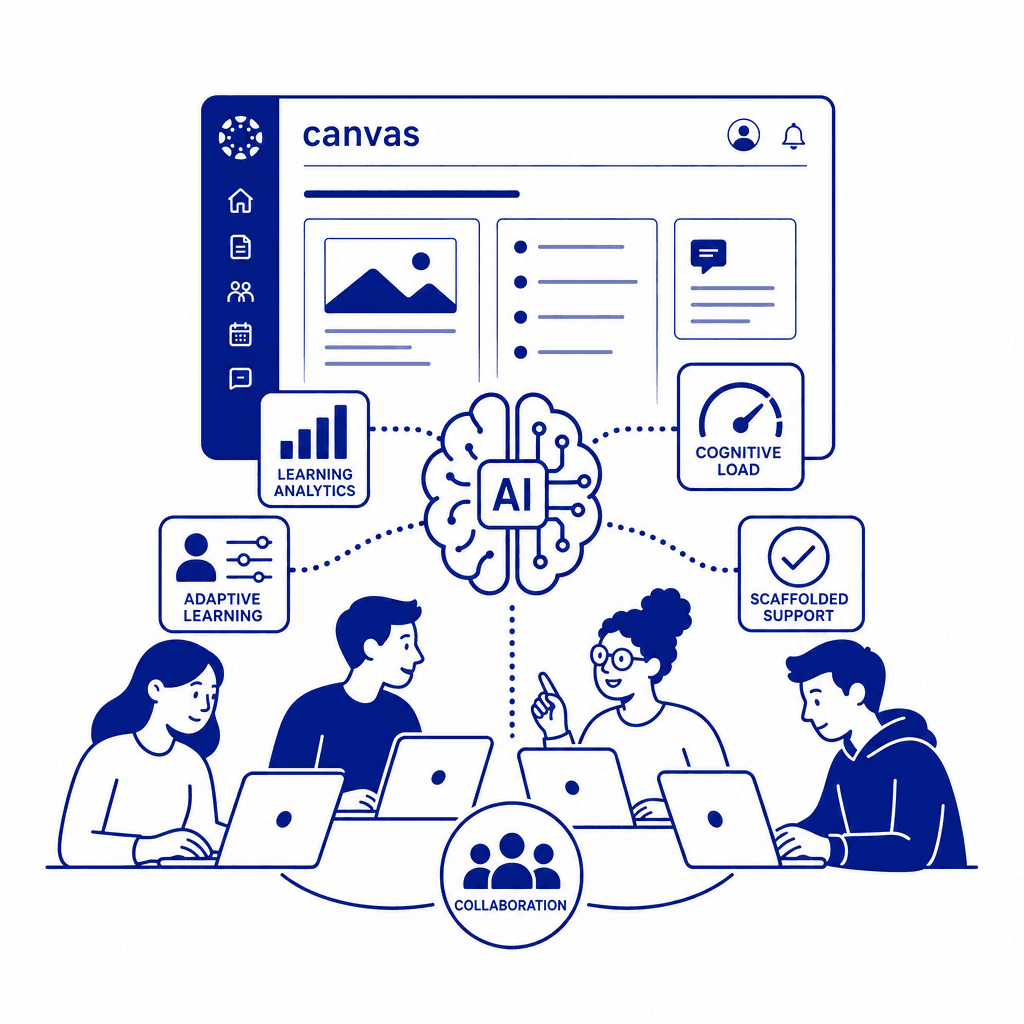
In a digital learning landscape, balancing cognitive load is crucial for student success. This article discusses how educational institutions can utilize AI tools within Canvas LMS to enhance cognitive load management. By integrating adaptive learning strategies and AI-driven features, educators can foster deeper learning and critical thinking among students, paving the way for more effective online and blended educational experiences.
Understanding Cognitive Load Theory
Cognitive Load Theory (CLT) is a critical framework in educational psychology that focuses on the amount of information working memory can hold at one time. Developed by John Sweller, CLT emphasizes that effective learning occurs when cognitive load is managed optimally. Understanding the three types of cognitive load is essential for instructional designers: intrinsic load relates to the inherent difficulty of the material; extraneous load encompasses distractions or poorly designed instructional methods; and germane load involves the mental effort dedicated to processing and integrating information. Reducing extraneous load is crucial for fostering a productive learning environment. For example, clear and concise instructional materials, along with the use of effective visuals, can alleviate cognitive overload caused by extraneous factors. In contrast, recognizing intrinsic load allows educators to scaffold complex tasks appropriately, breaking down challenging concepts into manageable segments that build on students' prior knowledge. Germane load, when maximized, facilitates deeper learning and critical thinking. By designing instructional experiences that encourage cognitive engagement without overwhelming students, educators can significantly enhance learning outcomes. The strategic management of cognitive load is integral to effective instructional design, paving the way for more efficient and meaningful student learning experiences in online and blended environments.
The Role of AI in Enhancing Education
Artificial Intelligence is transforming the educational landscape by providing novel functionalities that cater to the diverse needs of learners. Within the realms of personalized learning experiences, AI can significantly enhance the effectiveness of instructional strategies. For instance, adaptive learning technologies harness algorithms to analyze individual student performance and tailor educational materials accordingly. This approach distinguishes between various cognitive loads and adjusts content complexity based on intrinsic and extraneous factors influencing each learner. AI tools within Learning Management Systems (LMS) like Canvas can facilitate meaningful engagement through features such as real-time analytics, which help educators track student progress and identify areas requiring additional support. For example, personalized feedback systems can guide learners through challenging concepts and offer targeted resources, effectively reducing cognitive overload when tackling complex tasks. Moreover, AI-enhanced orchestration of learning paths allows educators to implement smart content sequencing, ensuring that students encounter materials in an optimized order that aligns with their cognitive abilities. This fosters deeper learning and critical thinking by allowing students to build on prior knowledge at their own pace. By integrating these AI capabilities, educators are empowered to create responsive learning environments that promote autonomy while addressing individual student needs.
Canvas LMS Features for Cognitive Load Management
Canvas LMS is equipped with several features that significantly aid in managing cognitive load for both educators and students. One of the standout tools is **SpeedGrader**, offering instant feedback on student submissions. This immediate response fosters a growth mindset, enabling learners to reflect on their work and make necessary adjustments promptly. Fast feedback loops reduce uncertainty, minimizing extraneous cognitive load associated with awaiting evaluations. **Modules** in Canvas allow instructors to structure content in a logical and sequential manner. By breaking complex topics into smaller, more manageable pieces, educators can assist students in gradually building their knowledge base. This strategic sequencing of content aligns perfectly with cognitive load principles, allowing students to focus deeply on one concept at a time before moving to the next. Additionally, the integration of **quizzes** within Canvas serves as a powerful formative assessment tool. Regular quizzes not only gauge comprehension but also reinforce learning and retention. By designing quizzes that adapt based on previous performance, educators can further tailor the learning experience, ensuring students engage with material that matches their current understanding while avoiding overwhelming them with unnecessary information. These features collectively empower educators to create a more supportive learning environment tailored to cognitive load management principles.
Adaptive Feedback and Smart Content Sequencing
Integrating adaptive feedback and smart content sequencing in Canvas can profoundly enhance the learning experience for students by addressing cognitive load effectively. By utilizing AI-driven functionalities, educators can offer immediate and personalized responses to student submissions, which fosters a supportive environment for learning. For instance, the SpeedGrader tool can be enhanced with AI algorithms that analyze student performance trends over time, allowing instructors to provide feedback tailored not only to the specific submission but also to the student’s learning trajectory. Smart content sequencing can further streamline learning processes by organizing course materials into manageable chunks that align with the students' current understanding. Educators could create modules where concepts are introduced incrementally, with the system suggesting resources or assessments based on student progress. For example, a mathematics course might initially focus on basic algebra concepts before progressively introducing more complex problem-solving tasks, with the AI adapting suggested pathways based on each student’s mastery of prior content. Real-life examples of this can be seen in institutions where Canvas integration has successfully employed these tools, reporting improved student engagement and retention rates. This approach not only promotes deeper learning by ensuring that students are equipped with the necessary foundation before tackling advanced concepts but also helps in managing cognitive load by presenting information in a digestible manner. Ultimately, adaptive feedback and smart content sequencing offer a promising route for educators aiming to enhance instructional design effectively within the Canvas LMS framework.
Creating Personalized Prompts and Scaffolding Tasks
Personalized prompts and task scaffolding serve as essential strategies for reducing cognitive load and enhancing student engagement in educational contexts. Personalized prompts encourage students to think critically by prompting them to reflect on their understanding and apply concepts in meaningful ways. By leveraging AI tools within Canvas, educators can create adaptive prompts that assess student comprehension in real-time, adjusting the complexity and focus based on individual performance. For example, an AI-powered tool could analyze a student’s previous interaction patterns to deliver tailored prompts that target specific misconceptions or areas of weakness, fostering deeper engagement and promoting critical thinking. This immediate customization not only engages students but also helps them to manage their cognitive load effectively. Layered scaffolding can further support students facing complex problem-solving tasks. By breaking down overarching tasks into smaller, manageable components, educators can guide learners through each stage, gradually increasing complexity as confidence builds. Tools within Canvas can facilitate this by providing step-by-step prompts, resources tailored to current tasks, and access to peer collaboration platforms, ultimately promoting a more structured approach to learning. Integrating AI as a facilitator ensures that students receive the support they need, minimizing confusion and maximizing understanding as they navigate intricate subjects, leading to more profound learning experiences.
Assessing the Impact of AI on Deeper Learning
In the pursuit of deeper learning, the integration of AI-enhanced tools presents a compelling opportunity to foster critical thinking and engagement among students. Assessing the effectiveness of these tools involves a comprehensive approach that considers cognitive load as a key metric. Educators can employ various methods, such as surveys, quizzes, and performance analytics, to measure changes in cognitive load and learning outcomes. For example, using analytics from Canvas LMS can help track students' progress and identify where they struggle or excel. To ensure that AI tools are benefitting deeper learning, educators should regularly gather student feedback regarding their experiences with adaptive feedback and smart content sequencing. This qualitative data can provide insights into how students perceive their learning journey and the effectiveness of AI functionalities in managing cognitive load. Performance metrics, such as assignment scores and retention rates, should also be analyzed to evaluate the impact of AI on learning outcomes. By correlating these metrics with cognitive load assessments, educators can refine their strategies for AI integration, ensuring that the tools enhance their instructional design. Continuous evaluation, based on both quantitative metrics and qualitative insights, allows for a responsive and adaptive approach to teaching that meets the needs of learners in a dynamic educational landscape.
Conclusions
Integrating AI tools in Canvas for cognitive load management can empower educators to enhance students' learning experiences. By implementing adaptive feedback, smart content sequencing, and personalized prompts, educators can reduce extraneous load and provide scaffolding for complex tasks. This strategic approach to instructional design not only optimizes cognitive load but also promotes deeper learning and critical thinking.
Understanding Cognitive Load Theory
Cognitive Load Theory (CLT) is a critical framework in educational psychology that focuses on the amount of information working memory can hold at one time. Developed by John Sweller, CLT emphasizes that effective learning occurs when cognitive load is managed optimally. Understanding the three types of cognitive load is essential for instructional designers: intrinsic load relates to the inherent difficulty of the material; extraneous load encompasses distractions or poorly designed instructional methods; and germane load involves the mental effort dedicated to processing and integrating information. Reducing extraneous load is crucial for fostering a productive learning environment. For example, clear and concise instructional materials, along with the use of effective visuals, can alleviate cognitive overload caused by extraneous factors. In contrast, recognizing intrinsic load allows educators to scaffold complex tasks appropriately, breaking down challenging concepts into manageable segments that build on students' prior knowledge. Germane load, when maximized, facilitates deeper learning and critical thinking. By designing instructional experiences that encourage cognitive engagement without overwhelming students, educators can significantly enhance learning outcomes. The strategic management of cognitive load is integral to effective instructional design, paving the way for more efficient and meaningful student learning experiences in online and blended environments.
The Role of AI in Enhancing Education
Artificial Intelligence is transforming the educational landscape by providing novel functionalities that cater to the diverse needs of learners. Within the realms of personalized learning experiences, AI can significantly enhance the effectiveness of instructional strategies. For instance, adaptive learning technologies harness algorithms to analyze individual student performance and tailor educational materials accordingly. This approach distinguishes between various cognitive loads and adjusts content complexity based on intrinsic and extraneous factors influencing each learner. AI tools within Learning Management Systems (LMS) like Canvas can facilitate meaningful engagement through features such as real-time analytics, which help educators track student progress and identify areas requiring additional support. For example, personalized feedback systems can guide learners through challenging concepts and offer targeted resources, effectively reducing cognitive overload when tackling complex tasks. Moreover, AI-enhanced orchestration of learning paths allows educators to implement smart content sequencing, ensuring that students encounter materials in an optimized order that aligns with their cognitive abilities. This fosters deeper learning and critical thinking by allowing students to build on prior knowledge at their own pace. By integrating these AI capabilities, educators are empowered to create responsive learning environments that promote autonomy while addressing individual student needs.
Canvas LMS Features for Cognitive Load Management
Canvas LMS is equipped with several features that significantly aid in managing cognitive load for both educators and students. One of the standout tools is **SpeedGrader**, offering instant feedback on student submissions. This immediate response fosters a growth mindset, enabling learners to reflect on their work and make necessary adjustments promptly. Fast feedback loops reduce uncertainty, minimizing extraneous cognitive load associated with awaiting evaluations. **Modules** in Canvas allow instructors to structure content in a logical and sequential manner. By breaking complex topics into smaller, more manageable pieces, educators can assist students in gradually building their knowledge base. This strategic sequencing of content aligns perfectly with cognitive load principles, allowing students to focus deeply on one concept at a time before moving to the next. Additionally, the integration of **quizzes** within Canvas serves as a powerful formative assessment tool. Regular quizzes not only gauge comprehension but also reinforce learning and retention. By designing quizzes that adapt based on previous performance, educators can further tailor the learning experience, ensuring students engage with material that matches their current understanding while avoiding overwhelming them with unnecessary information. These features collectively empower educators to create a more supportive learning environment tailored to cognitive load management principles.
Adaptive Feedback and Smart Content Sequencing
Integrating adaptive feedback and smart content sequencing in Canvas can profoundly enhance the learning experience for students by addressing cognitive load effectively. By utilizing AI-driven functionalities, educators can offer immediate and personalized responses to student submissions, which fosters a supportive environment for learning. For instance, the SpeedGrader tool can be enhanced with AI algorithms that analyze student performance trends over time, allowing instructors to provide feedback tailored not only to the specific submission but also to the student’s learning trajectory. Smart content sequencing can further streamline learning processes by organizing course materials into manageable chunks that align with the students' current understanding. Educators could create modules where concepts are introduced incrementally, with the system suggesting resources or assessments based on student progress. For example, a mathematics course might initially focus on basic algebra concepts before progressively introducing more complex problem-solving tasks, with the AI adapting suggested pathways based on each student’s mastery of prior content. Real-life examples of this can be seen in institutions where Canvas integration has successfully employed these tools, reporting improved student engagement and retention rates. This approach not only promotes deeper learning by ensuring that students are equipped with the necessary foundation before tackling advanced concepts but also helps in managing cognitive load by presenting information in a digestible manner. Ultimately, adaptive feedback and smart content sequencing offer a promising route for educators aiming to enhance instructional design effectively within the Canvas LMS framework.
Creating Personalized Prompts and Scaffolding Tasks
Personalized prompts and task scaffolding serve as essential strategies for reducing cognitive load and enhancing student engagement in educational contexts. Personalized prompts encourage students to think critically by prompting them to reflect on their understanding and apply concepts in meaningful ways. By leveraging AI tools within Canvas, educators can create adaptive prompts that assess student comprehension in real-time, adjusting the complexity and focus based on individual performance. For example, an AI-powered tool could analyze a student’s previous interaction patterns to deliver tailored prompts that target specific misconceptions or areas of weakness, fostering deeper engagement and promoting critical thinking. This immediate customization not only engages students but also helps them to manage their cognitive load effectively. Layered scaffolding can further support students facing complex problem-solving tasks. By breaking down overarching tasks into smaller, manageable components, educators can guide learners through each stage, gradually increasing complexity as confidence builds. Tools within Canvas can facilitate this by providing step-by-step prompts, resources tailored to current tasks, and access to peer collaboration platforms, ultimately promoting a more structured approach to learning. Integrating AI as a facilitator ensures that students receive the support they need, minimizing confusion and maximizing understanding as they navigate intricate subjects, leading to more profound learning experiences.
Assessing the Impact of AI on Deeper Learning
In the pursuit of deeper learning, the integration of AI-enhanced tools presents a compelling opportunity to foster critical thinking and engagement among students. Assessing the effectiveness of these tools involves a comprehensive approach that considers cognitive load as a key metric. Educators can employ various methods, such as surveys, quizzes, and performance analytics, to measure changes in cognitive load and learning outcomes. For example, using analytics from Canvas LMS can help track students' progress and identify where they struggle or excel. To ensure that AI tools are benefitting deeper learning, educators should regularly gather student feedback regarding their experiences with adaptive feedback and smart content sequencing. This qualitative data can provide insights into how students perceive their learning journey and the effectiveness of AI functionalities in managing cognitive load. Performance metrics, such as assignment scores and retention rates, should also be analyzed to evaluate the impact of AI on learning outcomes. By correlating these metrics with cognitive load assessments, educators can refine their strategies for AI integration, ensuring that the tools enhance their instructional design. Continuous evaluation, based on both quantitative metrics and qualitative insights, allows for a responsive and adaptive approach to teaching that meets the needs of learners in a dynamic educational landscape.
Conclusions
Integrating AI tools in Canvas for cognitive load management can empower educators to enhance students' learning experiences. By implementing adaptive feedback, smart content sequencing, and personalized prompts, educators can reduce extraneous load and provide scaffolding for complex tasks. This strategic approach to instructional design not only optimizes cognitive load but also promotes deeper learning and critical thinking.