
Integrating Experiential Learning in Canvas
Explore strategies for designing Canvas courses that incorporate real-world apprenticeship elements, fostering practical skills and career readiness through project-based learning, simulations, and collaborative industry projects.
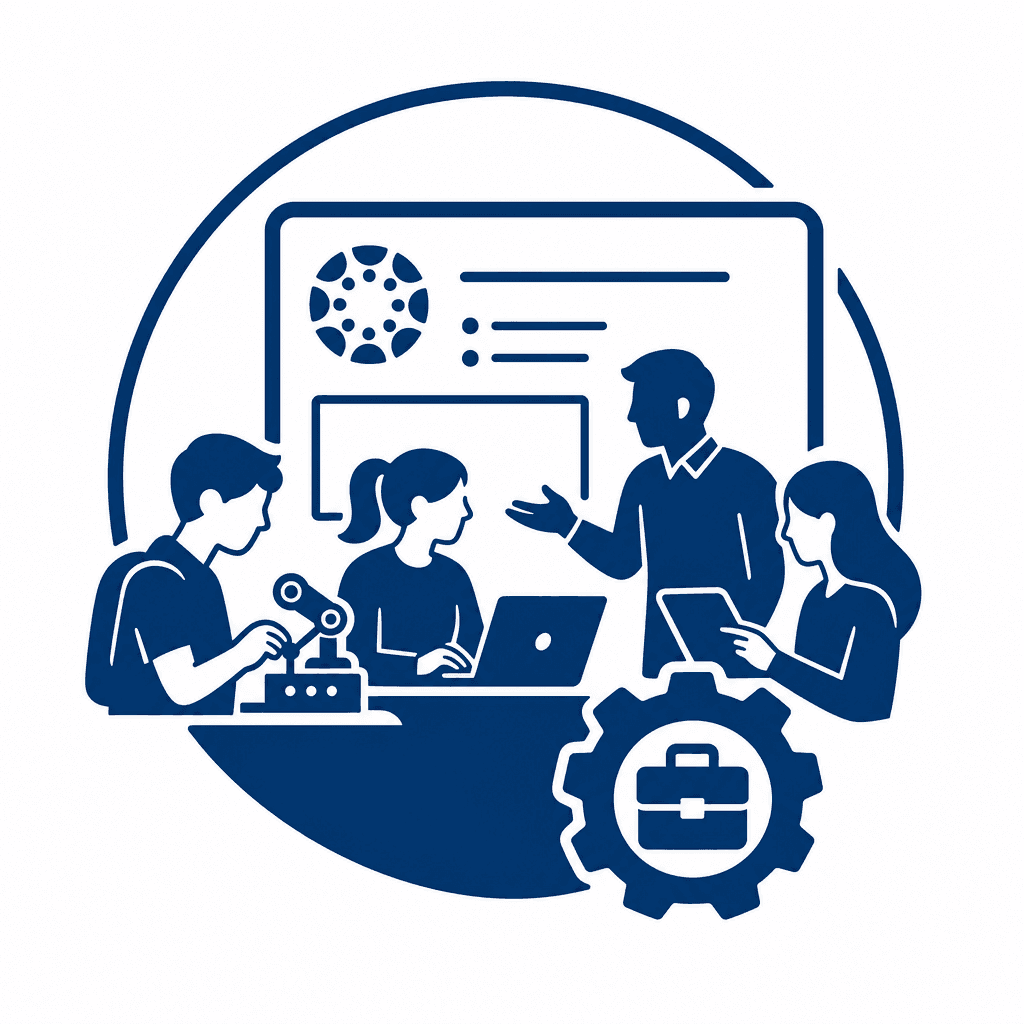
This article delves into the integration of experiential learning within Canvas course design, focusing on how apprenticeship models can enhance workforce readiness. Through project-based learning and collaboration with industry, educators can create impactful curricula that prepare students for real-world challenges, bridging the gap between theoretical knowledge and practical application.
Understanding Experiential Learning
Experiential learning is a powerful pedagogical approach that emphasizes learning through direct experience, guided reflection, and active participation. Rooted in the work of influential theorists like John Dewey and David Kolb, experiential learning provokes critical thought and the integration of theory with practical application. Dewey’s assertion that education should be grounded in real-life experiences laid the foundation for understanding that learning is inherently connected to doing. Kolb expanded on this notion with his experiential learning cycle, which includes concrete experience, reflective observation, abstract conceptualization, and active experimentation. This cycle encourages learners to engage fully in hands-on activities, allowing them to connect academic concepts to real-world situations. The significance of experiential learning in education today cannot be overstated. It transforms passive learners into active participants, promoting skill acquisition and critical thinking. Students who engage in experiential learning develop competencies that prepare them for the workforce, enhancing their employability and readiness for career challenges. Through project-based learning initiatives, simulations, and collaborative industry projects, educators can facilitate an environment where students thrive, gaining the practical experience that is essential in today's competitive job market. Thus, integrating experiential learning within Canvas courses can significantly enrich the academic experience, aligning educational outcomes with workforce demands.
The Role of Apprenticeships in Education
Apprenticeships are structured training programs that combine classroom learning with practical work experience, providing students with a pathway to develop specific skills while engaged in real-world applications. Their role in education is pivotal, as they bridge the gap between theoretical knowledge and practical expertise, enhancing learning experiences in Canvas courses by allowing students to interact directly with industry professionals. This hands-on experience cultivates a deeper understanding of their fields, facilitating connections with potential employers and real-world challenges. Integrating apprenticeships into Canvas courses fosters robust workforce readiness. Students engage in authentic tasks, building vital competencies such as problem-solving, teamwork, and technical skills that are essential in today’s job market. Successful models, like those in healthcare and information technology, exemplify how apprenticeships can lead to significant skill development, allowing students to transition seamlessly into their careers. For example, students participating in IT apprenticeships gain exposure to live projects, honing skills in coding and project management, while healthcare apprentices learn patient interaction and clinical procedures. These experiences not only enhance technical capabilities but also cultivate critical soft skills, making students more competitive and prepared for the evolving workforce landscape.
Designing Canvas Courses with Experiential Learning in Mind
Integrating experiential learning principles into Canvas course design can significantly enhance student engagement and workforce readiness. To begin, a thorough curriculum mapping process is vital to align learning outcomes with real-world applications. This ensures that each module not only addresses theoretical knowledge but also emphasizes practical skill development relevant to industry needs. One effective strategy is to incorporate apprenticeship models into course design by allowing students to connect with industry professionals as mentors, which enhances the learning experience. By weaving in specific projects linked to industry problems or opportunities, students gain firsthand experience while applying theoretical frameworks in tangible ways. Moreover, employing project-based learning (PBL) activities can cultivate critical thinking and problem-solving skills. Facilitators should structure these projects to include collaborative components, mirroring real-world team dynamics. Activities can range from case studies to simulation exercises where students tackle authentic challenges faced by organizations, fostering a deeper understanding of their field. Additionally, integrating competency-based education within Canvas can help learners master essential skills at their own pace, reinforcing the importance of practical knowledge alongside theoretical foundations. This tailored approach not only builds confidence but ensures students are truly career-ready upon completion of their studies.
Implementing Project-Based Learning in Canvas
Implementing project-based learning (PBL) in Canvas courses involves several key components that emphasize collaboration, critical thinking, and practical skill development, aligned with apprenticeship models. The process begins with defining clear, real-world problems that students can engage with, allowing them to explore solutions relevant to their fields. Selecting projects that mirror professional scenarios helps foster a deeper understanding of industry practices. To effectively implement PBL, course designers can create a structured timeline dividing the project into phases—initiation, development, and presentation—while embedding checkpoints for feedback and self-assessment. Assessment strategies should include both formative and summative evaluations, incorporating peer assessments and self-reflections to encourage accountability and growth. Furthermore, collaboration among students is vital; tools within Canvas, such as discussions, group assignments, and collaborative documents, can facilitate teamwork. Engaging with industry partners for project mentorship or critique can further enhance the authenticity of the learning experience. Ultimately, reflective practices post-project are crucial; students should analyze their learning processes and outcomes, solidifying their understanding and preparedness for the workforce. Examples of PBL could include developing marketing strategies for local businesses or creating prototypes for community challenges, integrating hands-on experiences with academic rigor.
Utilizing Simulations for Skill Development
Simulations serve as an impactful tool in enhancing experiential learning within Canvas courses, particularly by enabling students to engage in realistic scenarios that closely mirror industry practices. Various types of simulations, such as role-playing scenarios, virtual labs, and decision-making exercises, allow students to practice and hone their skills in a controlled environment. These scenarios foster an atmosphere where learners can experiment, make mistakes, and receive immediate feedback, critical for developing competencies in their respective fields. Integrating simulations into course design can be accomplished through the following strategies: - **Scenario-based Learning**: Create immersive case studies that reflect real-world challenges students might face in their apprenticeships. - **Interactive Platforms**: Utilize tools within Canvas, such as discussion boards and quizzes, to facilitate simulation scenarios where students must collaborate and problem-solve. - **Debriefing Activities**: After simulation exercises, ensure to include reflective components that allow students to assess their performance and explore alternative strategies. The effectiveness of simulations lies in their capacity to engage students actively, promoting workforce readiness. By bridging theoretical concepts with practical applications, simulations prepare learners for the complexities of their future careers, reinforcing the principles of competency-based education. As students navigate these simulated environments, they build vital skills and experiences that are directly transferable to real-world job settings.
Collaborating with Industry for Authentic Learning Experiences
Establishing partnerships with industry leaders is pivotal in designing Canvas courses that offer authentic learning experiences. Collaborating with industry partners not only enhances the relevance of course content but also bridges the gap between academic knowledge and practical application, crucial for workforce readiness. Such partnerships can facilitate **experiential learning** opportunities and apprenticeships, providing students with invaluable hands-on experiences that are increasingly demanded in the job market. To foster these collaborations, educators can employ several strategies. Firstly, they should actively engage in networking within relevant industries, reaching out to local businesses, professional organizations, and industry associations. Organizing workshops or webinars where industry representatives can share insights about the skills and competencies needed in their fields can strengthen these ties. Moreover, co-developing projects with industry partners helps ensure the curriculum meets current workforce needs. This co-design process can involve collaborative course projects that align closely with real-world challenges, allowing students to tackle practical problems while acquiring specific competencies. The benefits of such collaborations extend to students, educators, and organizations alike. Students gain essential skills that enhance career readiness, educators receive feedback on curriculum effectiveness and relevance, and organizations benefit from a pipeline of well-prepared talent. Integrating these partnerships into Canvas courses enriches the learning experience, making education more impactful and aligned with the evolving demands of the workforce.
Conclusions
In summary, embracing experiential learning within Canvas can transform educational experiences and better equip students for their future careers. By incorporating apprenticeship elements and project-based strategies, educators can foster a dynamic learning environment that emphasizes real-world skills and prepares students for success in their chosen fields.
Understanding Experiential Learning
Experiential learning is a powerful pedagogical approach that emphasizes learning through direct experience, guided reflection, and active participation. Rooted in the work of influential theorists like John Dewey and David Kolb, experiential learning provokes critical thought and the integration of theory with practical application. Dewey’s assertion that education should be grounded in real-life experiences laid the foundation for understanding that learning is inherently connected to doing. Kolb expanded on this notion with his experiential learning cycle, which includes concrete experience, reflective observation, abstract conceptualization, and active experimentation. This cycle encourages learners to engage fully in hands-on activities, allowing them to connect academic concepts to real-world situations. The significance of experiential learning in education today cannot be overstated. It transforms passive learners into active participants, promoting skill acquisition and critical thinking. Students who engage in experiential learning develop competencies that prepare them for the workforce, enhancing their employability and readiness for career challenges. Through project-based learning initiatives, simulations, and collaborative industry projects, educators can facilitate an environment where students thrive, gaining the practical experience that is essential in today's competitive job market. Thus, integrating experiential learning within Canvas courses can significantly enrich the academic experience, aligning educational outcomes with workforce demands.
The Role of Apprenticeships in Education
Apprenticeships are structured training programs that combine classroom learning with practical work experience, providing students with a pathway to develop specific skills while engaged in real-world applications. Their role in education is pivotal, as they bridge the gap between theoretical knowledge and practical expertise, enhancing learning experiences in Canvas courses by allowing students to interact directly with industry professionals. This hands-on experience cultivates a deeper understanding of their fields, facilitating connections with potential employers and real-world challenges. Integrating apprenticeships into Canvas courses fosters robust workforce readiness. Students engage in authentic tasks, building vital competencies such as problem-solving, teamwork, and technical skills that are essential in today’s job market. Successful models, like those in healthcare and information technology, exemplify how apprenticeships can lead to significant skill development, allowing students to transition seamlessly into their careers. For example, students participating in IT apprenticeships gain exposure to live projects, honing skills in coding and project management, while healthcare apprentices learn patient interaction and clinical procedures. These experiences not only enhance technical capabilities but also cultivate critical soft skills, making students more competitive and prepared for the evolving workforce landscape.
Designing Canvas Courses with Experiential Learning in Mind
Integrating experiential learning principles into Canvas course design can significantly enhance student engagement and workforce readiness. To begin, a thorough curriculum mapping process is vital to align learning outcomes with real-world applications. This ensures that each module not only addresses theoretical knowledge but also emphasizes practical skill development relevant to industry needs. One effective strategy is to incorporate apprenticeship models into course design by allowing students to connect with industry professionals as mentors, which enhances the learning experience. By weaving in specific projects linked to industry problems or opportunities, students gain firsthand experience while applying theoretical frameworks in tangible ways. Moreover, employing project-based learning (PBL) activities can cultivate critical thinking and problem-solving skills. Facilitators should structure these projects to include collaborative components, mirroring real-world team dynamics. Activities can range from case studies to simulation exercises where students tackle authentic challenges faced by organizations, fostering a deeper understanding of their field. Additionally, integrating competency-based education within Canvas can help learners master essential skills at their own pace, reinforcing the importance of practical knowledge alongside theoretical foundations. This tailored approach not only builds confidence but ensures students are truly career-ready upon completion of their studies.
Implementing Project-Based Learning in Canvas
Implementing project-based learning (PBL) in Canvas courses involves several key components that emphasize collaboration, critical thinking, and practical skill development, aligned with apprenticeship models. The process begins with defining clear, real-world problems that students can engage with, allowing them to explore solutions relevant to their fields. Selecting projects that mirror professional scenarios helps foster a deeper understanding of industry practices. To effectively implement PBL, course designers can create a structured timeline dividing the project into phases—initiation, development, and presentation—while embedding checkpoints for feedback and self-assessment. Assessment strategies should include both formative and summative evaluations, incorporating peer assessments and self-reflections to encourage accountability and growth. Furthermore, collaboration among students is vital; tools within Canvas, such as discussions, group assignments, and collaborative documents, can facilitate teamwork. Engaging with industry partners for project mentorship or critique can further enhance the authenticity of the learning experience. Ultimately, reflective practices post-project are crucial; students should analyze their learning processes and outcomes, solidifying their understanding and preparedness for the workforce. Examples of PBL could include developing marketing strategies for local businesses or creating prototypes for community challenges, integrating hands-on experiences with academic rigor.
Utilizing Simulations for Skill Development
Simulations serve as an impactful tool in enhancing experiential learning within Canvas courses, particularly by enabling students to engage in realistic scenarios that closely mirror industry practices. Various types of simulations, such as role-playing scenarios, virtual labs, and decision-making exercises, allow students to practice and hone their skills in a controlled environment. These scenarios foster an atmosphere where learners can experiment, make mistakes, and receive immediate feedback, critical for developing competencies in their respective fields. Integrating simulations into course design can be accomplished through the following strategies: - **Scenario-based Learning**: Create immersive case studies that reflect real-world challenges students might face in their apprenticeships. - **Interactive Platforms**: Utilize tools within Canvas, such as discussion boards and quizzes, to facilitate simulation scenarios where students must collaborate and problem-solve. - **Debriefing Activities**: After simulation exercises, ensure to include reflective components that allow students to assess their performance and explore alternative strategies. The effectiveness of simulations lies in their capacity to engage students actively, promoting workforce readiness. By bridging theoretical concepts with practical applications, simulations prepare learners for the complexities of their future careers, reinforcing the principles of competency-based education. As students navigate these simulated environments, they build vital skills and experiences that are directly transferable to real-world job settings.
Collaborating with Industry for Authentic Learning Experiences
Establishing partnerships with industry leaders is pivotal in designing Canvas courses that offer authentic learning experiences. Collaborating with industry partners not only enhances the relevance of course content but also bridges the gap between academic knowledge and practical application, crucial for workforce readiness. Such partnerships can facilitate **experiential learning** opportunities and apprenticeships, providing students with invaluable hands-on experiences that are increasingly demanded in the job market. To foster these collaborations, educators can employ several strategies. Firstly, they should actively engage in networking within relevant industries, reaching out to local businesses, professional organizations, and industry associations. Organizing workshops or webinars where industry representatives can share insights about the skills and competencies needed in their fields can strengthen these ties. Moreover, co-developing projects with industry partners helps ensure the curriculum meets current workforce needs. This co-design process can involve collaborative course projects that align closely with real-world challenges, allowing students to tackle practical problems while acquiring specific competencies. The benefits of such collaborations extend to students, educators, and organizations alike. Students gain essential skills that enhance career readiness, educators receive feedback on curriculum effectiveness and relevance, and organizations benefit from a pipeline of well-prepared talent. Integrating these partnerships into Canvas courses enriches the learning experience, making education more impactful and aligned with the evolving demands of the workforce.
Conclusions
In summary, embracing experiential learning within Canvas can transform educational experiences and better equip students for their future careers. By incorporating apprenticeship elements and project-based strategies, educators can foster a dynamic learning environment that emphasizes real-world skills and prepares students for success in their chosen fields.