LMS vs. LXP in a Canvas Ecosystem: Designing for Formal Courses vs. Continuous Learning
Explore the distinct roles of Learning Management Systems (LMS) like Canvas and Learning Experience Platforms (LXP). This article will provide instructional designers and Canvas administrators with a practical guide to understanding when and how to leverage each system, or integrate both, to support different learning objectives—from structured course delivery to personalized, continuous professional development. We'll examine specific Canvas integrations and workflows that enable a seamless learner journey across both platforms.
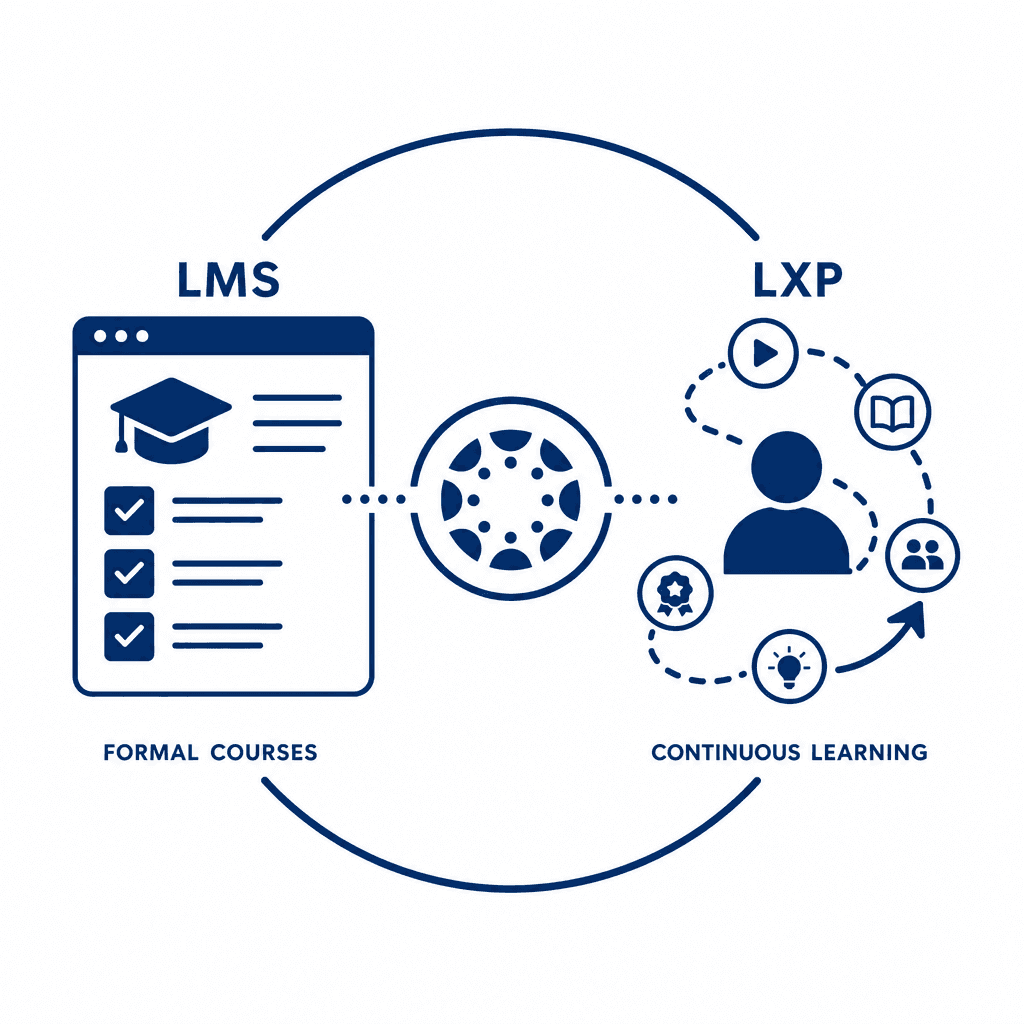
In today's digital learning environment, distinguishing between Learning Management Systems (LMS) and Learning Experience Platforms (LXP) is crucial, especially within a Canvas ecosystem. This article delves into the unique functionalities of each system, illustrating their roles in formal coursework and continuous learning, and offering insights on effective integration strategies to enhance learner experiences.
Understanding the Basics of LMS and LXP
Learning Management Systems (LMS) such as Canvas are designed primarily for structured educational environments, facilitating course delivery and management. Their main functions revolve around course design, assessment, grading, and reporting, enabling educators to monitor student progress effectively. By storing all course-related materials in a centralized location, LMS platforms promote uniformity and compliance with educational standards, ensuring that learners can access necessary resources anytime and anywhere. Canvas enhances the traditional LMS model through robust features like customizable course templates, integrated assessment tools, and intuitive analytics for tracking student engagement. These elements allow administrators to maintain organized and efficient communication between educators and learners, fostering a supportive learning atmosphere. Canvas’s user-friendly interface and mobile accessibility further streamline the learning process, accommodating diverse learning styles and preferences. As education increasingly incorporates technology, LMS solutions such as Canvas play a critical role in maintaining academic rigor while also ensuring compliance with institutional regulations. By focusing on structured learning experiences, Canvas effectively supports formal education, allowing for efficient administration and fostering meaningful interactions that enhance the overall learning journey.
The Role of Canvas as an LMS
Canvas serves as a robust Learning Management System (LMS) that plays a critical role in the facilitation of formal education. Its core features, such as intuitive course design, diverse assessment tools, and comprehensive student tracking, are tailored to meet the demands of structured learning environments. Instructors can create courses that are visually engaging and pedagogically sound by utilizing customizable templates and multimedia integrations. The assessment capabilities allow educators to employ various evaluation methods, ensuring a continuous feedback loop for learners. Moreover, Canvas enhances administrative efficiency through streamlined communication tools, including announcements, messaging, and integrated calendars that keep students informed and engaged. Its powerful analytics dashboard not only tracks student performance but also identifies at-risk learners, allowing for timely interventions. Canvas equally ensures compliance with educational standards, maintaining a robust framework that addresses accreditation requirements. Through these features, Canvas nurtures a disciplined learning atmosphere while allowing for straightforward administration. This capability underscores its significance as a foundational pillar in a learning ecosystem, providing educators with the tools needed to cultivate and manage effective learning experiences in formal educational settings.
The Emergence of Learning Experience Platforms
The rise of Learning Experience Platforms (LXP) marks a significant shift in how learners engage with educational content, driven by an increasing demand for personalized, engaging experiences. While Learning Management Systems like Canvas excel in delivering structured, formal courses, LXPs focus on user-driven content and learning pathways tailored to individual needs. Key features of LXPs include personalized learning experiences, where users can select content based on their interests and career goals. This autonomy fosters a sense of ownership over the learning process, contrasting sharply with the rigid frameworks often found in traditional LMS. Additionally, LXPs promote social learning, allowing users to connect with peers, share insights, and collaborate on projects, thereby enhancing their learning journey through community engagement. Adaptive learning pathways further distinguish LXPs from LMS. These pathways adjust in real-time based on a learner’s progress and preferences, ensuring that the content remains relevant and challenging. As continuous learning and professional development become essential in today’s fast-paced environment, LXPs support this evolution effectively, offering opportunities for skill enhancement and knowledge acquisition that traditional LMS cannot fully address. This adaptability ensures that learners remain engaged and motivated, paving the way for lifelong learning.
Integrating LMS and LXP within the Canvas Ecosystem
Integrating LMS and LXP within the Canvas Ecosystem requires a deliberate approach to create a cohesive learning environment that addresses both formal education and self-directed learning. One of the primary strategies is to leverage APIs that allow Canvas and LXPs to communicate seamlessly. For instance, integrating tools such as **Zapier** can automate the flow of user data between these platforms, ensuring that learners can transition smoothly from structured courses in Canvas to personalized content in the LXP. Another effective strategy involves using **Single Sign-On (SSO)**, which simplifies user access to both systems. This enhances the user experience by removing barriers to entry and allowing learners to navigate effortlessly between formal courses and continuous learning opportunities. For example, a Canvas course can include links to relevant LXP resources tailored to specific learner needs or interests. This encourages learners to explore additional materials, fostering a culture of continuous growth. Moreover, utilizing analytics from both systems can inform instructional designers about learner engagement and performance, enabling tailored interventions and support. By understanding individual learning journeys, educators can provide a more meaningful and effective learning experience, ultimately promoting a thriving learning ecosystem.
Designing Formal Courses vs. Continuous Learning
In the Canvas ecosystem, designing for formal courses involves creating structured and clearly defined pathways that deliver specific knowledge and skills. This requires aligning course objectives with assessments that track learner progress and engagement. When developing formal courses in Canvas, instructional designers are tasked with crafting a cohesive curriculum that emphasizes mastery through various assessment methods, such as quizzes, discussions, and projects. Engaging learners through interactive content like multimedia elements and group activities is essential to boost participation and motivation. On the other hand, continuous learning paths facilitated by an LXP are characterized by their adaptability and learner-centric approach. The design process shifts to accommodate personalized learning experiences that cater to individual interests and career aspirations. Here, users can pursue micro-learning modules, skill-based content, and just-in-time resources, allowing them to take charge of their learning journeys. Integrating both formal course elements and personalized experiences harnesses the strengths of both the LMS and LXP. By leveraging specific Canvas features, instructional designers can create pathways that allow learners to explore structured content while pursuing their unique learning goals in a dynamic ecosystem. The emphasis on flexibility ensures that all learners can thrive, regardless of their professional trajectories.
Best Practices for LMS Administration in a Hybrid Learning Environment
Effective LMS administration in a hybrid learning environment that utilizes both Canvas and an LXP demands a strategic approach focused on integration and user support. Administrators play a crucial role in implementing effective policies that ensure seamless collaboration between both platforms. This includes overseeing system integrations that allow for the sharing of data and resources, making sure that user information flows smoothly between Canvas and the LXP. To enhance the learning experience, administrators must prioritize user experience by providing clear guidelines and support for educators and learners. Regular training sessions and workshops can empower users to effectively navigate both systems, promoting a culture of continuous learning. In addition, administrators should utilize analytics tools to monitor user engagement and course completion rates. This data aids in identifying areas for improvement and can guide instructional design adjustments to better meet learner needs. Data management is pivotal; administrators must ensure that both platforms are compliant with data privacy regulations and maintain the integrity of user information. Continuous improvement strategies should focus on gathering feedback regularly from educators and learners alike, promoting innovative practices to enhance learning outcomes and support lifelong learning within the hybrid ecosystem.
Conclusions
In summary, understanding the differences between LMS and LXP within a Canvas ecosystem allows educational institutions to tailor their approaches to learning. By effectively integrating both systems, instructional designers and administrators can create a comprehensive learning environment that meets the diverse needs of learners, supporting both formal education and ongoing professional development.
Understanding the Basics of LMS and LXP
Learning Management Systems (LMS) such as Canvas are designed primarily for structured educational environments, facilitating course delivery and management. Their main functions revolve around course design, assessment, grading, and reporting, enabling educators to monitor student progress effectively. By storing all course-related materials in a centralized location, LMS platforms promote uniformity and compliance with educational standards, ensuring that learners can access necessary resources anytime and anywhere. Canvas enhances the traditional LMS model through robust features like customizable course templates, integrated assessment tools, and intuitive analytics for tracking student engagement. These elements allow administrators to maintain organized and efficient communication between educators and learners, fostering a supportive learning atmosphere. Canvas’s user-friendly interface and mobile accessibility further streamline the learning process, accommodating diverse learning styles and preferences. As education increasingly incorporates technology, LMS solutions such as Canvas play a critical role in maintaining academic rigor while also ensuring compliance with institutional regulations. By focusing on structured learning experiences, Canvas effectively supports formal education, allowing for efficient administration and fostering meaningful interactions that enhance the overall learning journey.
The Role of Canvas as an LMS
Canvas serves as a robust Learning Management System (LMS) that plays a critical role in the facilitation of formal education. Its core features, such as intuitive course design, diverse assessment tools, and comprehensive student tracking, are tailored to meet the demands of structured learning environments. Instructors can create courses that are visually engaging and pedagogically sound by utilizing customizable templates and multimedia integrations. The assessment capabilities allow educators to employ various evaluation methods, ensuring a continuous feedback loop for learners. Moreover, Canvas enhances administrative efficiency through streamlined communication tools, including announcements, messaging, and integrated calendars that keep students informed and engaged. Its powerful analytics dashboard not only tracks student performance but also identifies at-risk learners, allowing for timely interventions. Canvas equally ensures compliance with educational standards, maintaining a robust framework that addresses accreditation requirements. Through these features, Canvas nurtures a disciplined learning atmosphere while allowing for straightforward administration. This capability underscores its significance as a foundational pillar in a learning ecosystem, providing educators with the tools needed to cultivate and manage effective learning experiences in formal educational settings.
The Emergence of Learning Experience Platforms
The rise of Learning Experience Platforms (LXP) marks a significant shift in how learners engage with educational content, driven by an increasing demand for personalized, engaging experiences. While Learning Management Systems like Canvas excel in delivering structured, formal courses, LXPs focus on user-driven content and learning pathways tailored to individual needs. Key features of LXPs include personalized learning experiences, where users can select content based on their interests and career goals. This autonomy fosters a sense of ownership over the learning process, contrasting sharply with the rigid frameworks often found in traditional LMS. Additionally, LXPs promote social learning, allowing users to connect with peers, share insights, and collaborate on projects, thereby enhancing their learning journey through community engagement. Adaptive learning pathways further distinguish LXPs from LMS. These pathways adjust in real-time based on a learner’s progress and preferences, ensuring that the content remains relevant and challenging. As continuous learning and professional development become essential in today’s fast-paced environment, LXPs support this evolution effectively, offering opportunities for skill enhancement and knowledge acquisition that traditional LMS cannot fully address. This adaptability ensures that learners remain engaged and motivated, paving the way for lifelong learning.
Integrating LMS and LXP within the Canvas Ecosystem
Integrating LMS and LXP within the Canvas Ecosystem requires a deliberate approach to create a cohesive learning environment that addresses both formal education and self-directed learning. One of the primary strategies is to leverage APIs that allow Canvas and LXPs to communicate seamlessly. For instance, integrating tools such as **Zapier** can automate the flow of user data between these platforms, ensuring that learners can transition smoothly from structured courses in Canvas to personalized content in the LXP. Another effective strategy involves using **Single Sign-On (SSO)**, which simplifies user access to both systems. This enhances the user experience by removing barriers to entry and allowing learners to navigate effortlessly between formal courses and continuous learning opportunities. For example, a Canvas course can include links to relevant LXP resources tailored to specific learner needs or interests. This encourages learners to explore additional materials, fostering a culture of continuous growth. Moreover, utilizing analytics from both systems can inform instructional designers about learner engagement and performance, enabling tailored interventions and support. By understanding individual learning journeys, educators can provide a more meaningful and effective learning experience, ultimately promoting a thriving learning ecosystem.
Designing Formal Courses vs. Continuous Learning
In the Canvas ecosystem, designing for formal courses involves creating structured and clearly defined pathways that deliver specific knowledge and skills. This requires aligning course objectives with assessments that track learner progress and engagement. When developing formal courses in Canvas, instructional designers are tasked with crafting a cohesive curriculum that emphasizes mastery through various assessment methods, such as quizzes, discussions, and projects. Engaging learners through interactive content like multimedia elements and group activities is essential to boost participation and motivation. On the other hand, continuous learning paths facilitated by an LXP are characterized by their adaptability and learner-centric approach. The design process shifts to accommodate personalized learning experiences that cater to individual interests and career aspirations. Here, users can pursue micro-learning modules, skill-based content, and just-in-time resources, allowing them to take charge of their learning journeys. Integrating both formal course elements and personalized experiences harnesses the strengths of both the LMS and LXP. By leveraging specific Canvas features, instructional designers can create pathways that allow learners to explore structured content while pursuing their unique learning goals in a dynamic ecosystem. The emphasis on flexibility ensures that all learners can thrive, regardless of their professional trajectories.
Best Practices for LMS Administration in a Hybrid Learning Environment
Effective LMS administration in a hybrid learning environment that utilizes both Canvas and an LXP demands a strategic approach focused on integration and user support. Administrators play a crucial role in implementing effective policies that ensure seamless collaboration between both platforms. This includes overseeing system integrations that allow for the sharing of data and resources, making sure that user information flows smoothly between Canvas and the LXP. To enhance the learning experience, administrators must prioritize user experience by providing clear guidelines and support for educators and learners. Regular training sessions and workshops can empower users to effectively navigate both systems, promoting a culture of continuous learning. In addition, administrators should utilize analytics tools to monitor user engagement and course completion rates. This data aids in identifying areas for improvement and can guide instructional design adjustments to better meet learner needs. Data management is pivotal; administrators must ensure that both platforms are compliant with data privacy regulations and maintain the integrity of user information. Continuous improvement strategies should focus on gathering feedback regularly from educators and learners alike, promoting innovative practices to enhance learning outcomes and support lifelong learning within the hybrid ecosystem.
Conclusions
In summary, understanding the differences between LMS and LXP within a Canvas ecosystem allows educational institutions to tailor their approaches to learning. By effectively integrating both systems, instructional designers and administrators can create a comprehensive learning environment that meets the diverse needs of learners, supporting both formal education and ongoing professional development.