
Navigating Failure Modes in AI-Powered Language Assessments in Canvas
Explore common pitfalls and design flaws in AI-powered language assessment tools and strategies within Canvas LMS. This guide provides practical steps for educators to identify, diagnose, and resolve issues, ensuring accurate and equitable evaluation of student language proficiency. Learn how to refine prompts, calibrate AI models, and implement human oversight to prevent misinterpretations and improve assessment validity.
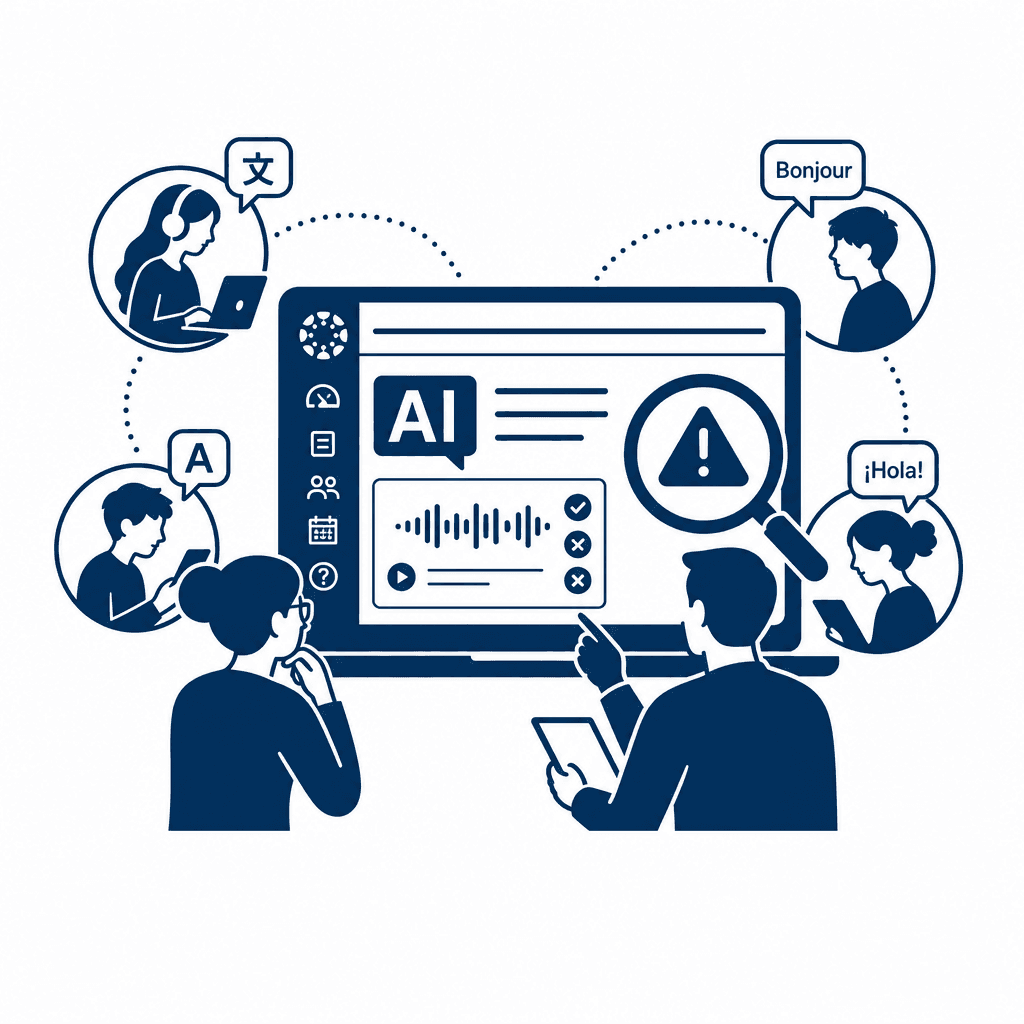
As educational institutions increasingly adopt AI-powered language assessment tools within Canvas LMS, understanding potential pitfalls is critical for effective implementation. This guide explores common failures and design flaws, offering educators actionable strategies to enhance assessment validity and ensure equitable evaluation of student language proficiency.
Understanding AI in Language Assessment
The integration of AI in language assessment, while transformative, also presents several common pitfalls that educators must be vigilant about. One prevalent issue is bias in AI algorithms, which can stem from the data used to train these models. If the training data lacks diversity or reflects societal biases, the assessments may unfairly penalize certain groups of students, leading to distorted evaluations of their language proficiency. Another challenge lies in the misinterpretation of student responses. AI systems may struggle to accurately parse language nuances, idiomatic expressions, or contextually rich answers, which can result in incorrect grading. This misinterpretation can significantly affect assessment validity, causing students' true language abilities to remain unrecognized or underappreciated. Furthermore, a lack of contextual awareness in evaluations can lead to oversimplified assessments. AI systems may overlook cultural contexts, learning backgrounds, or individual student needs, resulting in a one-size-fits-all approach that fails to cater to diverse learners. These pitfalls highlight the importance of ongoing monitoring and adjustment of AI tools within Canvas LMS to ensure equitable evaluations. Educators must remain aware of these challenges and adopt proactive strategies to address them, ultimately fostering a more accurate and supportive assessment environment.
Common Pitfalls in AI Assessments
AI-powered language assessments present significant opportunities for streamlined evaluation but also carry inherent pitfalls that educators must address. One critical concern is the potential for **bias in AI algorithms**. Often, these algorithms are trained on datasets that may not represent diverse linguistic backgrounds or learning styles, resulting in skewed evaluations. For instance, non-native speakers may be unjustly graded due to the model's inability to accurately interpret their unique syntax or vocabulary choices. Additionally, **misinterpretation of student responses** poses a serious challenge. AI systems can misread context or nuance in language, leading to erroneous assessments. Such misinterpretations can result from overly simplistic response metrics that fail to account for creative expression or complex sentence structures. The **lack of context** in evaluations further complicates matters. AI assessments often focus on surface-level features, neglecting the broader communicative intent. As a result, students may receive feedback that does not accurately reflect their linguistic skill or understanding. These pitfalls not only compromise **assessment validity** but also hinder student learning outcomes. Therefore, educators must remain vigilant, continually assessing both AI performance and their impact on educational equity. Awareness of these issues is the first step in ensuring meaningful and fair language assessments within Canvas LMS.
Designing Effective Language Assessment Tools
Designing effective language assessment tools that leverage AI involves careful consideration of various factors to ensure clarity and fairness. One fundamental aspect is the development of clear and concise prompts that leave little room for misinterpretation. Ambiguous questions can lead to varied responses that may not accurately represent a student's proficiency. To minimize ambiguity, educators should utilize straightforward language, clearly defined expectations, and contextually relevant scenarios that align with learning objectives. When structuring assessments, it is vital to create a balance between automated scoring and qualitative assessment. Incorporating a mix of open-ended and closed-ended questions can enhance evaluation reliability. In open-ended responses, teachers should provide specific guidelines about what constitutes a satisfactory answer, assisting the AI in making more accurate evaluations. Best practices for ensuring fairness in AI assessments include regular reviews of assessment materials to identify potential biases and inaccuracies in question framing. Educators should also consider implementing a diverse set of training data for AI models to minimize skew in results. By fostering collaboration between teachers and AI systems, educators can enhance assessment validity, paving the way for a more equitable approach to evaluating student language proficiency within Canvas LMS.
Calibrating AI Models for Fair Assessment
Calibrating AI models is essential to ensure fair assessments in language learning, particularly within the Canvas LMS context. These models must be rigorously adjusted to align with the educational standards and the specific needs of students. This process involves a series of methodology and data integrity strategies that require deliberate attention. One effective technique for calibrating AI algorithms is to utilize data validation methods, which help in identifying biases and inconsistencies in the training data. Educators should ensure that the dataset used to train AI models encompasses a diverse range of linguistic backgrounds and proficiency levels, thereby reflecting the diversity of the student population. Adjusting model parameters based on these findings can significantly enhance the algorithm's accuracy and fairness. Continuous monitoring is critical in maintaining assessment integrity. Regularly analyzing the outputs of the AI assessments allows educators to identify potential misinterpretations and areas of undesired bias. Educators should implement feedback loops, where insights from assessment outcomes are used to refine and retrain AI models, thus fostering an environment of ongoing improvement. By establishing these supports, educators can uphold the validity of AI-driven evaluations, ensuring that they meet educational benchmarks while being responsive to evolving student needs.
Implementing Human Oversight
The implementation of human oversight in AI-powered language assessments is essential for enhancing both reliability and validity. While AI can process large volumes of data and generate assessments efficiently, it often lacks the contextual understanding that human educators bring to the evaluation process. Educators should routinely review AI-generated evaluations to ensure that they align with pedagogical standards and accurately reflect student performance. One effective strategy is to establish feedback loops, where teachers analyze AI results and provide insights based on their observations and expertise. For instance, if an AI assessment misinterprets a student's nuanced language use, the educator can flag these discrepancies, allowing for model recalibration and refinement. Additionally, the involvement of teachers in interpreting results ensures that diverse cultural backgrounds and learning styles are acknowledged, ultimately leading to more equitable evaluations. Case studies indicate that schools integrating human oversight have reported improved assessment quality. In one instance, educators discovered that AI consistently misinterpreted idiomatic expressions in student submissions, which led to a revision in the model’s training data. By reinforcing the interplay of technology and human insight, educators can foster a more nuanced understanding of language proficiency, resulting in assessments that are not only accurate but also meaningful.
Troubleshooting and Resolving Issues
Educators using AI-powered language assessments in Canvas LMS often face challenges requiring effective troubleshooting techniques. Diagnosing issues begins with closely monitoring the AI's outputs. Anomalies in grading patterns can signal misinterpretations of prompts or flaws in training data. Regularly analyzing these discrepancies allows for early identification of problems that could undermine assessment validity. Collaborative problem-solving among educators is vital. Establishing a community of practice can foster knowledge sharing on best practices and common pitfalls in AI deployment. Regular forums or workshops can be effective spaces for discussing experiences, diagnosing challenges, and brainstorming solutions collaboratively. Implementing feedback mechanisms is crucial. Collect insights from students regarding their test experiences to identify areas where AI may misinterpret responses. Integrate these revelations into prompt refinement protocols, ensuring clarity and specificity in instructions. Ongoing professional development in AI assessment literacy is indispensable. Workshops focusing on AI's capabilities and limitations can empower educators to troubleshoot effectively. By investing in continuous learning, faculty can enhance their proficiency in both interpreting AI assessments and diagnosing issues, thus contributing to improved language evaluation within Canvas.
Conclusions
In summary, navigating the complexities of AI-powered language assessments requires a proactive approach. By understanding common failure modes, refining assessment prompts, and ensuring proper human oversight, educators can enhance validity and equity in language evaluations. Embracing these practices will ensure a more accurate reflection of student capabilities in an increasingly digital learning landscape.
Understanding AI in Language Assessment
The integration of AI in language assessment, while transformative, also presents several common pitfalls that educators must be vigilant about. One prevalent issue is bias in AI algorithms, which can stem from the data used to train these models. If the training data lacks diversity or reflects societal biases, the assessments may unfairly penalize certain groups of students, leading to distorted evaluations of their language proficiency. Another challenge lies in the misinterpretation of student responses. AI systems may struggle to accurately parse language nuances, idiomatic expressions, or contextually rich answers, which can result in incorrect grading. This misinterpretation can significantly affect assessment validity, causing students' true language abilities to remain unrecognized or underappreciated. Furthermore, a lack of contextual awareness in evaluations can lead to oversimplified assessments. AI systems may overlook cultural contexts, learning backgrounds, or individual student needs, resulting in a one-size-fits-all approach that fails to cater to diverse learners. These pitfalls highlight the importance of ongoing monitoring and adjustment of AI tools within Canvas LMS to ensure equitable evaluations. Educators must remain aware of these challenges and adopt proactive strategies to address them, ultimately fostering a more accurate and supportive assessment environment.
Common Pitfalls in AI Assessments
AI-powered language assessments present significant opportunities for streamlined evaluation but also carry inherent pitfalls that educators must address. One critical concern is the potential for **bias in AI algorithms**. Often, these algorithms are trained on datasets that may not represent diverse linguistic backgrounds or learning styles, resulting in skewed evaluations. For instance, non-native speakers may be unjustly graded due to the model's inability to accurately interpret their unique syntax or vocabulary choices. Additionally, **misinterpretation of student responses** poses a serious challenge. AI systems can misread context or nuance in language, leading to erroneous assessments. Such misinterpretations can result from overly simplistic response metrics that fail to account for creative expression or complex sentence structures. The **lack of context** in evaluations further complicates matters. AI assessments often focus on surface-level features, neglecting the broader communicative intent. As a result, students may receive feedback that does not accurately reflect their linguistic skill or understanding. These pitfalls not only compromise **assessment validity** but also hinder student learning outcomes. Therefore, educators must remain vigilant, continually assessing both AI performance and their impact on educational equity. Awareness of these issues is the first step in ensuring meaningful and fair language assessments within Canvas LMS.
Designing Effective Language Assessment Tools
Designing effective language assessment tools that leverage AI involves careful consideration of various factors to ensure clarity and fairness. One fundamental aspect is the development of clear and concise prompts that leave little room for misinterpretation. Ambiguous questions can lead to varied responses that may not accurately represent a student's proficiency. To minimize ambiguity, educators should utilize straightforward language, clearly defined expectations, and contextually relevant scenarios that align with learning objectives. When structuring assessments, it is vital to create a balance between automated scoring and qualitative assessment. Incorporating a mix of open-ended and closed-ended questions can enhance evaluation reliability. In open-ended responses, teachers should provide specific guidelines about what constitutes a satisfactory answer, assisting the AI in making more accurate evaluations. Best practices for ensuring fairness in AI assessments include regular reviews of assessment materials to identify potential biases and inaccuracies in question framing. Educators should also consider implementing a diverse set of training data for AI models to minimize skew in results. By fostering collaboration between teachers and AI systems, educators can enhance assessment validity, paving the way for a more equitable approach to evaluating student language proficiency within Canvas LMS.
Calibrating AI Models for Fair Assessment
Calibrating AI models is essential to ensure fair assessments in language learning, particularly within the Canvas LMS context. These models must be rigorously adjusted to align with the educational standards and the specific needs of students. This process involves a series of methodology and data integrity strategies that require deliberate attention. One effective technique for calibrating AI algorithms is to utilize data validation methods, which help in identifying biases and inconsistencies in the training data. Educators should ensure that the dataset used to train AI models encompasses a diverse range of linguistic backgrounds and proficiency levels, thereby reflecting the diversity of the student population. Adjusting model parameters based on these findings can significantly enhance the algorithm's accuracy and fairness. Continuous monitoring is critical in maintaining assessment integrity. Regularly analyzing the outputs of the AI assessments allows educators to identify potential misinterpretations and areas of undesired bias. Educators should implement feedback loops, where insights from assessment outcomes are used to refine and retrain AI models, thus fostering an environment of ongoing improvement. By establishing these supports, educators can uphold the validity of AI-driven evaluations, ensuring that they meet educational benchmarks while being responsive to evolving student needs.
Implementing Human Oversight
The implementation of human oversight in AI-powered language assessments is essential for enhancing both reliability and validity. While AI can process large volumes of data and generate assessments efficiently, it often lacks the contextual understanding that human educators bring to the evaluation process. Educators should routinely review AI-generated evaluations to ensure that they align with pedagogical standards and accurately reflect student performance. One effective strategy is to establish feedback loops, where teachers analyze AI results and provide insights based on their observations and expertise. For instance, if an AI assessment misinterprets a student's nuanced language use, the educator can flag these discrepancies, allowing for model recalibration and refinement. Additionally, the involvement of teachers in interpreting results ensures that diverse cultural backgrounds and learning styles are acknowledged, ultimately leading to more equitable evaluations. Case studies indicate that schools integrating human oversight have reported improved assessment quality. In one instance, educators discovered that AI consistently misinterpreted idiomatic expressions in student submissions, which led to a revision in the model’s training data. By reinforcing the interplay of technology and human insight, educators can foster a more nuanced understanding of language proficiency, resulting in assessments that are not only accurate but also meaningful.
Troubleshooting and Resolving Issues
Educators using AI-powered language assessments in Canvas LMS often face challenges requiring effective troubleshooting techniques. Diagnosing issues begins with closely monitoring the AI's outputs. Anomalies in grading patterns can signal misinterpretations of prompts or flaws in training data. Regularly analyzing these discrepancies allows for early identification of problems that could undermine assessment validity. Collaborative problem-solving among educators is vital. Establishing a community of practice can foster knowledge sharing on best practices and common pitfalls in AI deployment. Regular forums or workshops can be effective spaces for discussing experiences, diagnosing challenges, and brainstorming solutions collaboratively. Implementing feedback mechanisms is crucial. Collect insights from students regarding their test experiences to identify areas where AI may misinterpret responses. Integrate these revelations into prompt refinement protocols, ensuring clarity and specificity in instructions. Ongoing professional development in AI assessment literacy is indispensable. Workshops focusing on AI's capabilities and limitations can empower educators to troubleshoot effectively. By investing in continuous learning, faculty can enhance their proficiency in both interpreting AI assessments and diagnosing issues, thus contributing to improved language evaluation within Canvas.
Conclusions
In summary, navigating the complexities of AI-powered language assessments requires a proactive approach. By understanding common failure modes, refining assessment prompts, and ensuring proper human oversight, educators can enhance validity and equity in language evaluations. Embracing these practices will ensure a more accurate reflection of student capabilities in an increasingly digital learning landscape.