
Pedagogy-First AI Course Design in Canvas
Explore strategies for leveraging AI in Canvas to generate course content and activities while prioritizing sound pedagogical principles. Learn how to guide AI tools to produce meaningful, engaging, and effective learning experiences, rather than simply accepting AI-generated output. This guide will focus on maintaining instructional integrity and student-centered design when integrating AI into your Canvas course development workflow.
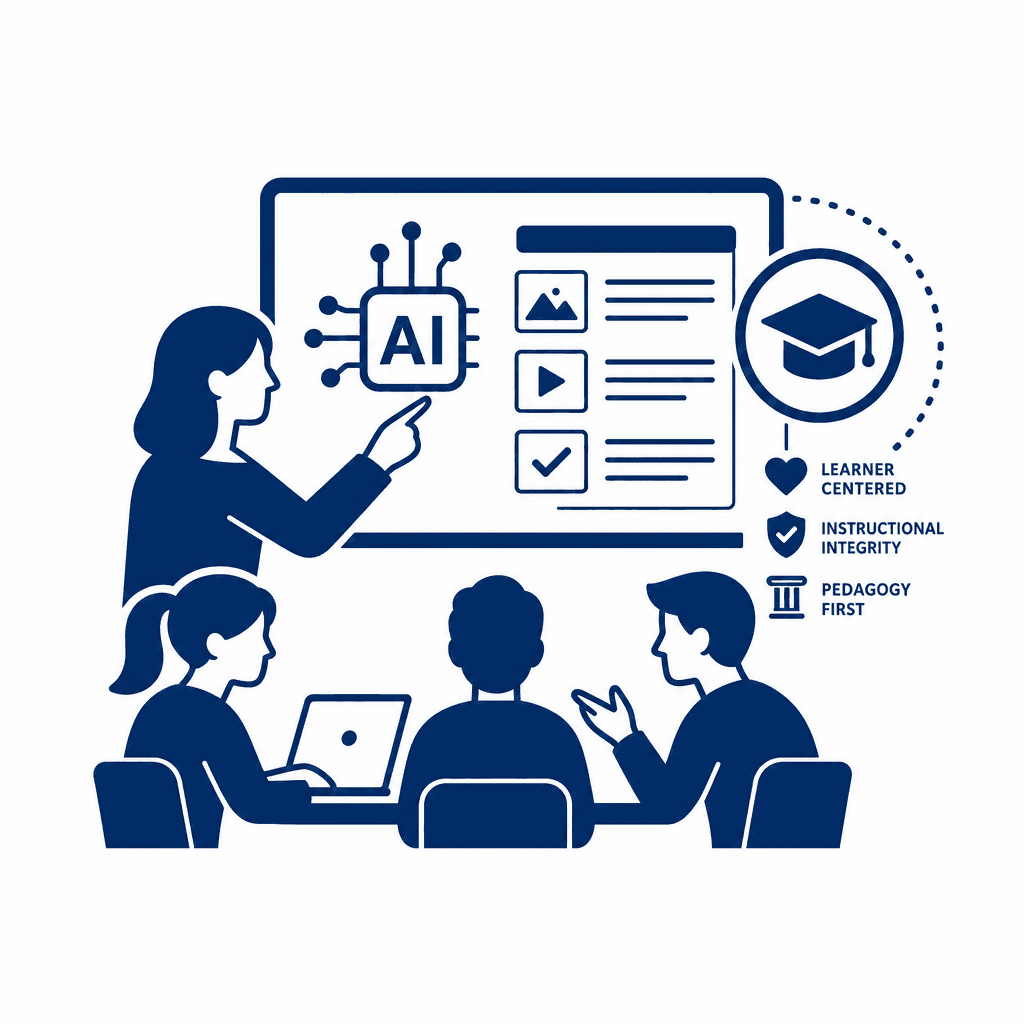
This article delves into how educators can utilize generative AI tools within the Canvas learning management system. By prioritizing pedagogical integrity and student-centered design, instructors can effectively enhance course content and activities. Discover strategies to guide AI contributions that align with educational goals rather than merely relying on automated outputs.
Understanding AI in Course Design
Artificial Intelligence (AI) is rapidly transforming the landscape of education, especially in the realm of course design. The integration of AI tools can enhance various aspects of curriculum development by automating routine tasks, generating personalized learning materials, and creating dynamic learning experiences. Educators can leverage AI to better understand student performance data, allowing them to fine-tune their approach to meet individual learning needs. For instance, AI algorithms can analyze student interactions with course content and suggest tailored resources or activities, enhancing engagement. However, challenges accompany these benefits, including the potential for reliance on AI-generated content that may lack depth or relevance. There is a risk that educators might accept AI outputs without critical evaluation, which could undermine instructional integrity. To effectively harness AI in education, educators must develop a critical understanding of its capabilities and limitations. This involves not only employing AI tools to assist in course design but also ensuring that the resultant learning experiences prioritize students’ needs, encouraging a thoughtful balance between innovation and sound pedagogical practices. Through careful integration, AI can be a powerful ally in enriching the educational landscape.
Exploring Canvas as a Tool for Course Generation
Exploring Canvas as a Tool for Course Generation Canvas serves as a robust learning management system that seamlessly integrates with generative AI tools, enhancing course design efforts. Its capabilities offer a rich environment for educators to create engaging and interactive online learning experiences. One of Canvas' standout features is its multimedia integration, allowing instructors to embed videos, audio files, and graphics directly into course materials. This feature not only enriches the learning experience but also complements diverse learning styles. Furthermore, Canvas supports interactive components such as quizzes, discussion boards, and collaborative assignments that foster active participation. By leveraging generative AI, educators can automate the creation of these interactive elements, customizing content to meet specific instructional needs while ensuring alignment with educational objectives. Assessment tools within Canvas—such as rubrics and grading analytics—provide educators with valuable insights regarding student performance, allowing for timely interventions. Generative AI can assist in generating formative assessments that are tailored to the course content, ensuring validity and reliability in evaluating student understanding. By utilizing these features, educators can maintain instructional integrity while prioritizing student-centered design, ultimately crafting meaningful learning experiences that resonate with students' needs and goals.
Sound Pedagogical Principles for AI Integration
The integration of AI in course development must be guided by sound pedagogical principles to preserve instructional integrity and enhance student engagement. At the forefront, an alignment between AI-generated content and educational objectives is essential. This alignment ensures that the course materials and activities produced by AI reflect the desired learning outcomes, avoiding tangential or irrelevant content that could derail student focus. Accessibility is another critical principle. AI outputs should be designed to accommodate diverse learning styles and needs, ensuring that all students can engage with the material meaningfully. For instance, when using generative AI to create resources, it is vital to include text that can be easily translated or adapted for students with visual impairments or different language proficiencies. A student-centered approach emphasizes active learning and personal relevance. Using AI to tailor content based on student interests and performance data can enhance motivation and foster a community of inquiry. For example, in a Canvas course, AI could generate interactive case studies linked to students’ fields of interest, promoting deeper engagement. By anchoring AI integration in these pedagogical principles, educators can harness the potential of generative AI while ensuring the course remains aligned with its academic mission and focuses on student success.
Guiding AI Tools for Meaningful Outputs
To effectively guide AI tools in generating meaningful and relevant course content and activities, educators must offer precise instructions and context. Clear guidelines empower AI systems to align outputs with intended learning objectives. Begin by defining desired outcomes, specifying topics, and articulating the tone and complexity level. This clarity enables AI to produce materials that resonate with student needs and course goals. When generating content using AI, consider utilizing structured prompts. For instance, request outlines for specific subjects or ask for brainstorming ideas tailored to particular instructional methods. This directs the AI towards producing outputs that are not only relevant but also coherent, making the integration into course design seamless. Following the generation of AI outputs, critical evaluation is essential. Review the content for alignment with academic standards, relevance, and accessibility. Engage in iterative refinement, providing feedback or additional context to enhance AI performance. This process helps educators ascertain that the materials generated are useful and uphold the integrity of the educational experience. The instructor's role in this workflow remains pivotal, guiding AI outputs to foster engaging and meaningful learning environments.
Maintaining Instructional Integrity in AI-Enhanced Courses
As we incorporate AI into course design, maintaining instructional integrity becomes paramount. Educators must recognize the ethical implications of AI-driven content generation, particularly the risk of bias that may be inherent in AI algorithms. Bias can arise from the data used to train these systems, leading to outcomes that may misrepresent or marginalize certain groups. Therefore, it is crucial for instructors to critically assess AI-generated content for inclusivity and fairness. Personal oversight is essential in this process. Instructors should take an active role in vetting AI outputs, ensuring they align with academic standards and pedagogical objectives. This includes verifying the accuracy of facts, the appropriateness of language, and the relevance of activities. Regularly engaging with the AI’s suggestions allows educators to refine and adjust the materials, fostering a course environment where quality over quantity prevails. A collaborative approach can also enhance integrity; educators can involve peers in the review process to gain diverse perspectives on AI-generated materials. By establishing a rigorous framework for assessing and integrating AI outputs, instructors can uphold the educational quality expected in their courses, ultimately enriching the learning experience while leveraging innovative technologies.
Implementing a Student-Centered Design Approach
Implementing a student-centered design approach with AI in Canvas emphasizes aligning technology with genuine learner needs and experiences. As educators leverage generative AI, it's crucial to ensure that the outputs resonate with student objectives and learning levels. A focus on student input not only improves the relevance of course materials but fosters a sense of agency among learners. Encouraging students to provide feedback on AI-generated content enhances its effectiveness and relevance. Surveys, focus groups, and informal discussions can serve as valuable tools for gathering insights, allowing educators to iteratively refine their course offerings. This practice not only fine-tunes content but also creates a dynamic environment where student voices shape the learning experience. Success stories demonstrate the potential of this approach. For instance, an instructor at a mid-sized university integrated student suggestions to enhance course assignments generated by AI, resulting in an increased engagement rate and higher completion levels. By weaving student insights into the course development workflow, educators not only uphold instructional integrity but also cultivate a more inclusive and effective learning environment. By prioritizing learner experiences, AI can significantly transform educational outcomes in a student-centered manner.
Conclusions
Integrating AI into course design within Canvas can significantly enhance educational quality when rooted in sound pedagogical principles. By ensuring instructional integrity and focusing on student-centered approaches, educators can develop engaging and meaningful learning experiences. Embracing AI as a supportive tool rather than a replacement will empower instructors and enrich student learning.
Understanding AI in Course Design
Artificial Intelligence (AI) is rapidly transforming the landscape of education, especially in the realm of course design. The integration of AI tools can enhance various aspects of curriculum development by automating routine tasks, generating personalized learning materials, and creating dynamic learning experiences. Educators can leverage AI to better understand student performance data, allowing them to fine-tune their approach to meet individual learning needs. For instance, AI algorithms can analyze student interactions with course content and suggest tailored resources or activities, enhancing engagement. However, challenges accompany these benefits, including the potential for reliance on AI-generated content that may lack depth or relevance. There is a risk that educators might accept AI outputs without critical evaluation, which could undermine instructional integrity. To effectively harness AI in education, educators must develop a critical understanding of its capabilities and limitations. This involves not only employing AI tools to assist in course design but also ensuring that the resultant learning experiences prioritize students’ needs, encouraging a thoughtful balance between innovation and sound pedagogical practices. Through careful integration, AI can be a powerful ally in enriching the educational landscape.
Exploring Canvas as a Tool for Course Generation
Exploring Canvas as a Tool for Course Generation Canvas serves as a robust learning management system that seamlessly integrates with generative AI tools, enhancing course design efforts. Its capabilities offer a rich environment for educators to create engaging and interactive online learning experiences. One of Canvas' standout features is its multimedia integration, allowing instructors to embed videos, audio files, and graphics directly into course materials. This feature not only enriches the learning experience but also complements diverse learning styles. Furthermore, Canvas supports interactive components such as quizzes, discussion boards, and collaborative assignments that foster active participation. By leveraging generative AI, educators can automate the creation of these interactive elements, customizing content to meet specific instructional needs while ensuring alignment with educational objectives. Assessment tools within Canvas—such as rubrics and grading analytics—provide educators with valuable insights regarding student performance, allowing for timely interventions. Generative AI can assist in generating formative assessments that are tailored to the course content, ensuring validity and reliability in evaluating student understanding. By utilizing these features, educators can maintain instructional integrity while prioritizing student-centered design, ultimately crafting meaningful learning experiences that resonate with students' needs and goals.
Sound Pedagogical Principles for AI Integration
The integration of AI in course development must be guided by sound pedagogical principles to preserve instructional integrity and enhance student engagement. At the forefront, an alignment between AI-generated content and educational objectives is essential. This alignment ensures that the course materials and activities produced by AI reflect the desired learning outcomes, avoiding tangential or irrelevant content that could derail student focus. Accessibility is another critical principle. AI outputs should be designed to accommodate diverse learning styles and needs, ensuring that all students can engage with the material meaningfully. For instance, when using generative AI to create resources, it is vital to include text that can be easily translated or adapted for students with visual impairments or different language proficiencies. A student-centered approach emphasizes active learning and personal relevance. Using AI to tailor content based on student interests and performance data can enhance motivation and foster a community of inquiry. For example, in a Canvas course, AI could generate interactive case studies linked to students’ fields of interest, promoting deeper engagement. By anchoring AI integration in these pedagogical principles, educators can harness the potential of generative AI while ensuring the course remains aligned with its academic mission and focuses on student success.
Guiding AI Tools for Meaningful Outputs
To effectively guide AI tools in generating meaningful and relevant course content and activities, educators must offer precise instructions and context. Clear guidelines empower AI systems to align outputs with intended learning objectives. Begin by defining desired outcomes, specifying topics, and articulating the tone and complexity level. This clarity enables AI to produce materials that resonate with student needs and course goals. When generating content using AI, consider utilizing structured prompts. For instance, request outlines for specific subjects or ask for brainstorming ideas tailored to particular instructional methods. This directs the AI towards producing outputs that are not only relevant but also coherent, making the integration into course design seamless. Following the generation of AI outputs, critical evaluation is essential. Review the content for alignment with academic standards, relevance, and accessibility. Engage in iterative refinement, providing feedback or additional context to enhance AI performance. This process helps educators ascertain that the materials generated are useful and uphold the integrity of the educational experience. The instructor's role in this workflow remains pivotal, guiding AI outputs to foster engaging and meaningful learning environments.
Maintaining Instructional Integrity in AI-Enhanced Courses
As we incorporate AI into course design, maintaining instructional integrity becomes paramount. Educators must recognize the ethical implications of AI-driven content generation, particularly the risk of bias that may be inherent in AI algorithms. Bias can arise from the data used to train these systems, leading to outcomes that may misrepresent or marginalize certain groups. Therefore, it is crucial for instructors to critically assess AI-generated content for inclusivity and fairness. Personal oversight is essential in this process. Instructors should take an active role in vetting AI outputs, ensuring they align with academic standards and pedagogical objectives. This includes verifying the accuracy of facts, the appropriateness of language, and the relevance of activities. Regularly engaging with the AI’s suggestions allows educators to refine and adjust the materials, fostering a course environment where quality over quantity prevails. A collaborative approach can also enhance integrity; educators can involve peers in the review process to gain diverse perspectives on AI-generated materials. By establishing a rigorous framework for assessing and integrating AI outputs, instructors can uphold the educational quality expected in their courses, ultimately enriching the learning experience while leveraging innovative technologies.
Implementing a Student-Centered Design Approach
Implementing a student-centered design approach with AI in Canvas emphasizes aligning technology with genuine learner needs and experiences. As educators leverage generative AI, it's crucial to ensure that the outputs resonate with student objectives and learning levels. A focus on student input not only improves the relevance of course materials but fosters a sense of agency among learners. Encouraging students to provide feedback on AI-generated content enhances its effectiveness and relevance. Surveys, focus groups, and informal discussions can serve as valuable tools for gathering insights, allowing educators to iteratively refine their course offerings. This practice not only fine-tunes content but also creates a dynamic environment where student voices shape the learning experience. Success stories demonstrate the potential of this approach. For instance, an instructor at a mid-sized university integrated student suggestions to enhance course assignments generated by AI, resulting in an increased engagement rate and higher completion levels. By weaving student insights into the course development workflow, educators not only uphold instructional integrity but also cultivate a more inclusive and effective learning environment. By prioritizing learner experiences, AI can significantly transform educational outcomes in a student-centered manner.
Conclusions
Integrating AI into course design within Canvas can significantly enhance educational quality when rooted in sound pedagogical principles. By ensuring instructional integrity and focusing on student-centered approaches, educators can develop engaging and meaningful learning experiences. Embracing AI as a supportive tool rather than a replacement will empower instructors and enrich student learning.