
Preventing 'Leveling Down' Designing AI-Enhanced Learning in Canvas for Deeper Engagement
Explore strategies for integrating AI into Canvas courses to promote critical thinking and higher-order skills, ensuring technology elevates rather than simplifies student learning. This article will provide actionable tips for instructional designers and teachers to create AI-powered activities that challenge students and foster deeper engagement, countering the risk of AI 'leveling down' educational experiences.
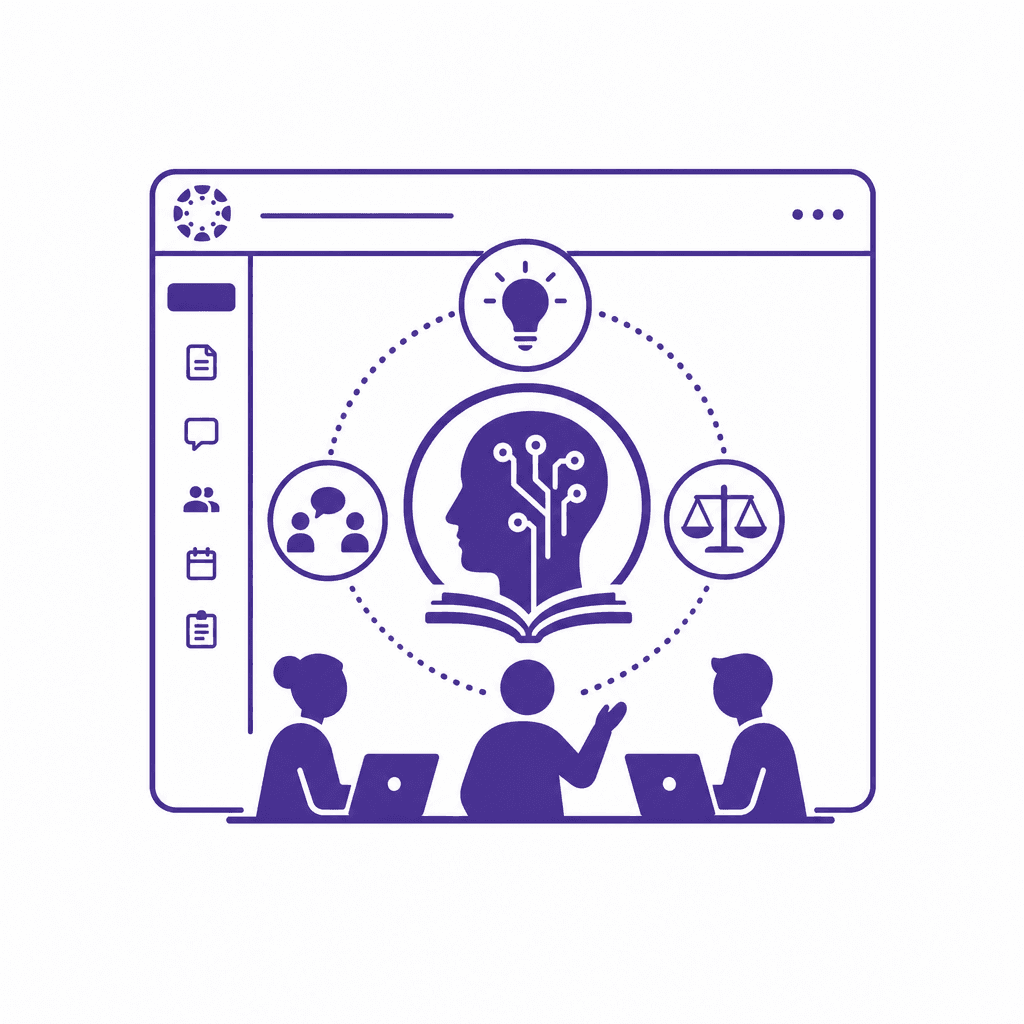
As educational technology continues to evolve, integrating AI in platforms like Canvas offers new opportunities for fostering critical thinking and deeper student engagement. This article explores innovative strategies to harness AI effectively within the learning management system, ensuring that student experiences are enriched and not diminished.
Understanding AI in Education
AI is reshaping the educational landscape, offering transformative tools and resources designed to enhance teaching and learning experiences. In modern education, AI serves multiple roles, from personalizing learning pathways to providing insightful student analytics. One of the most significant benefits of AI is its capacity to tailor educational experiences to individual needs, addressing varying skill levels and learning preferences. This personalization fosters a classroom environment where critical thinking is not merely encouraged but is an essential aspect of daily engagement. Moreover, AI can streamline administrative tasks, allowing educators to focus more on pedagogy rather than logistics, thus promoting deeper engagement. With robust data analytics capabilities, instructors can assess student performance in real-time, identifying areas for improvement and adapting their teaching strategies accordingly. However, the challenges of ethical AI use must not be overlooked; educators must ensure that AI tools are implemented in ways that respect student privacy and promote equity. Ultimately, when leveraged thoughtfully, AI can complement teaching practices, enhancing not only the learning experience but also the development of higher-order skills and critical thought among students, paving the way for an enriched educational journey.
The Canvas Learning Management System
The Canvas Learning Management System (LMS) represents a pivotal platform for integrating AI tools into educational practices, enabling a more enriched learning experience. Its user-friendly design is a significant advantage, allowing educators to seamlessly incorporate AI-driven activities that challenge students' critical thinking and analytical skills. The platform’s collaborative tools, such as discussion boards and group projects, promote interaction among students, fostering an environment where deeper engagement thrives. Moreover, Canvas offers robust analytics capabilities that enable instructors to track students' progress and engagement levels. By analyzing this data, educators can tailor their approaches, offering personalized support that encourages critical inquiry rather than rote learning. The real-time feedback mechanisms within Canvas empower students to reflect on their learning paths, ultimately enhancing their problem-solving skills. Additionally, the integration of AI can facilitate adaptive learning paths within Canvas, ensuring that students are challenged according to their unique abilities. This approach not only prevents 'leveling down' the educational experience but actively works to elevate it, encouraging students to delve deeper into complex concepts while honing their ability to think critically. By leveraging these features, educators can create a more dynamic learning landscape that prioritizes ethical AI use and student engagement.
Instructional Design Principles for AI-Enhanced Learning
To effectively integrate AI into Canvas courses, instructional designers must adhere to key principles that elevate student learning rather than reduce it. First, **constructivist principles** should be prioritized, encouraging students to build their own understanding through exploration and collaboration with AI tools. This approach fosters a learning environment where students actively engage with content, applying AI to analyze data and draw conclusions, thereby deepening their critical thinking skills. Second, **scaffolding techniques** are essential in designing AI-enhanced activities. By providing students with tailored prompts and resources, instructors can guide them through complex problem-solving processes. For instance, using AI-driven analytics, educators can offer personalized feedback that helps students reflect on their learning journey, ensuring they are continually challenged and engaged. Additionally, **active learning strategies** should dominate the curriculum. Educators can incorporate AI simulations or role-playing scenarios that require students to synthesize information and collaborate to tackle real-world problems. This immersive experience not only aids retention but also cultivates higher-order thinking skills. Ultimately, embedding ethical considerations into AI use promotes a balanced approach, ensuring that students learn to navigate technology responsibly. By prioritizing deep learning and student engagement, instructional design can transform AI tools from mere task automators into catalysts for profound educational experiences.
Fostering Critical Thinking through AI Activities
Incorporating AI-driven activities within Canvas can significantly enhance critical thinking among students by fostering environments that challenge their analytical and creative capabilities. For instance, project-based learning assignments can utilize AI to present real-world scenarios where students are required to research, analyze, and propose innovative solutions. An example might involve students using AI tools to gather and process data related to climate change, prompting them to evaluate sources critically and synthesize findings into actionable plans. Similarly, simulations can leverage AI to create immersive experiences where students must navigate complex problems. In a history course, for instance, students can engage with an AI-driven simulation of a historical event, which allows them to interact with virtual stakeholders and explore the implications of different decisions. This approach encourages learners to assess varied perspectives and consequences. Collaborative tasks are equally beneficial; students can use AI chatbots within Canvas to engage in discussions on ethical dilemmas in technology. By collectively analyzing the responses generated by AI, students can critically assess the validity and implications of differing viewpoints. Such activities not only deepen understanding but also promote a culture of inquiry, encouraging students to evaluate and create rather than merely consume information.
Encouraging Ethical AI Use in Education
As we delve deeper into the integration of AI within educational settings, it’s imperative to address ethical considerations that accompany this technology. To harness the full potential of AI in Canvas while safeguarding our core educational values, we must embrace principles of responsible AI use. A foundational aspect of ethical AI involves transparency; students should understand how AI tools function and the data they collect. Encouraging students to scrutinize AI outputs fosters critical thinking and promotes digital literacy. Furthermore, we must consider equity in AI implementation. Not all students have equal access to technology or the same learning contexts. Instructional designers should prioritize inclusivity, ensuring AI tools accommodate diverse learning needs, thus avoiding biases that could disproportionately affect marginalized students. Responsibility also extends to the interaction between AI and educators. Teachers must remain facilitators, guiding students in utilizing AI tools effectively while allowing space for creativity and exploration. Integrating ethical discussions into the curriculum can empower students to think critically about the implications of AI, allowing them to approach technology as informed, conscientious users rather than passive consumers. This way, we can ensure that AI enhances, rather than diminishes, the educational experience.
Evaluating the Impact of AI on Student Engagement
Evaluating the impact of AI-enhanced activities on student engagement and critical thinking is crucial for informed instructional design. Educators should adopt comprehensive methods to assess how these technologies contribute to learning outcomes. One effective approach is to establish specific metrics tied to engagement and cognitive challenges. **Quantitative metrics** such as participation rates, completion timelines on AI-driven assignments, and scores from assessments designed to promote higher-order thinking help gauge the immediate impact of AI initiatives. In conjunction, **qualitative measures**—like student reflections, peer evaluations, and instructor observations—provide nuanced insight into how AI tools shape critical thinking and engagement. Feedback mechanisms also play a vital role in this evaluation. Implementing structured surveys allows students to express their perceptions of AI activities, focusing on aspects like difficulty, relevance, and personal engagement. Moreover, incorporating peer feedback can enhance collaborative learning experiences. Regular analysis of both metrics and feedback enables educators to fine-tune their AI applications, ensuring a dynamic learning environment that continually fosters deeper engagement and critical thinking. This iterative evaluation process not only identifies areas for improvement but also empowers educators to make informed decisions that enhance the learning experience.
Conclusions
Incorporating AI into educational practices within Canvas can enhance critical thinking and engagement when approached thoughtfully. By understanding the balance between technology and meaningful learning, educators can create experiences that challenge and inspire students. Ethical AI use is essential in maintaining educational integrity while promoting interactive, engaging learning environments.
Understanding AI in Education
AI is reshaping the educational landscape, offering transformative tools and resources designed to enhance teaching and learning experiences. In modern education, AI serves multiple roles, from personalizing learning pathways to providing insightful student analytics. One of the most significant benefits of AI is its capacity to tailor educational experiences to individual needs, addressing varying skill levels and learning preferences. This personalization fosters a classroom environment where critical thinking is not merely encouraged but is an essential aspect of daily engagement. Moreover, AI can streamline administrative tasks, allowing educators to focus more on pedagogy rather than logistics, thus promoting deeper engagement. With robust data analytics capabilities, instructors can assess student performance in real-time, identifying areas for improvement and adapting their teaching strategies accordingly. However, the challenges of ethical AI use must not be overlooked; educators must ensure that AI tools are implemented in ways that respect student privacy and promote equity. Ultimately, when leveraged thoughtfully, AI can complement teaching practices, enhancing not only the learning experience but also the development of higher-order skills and critical thought among students, paving the way for an enriched educational journey.
The Canvas Learning Management System
The Canvas Learning Management System (LMS) represents a pivotal platform for integrating AI tools into educational practices, enabling a more enriched learning experience. Its user-friendly design is a significant advantage, allowing educators to seamlessly incorporate AI-driven activities that challenge students' critical thinking and analytical skills. The platform’s collaborative tools, such as discussion boards and group projects, promote interaction among students, fostering an environment where deeper engagement thrives. Moreover, Canvas offers robust analytics capabilities that enable instructors to track students' progress and engagement levels. By analyzing this data, educators can tailor their approaches, offering personalized support that encourages critical inquiry rather than rote learning. The real-time feedback mechanisms within Canvas empower students to reflect on their learning paths, ultimately enhancing their problem-solving skills. Additionally, the integration of AI can facilitate adaptive learning paths within Canvas, ensuring that students are challenged according to their unique abilities. This approach not only prevents 'leveling down' the educational experience but actively works to elevate it, encouraging students to delve deeper into complex concepts while honing their ability to think critically. By leveraging these features, educators can create a more dynamic learning landscape that prioritizes ethical AI use and student engagement.
Instructional Design Principles for AI-Enhanced Learning
To effectively integrate AI into Canvas courses, instructional designers must adhere to key principles that elevate student learning rather than reduce it. First, **constructivist principles** should be prioritized, encouraging students to build their own understanding through exploration and collaboration with AI tools. This approach fosters a learning environment where students actively engage with content, applying AI to analyze data and draw conclusions, thereby deepening their critical thinking skills. Second, **scaffolding techniques** are essential in designing AI-enhanced activities. By providing students with tailored prompts and resources, instructors can guide them through complex problem-solving processes. For instance, using AI-driven analytics, educators can offer personalized feedback that helps students reflect on their learning journey, ensuring they are continually challenged and engaged. Additionally, **active learning strategies** should dominate the curriculum. Educators can incorporate AI simulations or role-playing scenarios that require students to synthesize information and collaborate to tackle real-world problems. This immersive experience not only aids retention but also cultivates higher-order thinking skills. Ultimately, embedding ethical considerations into AI use promotes a balanced approach, ensuring that students learn to navigate technology responsibly. By prioritizing deep learning and student engagement, instructional design can transform AI tools from mere task automators into catalysts for profound educational experiences.
Fostering Critical Thinking through AI Activities
Incorporating AI-driven activities within Canvas can significantly enhance critical thinking among students by fostering environments that challenge their analytical and creative capabilities. For instance, project-based learning assignments can utilize AI to present real-world scenarios where students are required to research, analyze, and propose innovative solutions. An example might involve students using AI tools to gather and process data related to climate change, prompting them to evaluate sources critically and synthesize findings into actionable plans. Similarly, simulations can leverage AI to create immersive experiences where students must navigate complex problems. In a history course, for instance, students can engage with an AI-driven simulation of a historical event, which allows them to interact with virtual stakeholders and explore the implications of different decisions. This approach encourages learners to assess varied perspectives and consequences. Collaborative tasks are equally beneficial; students can use AI chatbots within Canvas to engage in discussions on ethical dilemmas in technology. By collectively analyzing the responses generated by AI, students can critically assess the validity and implications of differing viewpoints. Such activities not only deepen understanding but also promote a culture of inquiry, encouraging students to evaluate and create rather than merely consume information.
Encouraging Ethical AI Use in Education
As we delve deeper into the integration of AI within educational settings, it’s imperative to address ethical considerations that accompany this technology. To harness the full potential of AI in Canvas while safeguarding our core educational values, we must embrace principles of responsible AI use. A foundational aspect of ethical AI involves transparency; students should understand how AI tools function and the data they collect. Encouraging students to scrutinize AI outputs fosters critical thinking and promotes digital literacy. Furthermore, we must consider equity in AI implementation. Not all students have equal access to technology or the same learning contexts. Instructional designers should prioritize inclusivity, ensuring AI tools accommodate diverse learning needs, thus avoiding biases that could disproportionately affect marginalized students. Responsibility also extends to the interaction between AI and educators. Teachers must remain facilitators, guiding students in utilizing AI tools effectively while allowing space for creativity and exploration. Integrating ethical discussions into the curriculum can empower students to think critically about the implications of AI, allowing them to approach technology as informed, conscientious users rather than passive consumers. This way, we can ensure that AI enhances, rather than diminishes, the educational experience.
Evaluating the Impact of AI on Student Engagement
Evaluating the impact of AI-enhanced activities on student engagement and critical thinking is crucial for informed instructional design. Educators should adopt comprehensive methods to assess how these technologies contribute to learning outcomes. One effective approach is to establish specific metrics tied to engagement and cognitive challenges. **Quantitative metrics** such as participation rates, completion timelines on AI-driven assignments, and scores from assessments designed to promote higher-order thinking help gauge the immediate impact of AI initiatives. In conjunction, **qualitative measures**—like student reflections, peer evaluations, and instructor observations—provide nuanced insight into how AI tools shape critical thinking and engagement. Feedback mechanisms also play a vital role in this evaluation. Implementing structured surveys allows students to express their perceptions of AI activities, focusing on aspects like difficulty, relevance, and personal engagement. Moreover, incorporating peer feedback can enhance collaborative learning experiences. Regular analysis of both metrics and feedback enables educators to fine-tune their AI applications, ensuring a dynamic learning environment that continually fosters deeper engagement and critical thinking. This iterative evaluation process not only identifies areas for improvement but also empowers educators to make informed decisions that enhance the learning experience.
Conclusions
Incorporating AI into educational practices within Canvas can enhance critical thinking and engagement when approached thoughtfully. By understanding the balance between technology and meaningful learning, educators can create experiences that challenge and inspire students. Ethical AI use is essential in maintaining educational integrity while promoting interactive, engaging learning environments.