Rethinking Achievement: Designing Assessments for Deeper Learning in Canvas (AI Era)
The rise of AI challenges traditional assessment methods, especially for high-achieving students. This article provides practical strategies for educators and instructional designers to use Canvas LMS features and pedagogical approaches to design assessments that encourage and measure deeper learning, critical thinking, and genuine skill development. Explore how to move beyond superficial outputs, foster academic integrity, and create evaluations that truly reflect student achievement in an AI-integrated educational landscape.
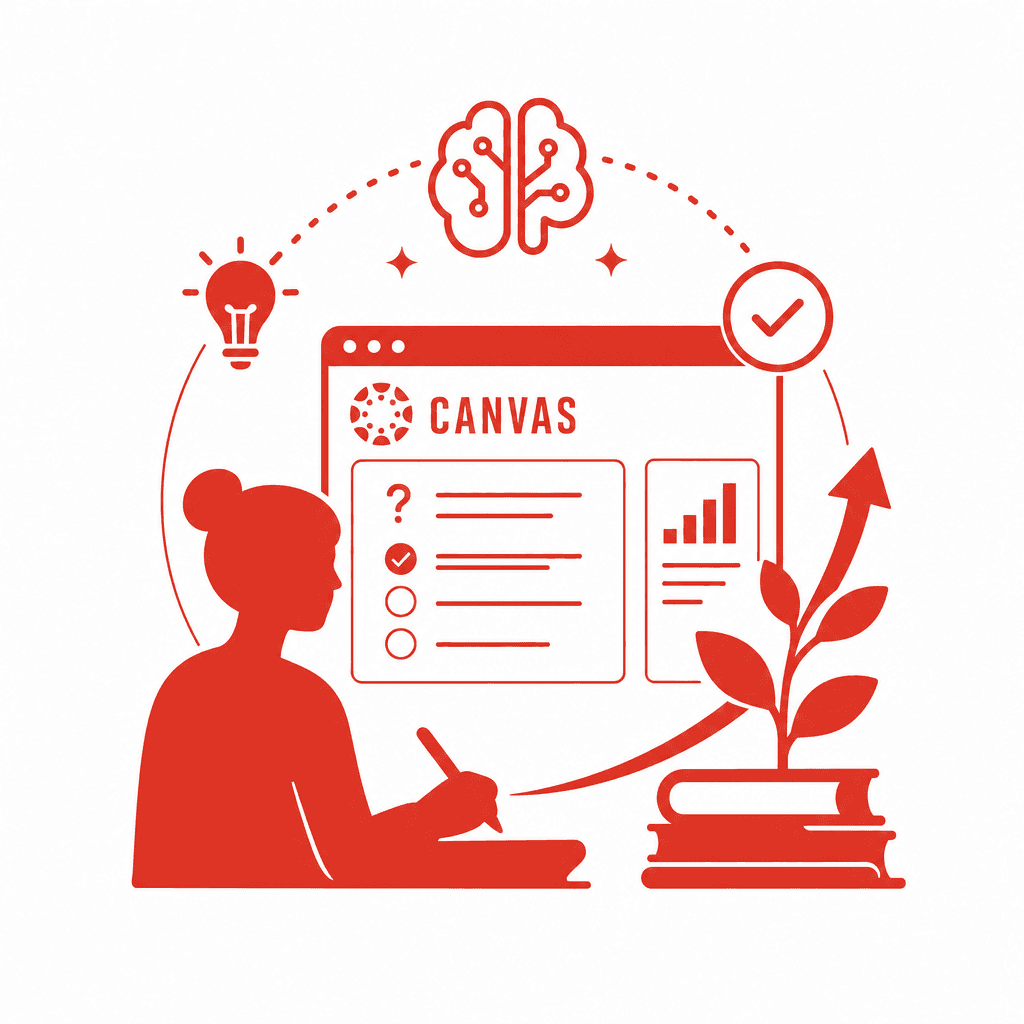
As artificial intelligence transforms the educational landscape, traditional assessment methods face significant challenges, particularly for high-achieving students. This article delves into innovative strategies for educators and instructional designers using Canvas LMS, focusing on how to design assessments that promote deeper learning and critical thinking while maintaining academic integrity.
The Impact of AI on Traditional Assessments
The emergence of artificial intelligence (AI) in education has profound implications for traditional assessments, particularly for high-achieving students. As AI technologies advance, they challenge the conventional methods of evaluating student performance. For instance, automated essay scoring and AI-powered problem-solving tools can create an environment where innovative responses may be produced without truly reflecting the learner's understanding or skills. This shift necessitates a reevaluation of assessment strategies. High-achieving students may find traditional assessments inadequate, as AI can produce high-quality outputs that sometimes mask a lack of deep learning or critical thinking. Consequently, educators must adapt their assessment methods to ensure they demand higher-order thinking and authentic engagement with content. Moreover, while AI can enhance assessments through personalized learning pathways and formative feedback, it also raises concerns about academic integrity. Students may resort to using AI tools inappropriately, which can distort their learning process. To address these challenges, educators should focus on creating assessments that not only incorporate AI but also promote reflective practice and integrity. This requires a thoughtful integration of Canvas LMS features to design evaluations that emphasize deeper learning while mitigating the risks associated with AI.
Understanding Deeper Learning
Deeper learning is an educational paradigm that emphasizes the mastery of content through critical thinking, problem-solving, collaboration, and self-directed learning. Significantly, deeper learning transcends memorization or rote knowledge, focusing instead on the application and transfer of concepts to real-world contexts. In this AI-infused educational landscape, the importance of fostering deeper learning becomes paramount, as superficial learning outcomes may inadequately prepare students for the complexities of modern challenges. The core characteristics of deeper learning include: - **Critical Thinking**: Encourages students to analyze information, evaluate evidence, and synthesize new ideas rather than simply regurgitating facts. - **Problem-Solving**: Engages learners in finding innovative solutions to complex problems, fostering an adaptive mindset suited for the fast-evolving job market. - **Collaboration**: Promotes teamwork, where students learn the value of diverse perspectives and collective efforts in driving deeper understanding. In stark contrast, superficial learning often results in fleeting knowledge, wherein students may perform well on traditional assessments without truly grasping underlying concepts. This divergence carries significant implications for assessment design. To effectively measure deeper learning, assessments must be reimagined to focus on the processes and competencies essential for navigating an increasingly complex world, thereby reinforcing the need for assessments that prioritize critical skills over mere content retention.
Leveraging Canvas LMS for Innovative Assessments
The Canvas LMS offers a variety of features that can facilitate innovative assessment strategies aimed at deeper learning outcomes. One notable tool is the **quiz feature**, which can be designed to go beyond basic recall questions. Educators can create scenario-based questions that require students to apply concepts in realistic contexts, thus fostering critical thinking. For example, an assessment could prompt students to analyze a complex case study and devise solutions, challenging them to use their knowledge creatively. **Discussions** within Canvas can also be leveraged to promote collaborative learning. By facilitating structured online discussions, educators can engage students in deep dialogues around course content, encouraging them to articulate their understanding and challenge each other's perspectives. This peer interaction not only deepens understanding but also mirrors real-world academic dialogue. Moreover, **peer review** functionalities allow students to evaluate their peers’ work against established criteria. This reflection process helps students think critically about content quality while gaining insights from different viewpoints, further enhancing their analytical skills. By integrating these Canvas features effectively, assessments can foster an environment of deeper learning that prepares students for the complexities of the modern world.
Designing Assessments that Foster Critical Thinking
In the context of Canvas LMS, educators can design assessments that genuinely challenge students to think critically and creatively. Moving beyond traditional testing methods, a variety of assessment tasks can be employed. **Project-based assessments** allow students to engage deeply with real-world problems, encouraging them to synthesize information and apply skills in a meaningful context. By using Canvas tools, students can collaborate in groups, share resources, and present their findings in creative formats. **Case studies** are another effective method, enabling students to analyze complex scenarios, weigh evidence, and develop reasoned solutions. This approach encourages students to connect theoretical knowledge with practical application, enhancing critical thinking skills. **Reflective essays** prompt students to consider their learning journeys, analyze their thought processes, and make connections between concepts. In Canvas, the integration of peer reviews allows for constructive feedback, nurturing a culture of reflection and continuous improvement. By incorporating these diverse assessment types, educators can create an environment that fosters deeper learning. This approach not only enhances critical thinking but also prepares students to navigate the complexities of an AI-enhanced educational landscape, showcasing their skills authentically and effectively.
Ensuring Academic Integrity in the Age of AI
The rise of AI in education poses significant challenges to maintaining academic integrity, especially as students may be tempted to leverage AI tools for shortcuts rather than genuine learning. To foster a culture of honesty and originality within Canvas LMS, educators should implement strategic assessment designs that discourage dishonest practices. Utilizing unique prompts for assessments can be an effective strategy; by challenging students to think creatively about their responses, they are less likely to find pre-existing answers through AI. Additionally, timed assessments can limit the opportunity for students to consult external aids, ensuring that their responses truly reflect their knowledge and understanding under pressure. Another powerful approach is to require drafts or iterative submissions where students must submit their work in stages. This not only helps to track their progress and thought processes but also encourages engagement with the material rather than superficial completion. Incorporating peer review processes within Canvas allows students to engage critically with one another’s work, further discouraging academic dishonesty. Clear communication of the importance of academic integrity, alongside these practical strategies, helps nurture an environment where original thought and deeper learning thrive, even in an AI-integrated landscape.
Evaluation and Feedback for Continuous Improvement
Ongoing evaluation and feedback are crucial components of a robust assessment process, particularly in an AI-influenced educational landscape. These methodologies provide a framework for educators and instructional designers to facilitate deeper learning experiences. By incorporating iterative feedback loops, students engage in a continuous dialogue about their progress, fostering an environment of growth rather than mere validation of success. Providing constructive feedback requires thoughtful strategies. Using Canvas LMS features, educators can create specific, actionable comments linked to individual performance metrics. This can be achieved through integrated tools such as rubrics and comment banks that align closely with learning objectives. Engaging in formative assessments allows educators to pinpoint student strengths and weaknesses throughout the course, rather than solely at the end. Encouraging reflective practices is also essential. Assignments should include opportunities for self-assessment, where students can evaluate their work based on established criteria. This not only cultivates critical thinking skills but also reinforces academic integrity. When students are actively involved in assessing their own learning against meaningful standards, they are more likely to internalize the feedback and strive for continuous improvement, ultimately leading to enhanced engagement and achievement.
Conclusions
In conclusion, adapting assessment strategies in the Canvas LMS to embrace deeper learning is essential in the age of AI. By incorporating innovative techniques and aligning evaluations with genuine skill development, educators can create a framework that not only upholds academic integrity but also accurately reflects student achievements and fosters critical thinking skills.