
Rethinking Digital Certificates in Canvas - From PDFs to Verifiable Credentials
Explore the shift from static PDF certificates to dynamic, verifiable digital credentials within Canvas LMS. This guide will cover the benefits for learners and institutions, practical steps for implementation using existing Canvas features or third-party integrations, and how to future-proof your course completion recognition in the evolving digital landscape.
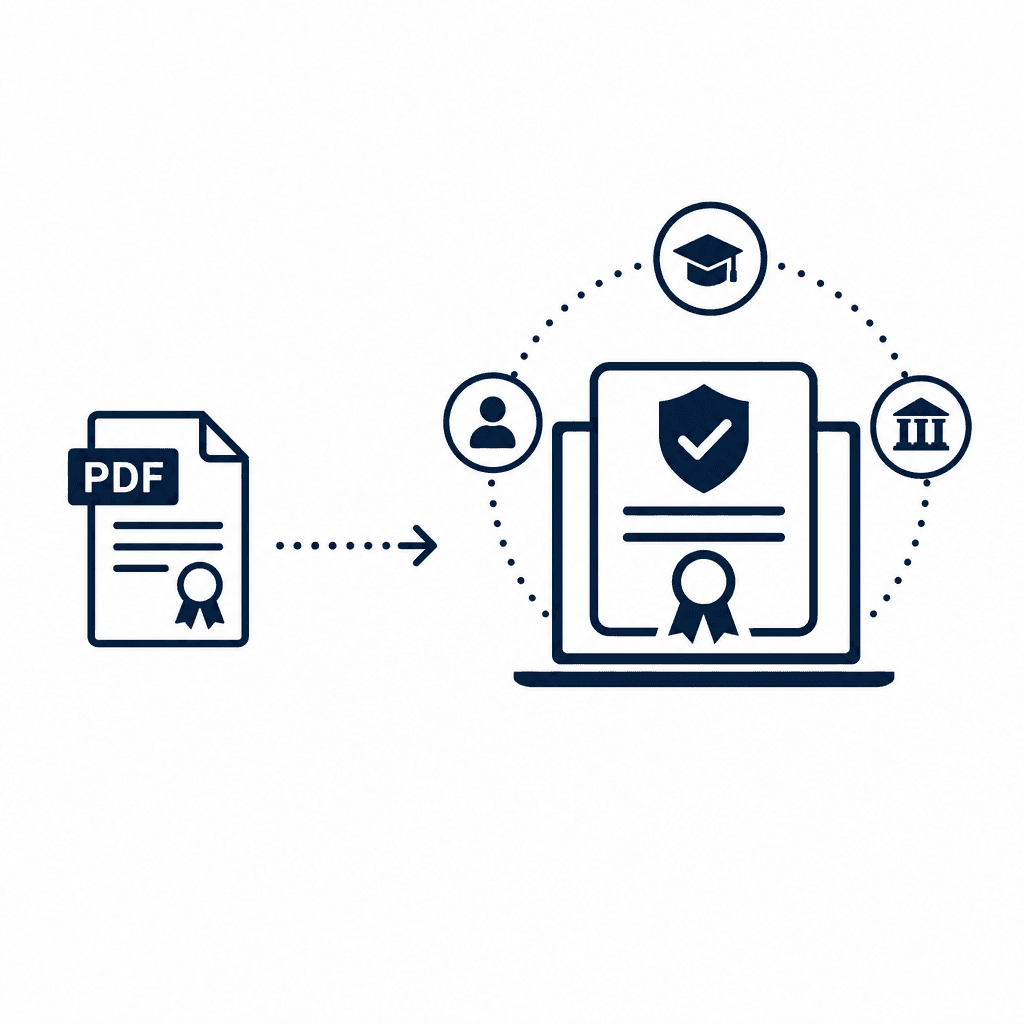
Understanding Digital Credentials
The landscape of educational credentials has undergone significant transformation with the rise of digital technology. Digital credentials are online representations of achievements, qualifications, or skills. This section will detail various types of digital credentials, such as badges, transcripts, and certificates, explaining their significance in the online learning ecosystem. Digital credentials serve as a modern alternative to traditional recognition methods, allowing learners to showcase their competencies in a more effective manner. Some common types include: - **Badges**: These are often used to acknowledge specific skills or achievements and can be easily shared across social platforms. - **Transcripts**: Digital transcripts provide a comprehensive view of a learner’s performance and academic history in real-time. - **Certificates**: Unlike static PDFs, dynamic digital certificates can incorporate metadata, including course content, date of achievement, and institutional branding. The importance of digital credentials extends beyond mere representation of courses completed. They empower learners to present their qualifications in a verifiable format, enhancing employability and recognition in a fast-evolving job market. Furthermore, institutions benefit by simplifying the credential verification process and increasing the credibility of their programs, aligning education with the digital transformation of modern society.
Limitations of Static PDF Certificates
Despite their widespread use, traditional PDF certificates come with significant limitations that hinder their effectiveness in the modern educational landscape. One of the most pressing challenges of PDF certificates is their vulnerability to manipulation. Crafty individuals can easily alter names, dates, and accomplishments, leading to widespread forgery and misrepresentation, ultimately jeopardizing the integrity of qualifications. This raises serious concerns not only for the institutions issuing the certificates but also for learners who depend on their credentials to advance their careers.
Furthermore, PDF certificates often lack features that ensure authenticity and verification, making it difficult for employers and educational institutions to trust their legitimacy. As the job market increasingly emphasizes skills verification, many employers remain skeptical toward static certificates, favoring more dynamic and secure forms of credentialing. This skepticism can create barriers for learners attempting to present their accomplishments to potential employers, limiting the career opportunities that these certificates are supposed to enhance. In the evolving landscape of online learning, the need for reliable, authentic recognition of course completion has never been more critical.
Introduction to Verifiable Credentials
Verifiable credentials represent a groundbreaking shift in the realm of digital certifications, combining innovative technologies to ensure authenticity and security. These digital artifacts are designed to assert an individual’s accomplishments and skills in a way that is both tamper-proof and easily verifiable by relevant parties. Unlike traditional certificates, verifiable credentials utilize a decentralized approach, often anchored on blockchain technology, which allows for real-time validation without the need for central authorities. This technological backbone ensures that once credentials are issued, they are securely locked and less susceptible to forgery or misrepresentation.
- Verifiable credentials are composed of three key components: the issuer, the subject (the learner), and the verifier. The issuer, such as an educational institution, creates the credential, embedding essential information such as the learner's achievements and skills. The subject receives this digital badge or certification, while the verifier, like potential employers, can access and validate the credential’s authenticity with minimal effort.
- In contrast to traditional certificates, which can be printed, scanned, and easily altered, verifiable credentials maintain a secure lineage. They provide a permanent digital record of accomplishments, ensuring that learners’ achievements are not only recognized but also respected across various platforms.
- The technology propelling verifiable credentials includes cryptographic signatures that ensure the integrity of the issued data. This method guarantees that any tampering is detectable, thereby creating a higher degree of trust between learners and institutions. In essence, verifiable credentials represent a commitment to integrity and transparency in the ever-evolving landscape of online learning and course completion recognition.
Benefits for Learners and Institutions
Implementing verifiable digital credentials offers significant advantages for learners navigating an increasingly competitive job market. These credentials not only validate skills and accomplishments but also empower students to present their qualifications authentically and efficiently. By sharing verifiable skills on professional platforms, learners enhance their employability, allowing prospective employers to verify achievements instantly without the cumbersome process of validating static PDF certificates.
On the institutional side, adopting verifiable credentials strengthens an institution's reputation. By ensuring that their graduates possess recognized and verifiable skills, educational institutions can attract more students and partnerships with industry. This improved credibility in the educational landscape fosters trust among stakeholders, including employers, current students, and alumni.
Moreover, verifiable credentials help combat issues of credential fraud, a growing concern in online learning environments. By using secure technologies to issue these credentials, institutions can ensure that their graduates' achievements are both trustworthy and transparent. This symbiotic relationship enhances the overall educational ecosystem, benefiting learners while fortifying institutional credibility in a digital age.
Implementing Verifiable Credentials in Canvas LMS
Shifting to verifiable digital credentials within the Canvas LMS is a highly achievable task, facilitated by a combination of its native features and third-party tools. Institutions can capitalize on Canvas's existing functionalities, such as its intuitive user interface and robust course management systems, to enhance the credentialing process. By leveraging the built-in tools for course completion tracking, educators can define criteria that automatically trigger the issuance of verifiable credentials upon successful learner completion.
To begin the setup process, institutions should ensure they have the necessary permissions enabled within Canvas. This includes configuring assignment requirements, grading scales, and completion criteria. Start by creating a dedicated course for credentialing, where specific modules can outline the skills acquired through the program. Once the prerequisites are established, the next step involves designing the digital credentials. Institutions can create visually engaging badges or certificates using design tools readily available online.
For a more sophisticated system, exploring third-party integration options such as Badgr or Credly can provide enhanced functionality for issuing and verifying credentials. These solutions typically offer seamless integration with Canvas, allowing for automated uploads of earned credentials directly to digital wallets. This integration not only streamlines the issuance process but also boosts learners’ portfolio visibility, making achievements easily shareable across professional networks. By implementing these steps, institutions can effectively transition to a dynamic credentialing system that aligns with contemporary educational demands.
Future-Proofing Course Completion Recognition
The educational landscape is rapidly evolving, necessitating the need for institutions to future-proof their course completion recognition systems. As digital credentials gain traction, adapting to technological changes becomes imperative. Institutions must understand that the transition to verifiable credentials extends beyond simple implementation; it requires an ongoing commitment to evolving educational strategies and technologies. By embracing verifiable credentials, institutions not only enhance the security and recognition of achievements for learners but also position themselves as leaders in innovative educational practices. This shift can translate into long-term benefits such as increased student enrollment, employer trust in the qualifications, and streamlined processes in the verification of skills. To create a roadmap for future credentialing, institutions can focus on continuous professional development in instructional design and technology integration. Collaborating with edtech companies can also enhance the delivery of dynamic credentials. Building a flexible framework that accommodates various forms of learning and assessment will further ensure that the credentials offered are relevant and valuable in an ever-changing job market. By anticipating future needs and continuously improving credentialing practices, institutions will remain competitive and responsive to the demands of both learners and employers.
Conclusions
In summary, transitioning to verifiable digital credentials within Canvas LMS represents a vital step in modernizing course completion recognition. By embracing this shift, educational institutions can enhance credential validity, streamline verification processes, and better prepare learners for an increasingly digital world.