
Rethinking High Achievement: Assessing and Rewarding Deeper Learning in Canvas in the AI Era
In a learning landscape transformed by AI, traditional metrics of high achievement are being challenged. This article guides Canvas educators and instructional designers on how to evolve assessment strategies and grading rubrics to genuinely identify and reward deeper learning, critical thinking, and advanced skills that go beyond AI-assisted output. Explore practical approaches to foster and measure authentic student mastery in an AI-integrated classroom.
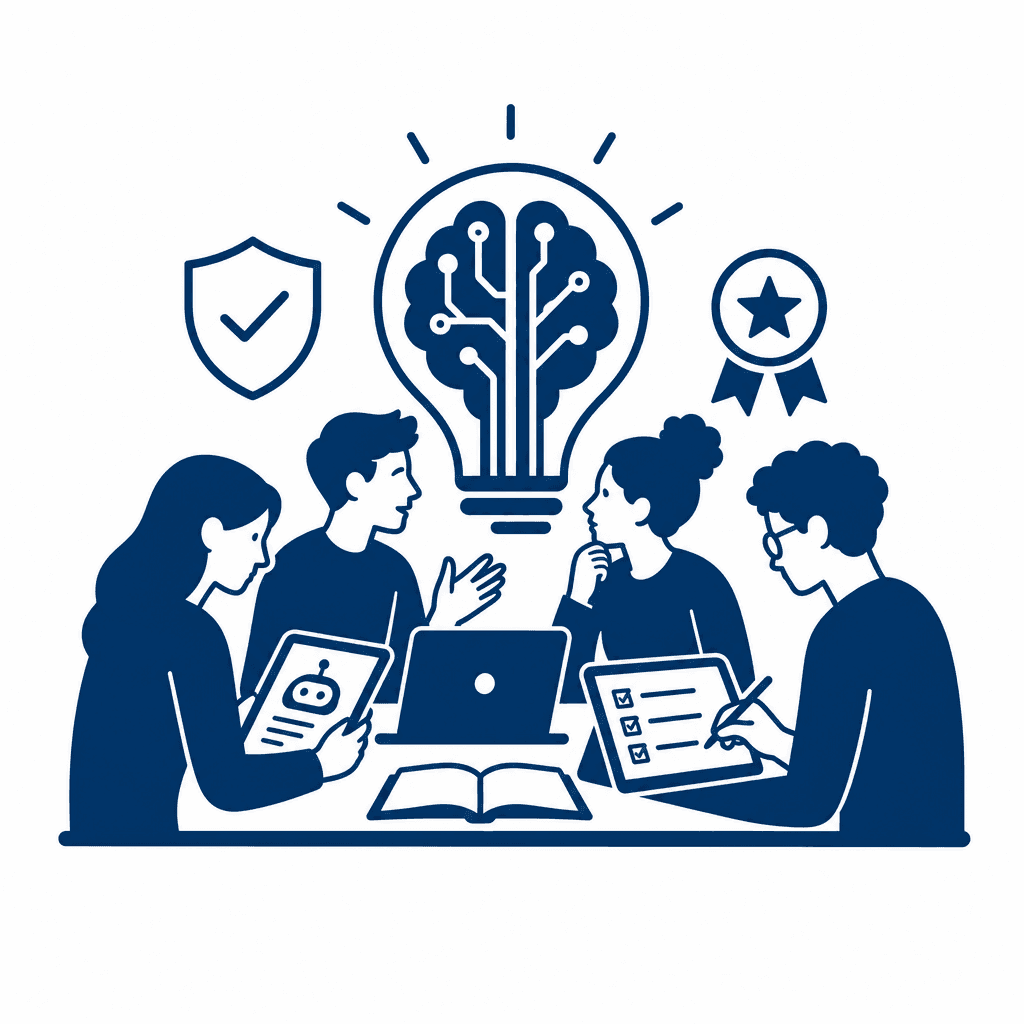
As AI reshapes the educational landscape, there is a pressing need to rethink how we assess and reward student achievement. Traditional metrics may no longer capture the nuances of deeper learning, critical thinking, and creativity. This article explores innovative assessment strategies within the Canvas platform to ensure that we accurately measure and celebrate authentic student mastery in the age of AI.
The Impact of AI on Education
The impact of AI on education has reshaped not only teaching methodologies but also the concept of high achievement. Traditional methods, reliant on standardized testing and rote learning, struggle to adapt to an era where students can access vast amounts of information and analytical tools at their fingertips. AI has facilitated personalized learning experiences, allowing students to engage with content in ways that align with their individual strengths and interests. As a result, students now interact with knowledge not as passive recipients but as active participants who can synthesize, analyze, and create. However, this shift brings challenges in assessing student performance against conventional high achievement metrics. Many existing assessment frameworks inadequately capture the nuances of deeper learning and critical thinking skills that AI encourages. The reliance on AI-generated outputs can potentially undermine academic integrity, prompting concerns regarding originality and the true essence of a student's understanding. To truly measure student progress in an AI-integrated classroom, educators must rethink high achievement metrics. This requires an emphasis on complex problem-solving, innovative thinking, and collaborative skills—areas where traditional assessments often fall short. Thus, it is essential to evolve assessment methods to reflect the capabilities of today's learners, ensuring that they are well prepared for a future where AI plays a pivotal role in all knowledge fields.
Rethinking Assessment Strategies
In the era of AI, traditional assessment methods often fail to capture the complexities of student learning and understanding. Relying heavily on standardized tests and summative assessments limits opportunities for students to demonstrate their mastery in meaningful ways. Consequently, educators must adopt innovative assessment strategies that resonate with deeper learning objectives. Formative assessments, designed to provide ongoing feedback, allow students to engage with the material actively and reflectively. These assessments can take various forms, such as quick quizzes, interactive discussions, or digital portfolios, all of which encourage a growth mindset and continuous improvement. Additionally, self-assessments empower learners to evaluate their progress critically, fostering autonomy and intrinsic motivation. By articulating their strengths and areas for growth, students become active participants in their learning journey. Peer evaluations further enhance this process by integrating collaborative learning. When students assess one another's work, they not only reinforce their comprehension but also develop critical thinking and evaluative skills essential in a world increasingly influenced by AI. By incorporating these innovative assessment strategies into Canvas, educators can cultivate a richer educational experience that effectively tracks student progress while genuinely reflecting their understanding and mastery.
Creating Effective Grading Rubrics
Creating effective grading rubrics is essential for accurately assessing deeper learning outcomes in the AI era. Traditional rubrics often emphasize rote memory or basic comprehension, falling short of evaluating critical thinking, creativity, and problem-solving skills. Essential components of effective grading rubrics should include clear learning objectives, specific criteria for various levels of performance, and a focus on skills that reflect real-world applications. For example, a rubric designed to assess critical thinking might include criteria such as the ability to analyze information, evaluate sources, and formulate coherent arguments. Similarly, a rubric for creativity could evaluate originality, flexibility in thought, and the execution of innovative ideas. Problem-solving rubrics should assess students on their reasoning processes, their capacity to identify and analyze problems, and the effectiveness of their proposed solutions. Implementing these rubrics in Canvas facilitates transparent and fair evaluations. Educators can leverage Canvas’s integrated grading tools to provide real-time feedback, allowing for iterative improvements. By aligning assessments with deeper learning skills, educators can ensure that grading reflects a student's true mastery and understanding, ultimately fostering a richer learning experience in an AI-enhanced environment.
Fostering Authentic Mastery
In cultivating authentic mastery, educators must embrace active learning modalities that empower students to engage deeply with content. By implementing project-based learning, students can tackle real-world challenges that necessitate critical thinking and collaboration. For instance, assignments can be structured around interdisciplinary themes, urging students to synthesize knowledge from multiple domains. This approach not only fosters deeper understanding but also encourages the practical application of skills in contexts beyond the classroom. Moreover, integrating technology tools available in Canvas can significantly enhance collaborative learning experiences. The platform allows for group projects where students can share resources, provide feedback, and co-create solutions, thus mirroring real-world scenarios. Utilizing features like discussion boards or collaborative documents reinforces communication skills and promotes an atmosphere of inquiry and innovation. Additionally, assessments should be designed to measure not only knowledge acquisition but also skill application. Incorporating peer assessments encourages students to engage critically with each other's work, cultivating a community of respect and growth. Ultimately, these strategies ensure that students are not merely passive consumers of information but active participants in their learning journeys, paving the path to authentic mastery in an AI-enhanced educational landscape.
Ensuring Academic Integrity
In an AI-driven learning environment, the challenges to maintaining academic integrity are increasingly complex. As students gain access to powerful tools that can generate responses and aid learning, the line between independent work and AI-assisted output blurs. Educators need practical strategies to promote honesty and accountability, ensuring that students engage genuinely with content and assessments. One approach is to redesign assessments to emphasize critical thinking and creative problem-solving, tasks inherently resistant to AI completion. Collaborative projects and open-ended questions can encourage students to express unique perspectives rather than relying solely on AI-generated content. Educators can also foster a culture of integrity by clearly communicating expectations related to academic honesty. This includes transparent discussion around the use of AI tools, outlining their acceptable use in academic work and requiring proper attribution when these tools are employed. Additionally, implementing formative assessments or reflective journals can help students articulate their thought processes and learning journeys, making it harder for them to misrepresent AI contributions as their own. By cultivating environments that value ethical behavior in conjunction with technological assistance, educators can encourage students to take ownership of their learning while navigating the evolving landscape of education.
Measuring Success Beyond Grades
In an era where AI shapes learning ecosystems, the definition of success goes beyond traditional grades. Assessment strategies must evolve to prioritize skills that are increasingly essential in a rapidly changing world. Adaptability, communication, and collaboration emerge as critical capabilities that reflect deeper learning outcomes and are pivotal for success in an AI-integrated environment. Instead of merely focusing on numerical grades, educators can implement **alternative metrics** such as self-assessments, peer evaluations, and project-based learning outcomes. These methods not only measure knowledge retention but also foster essential soft skills. For example, **adaptability** can be evaluated through students' abilities to navigate complex problems, while **communication** is best assessed through collaborative projects where students articulate their ideas and engage with peers. Furthermore, incorporating reflection in assessments allows students to articulate their learning processes and demonstrate a mastery of skills rather than rote memorization. Rethinking what success looks like helps prepare students for future challenges by emphasizing a holistic understanding of their capabilities. As we redefine achievement in the age of AI, focusing on these qualities will enrich the educational experience and graduates' readiness for the real world.
Conclusions
In conclusion, the evolving educational environment necessitates a shift in assessment strategies to prioritize deeper learning and critical skills over rote outputs. By implementing adaptive grading rubrics and fostering a culture of integrity, educators can better prepare students for a future where human skills are paramount. Embracing these changes will enable a more authentic and meaningful educational experience.