Spring Cleaning Your Canvas Course Content: Strategies for an Organized and Efficient Learning Environment
Many educators find their Canvas courses cluttered with outdated files, redundant modules, or inconsistently organized materials. This article provides actionable strategies for instructional designers and teachers to conduct a "spring clean" of their Canvas course content, ensuring a more organized, efficient, and user-friendly learning environment. We'll cover identifying content rot, archiving unused materials, streamlining module structures, and improving content discoverability.
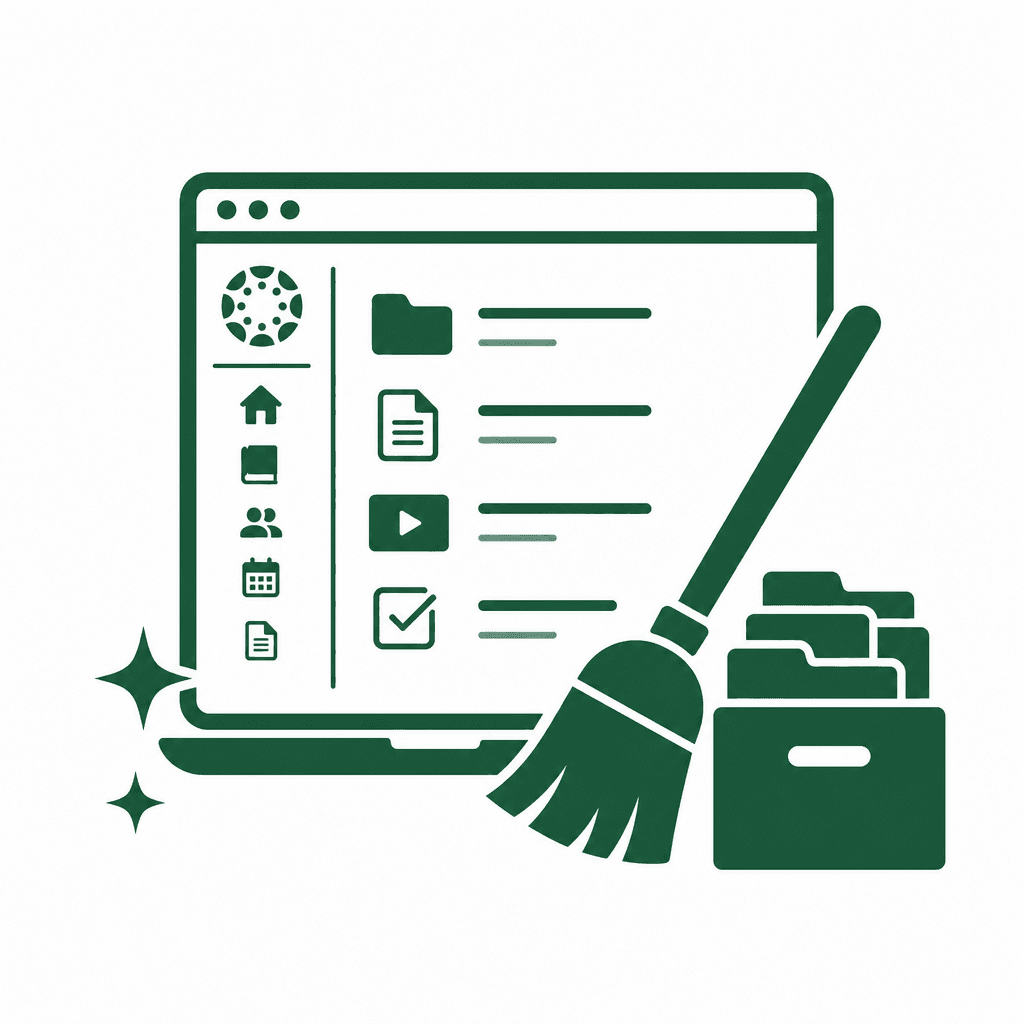
As educators strive to provide high-quality learning experiences, maintaining organized course content in platforms like Canvas is crucial. This article offers practical strategies for decluttering course materials, enhancing user experience, and ultimately fostering a more efficient learning environment. We will explore effective methods for identifying outdated content, archiving what is no longer needed, and improving overall course navigation.
Understanding Content Rot
In the context of educational environments, 'content rot' refers to the deterioration of course content's relevance and usability over time. Just as physical clutter can impede organization in a classroom, digital clutter in a Canvas course can obstruct learning efficiency and learner engagement. Common indicators of content rot include outdated files that no longer align with current curriculum goals, broken links that lead to inaccessible resources, and redundant materials that confuse students rather than clarify concepts. For instance, a module may contain outdated lecture notes from several years past or resources that have been updated, making earlier versions obsolete. The impact of content rot is significant; it can lead to learner frustration, decreased motivation, and diminished educational outcomes. When students encounter broken links or irrelevant materials, their trust in the course diminishes, affecting their overall engagement. Therefore, it is crucial for educators and instructional designers to regularly assess course materials. This ongoing evaluation helps ensure that content remains relevant and effective, supporting a dynamic learning environment where learners can thrive.
Identifying and Archiving Unused Materials
Identifying materials that no longer serve your course's objectives is a vital step in the spring cleaning process. Begin by reviewing each module and asking whether the content contributes meaningfully to your students' learning experiences. Look for signs of outdated resources, such as old readings or assignments that no longer align with current course goals. Utilize Canvas's built-in analytics tools to track which materials are being accessed. If certain files or assessments are seldom viewed or submitted, they may be candidates for archiving. Once you've identified unnecessary content, consider how to archive these materials effectively. Canvas provides a robust storage solution; you can create a dedicated folder within your course for archived files or simply download them and store them securely on an external platform like Google Drive or Dropbox. This not only protects your resources but enables you to revisit them later if needed. Archiving is not just about clearing space; it significantly enhances learning efficiency by minimizing distractions and helping students to focus on relevant content. When students can navigate a streamlined course, their engagement and comprehension improve, making the learning experience more effective overall. This foundational step sets the stage for a more organized and practical course structure, which will be elaborated on in the next chapter.
Streamlining Module Structures
A well-structured module design in Canvas is crucial for fostering an efficient learning environment. By organizing modules logically and sequentially, educators can create clear learning pathways that guide students through the material systematically. One effective technique is to label each module with descriptive titles that provide a clear indication of the content and learning objectives. This transparency allows students to navigate the course more intuitively, reducing frustration and enhancing engagement. Using standardized layouts across all modules can significantly contribute to a coherent learning experience. For instance, maintaining the same sequence of elements—such as an overview, learning activities, and assessments—helps students know what to expect, making their study more predictable and manageable. Coupled with consistent formatting, such as uniform font styles and colors, this approach reinforces familiarity, allowing learners to focus on content rather than the mechanics of navigation. Moreover, consider integrating a “module overview” page that summarizes key points and expected outcomes. This consolidates important information and reinforces the module's purpose. Streamlining module structures not only enhances clarity but also directly impacts students' ability to engage with and retain course content, paving the way for a more enriching educational experience.
Improving Content Discoverability
To improve content discoverability within Canvas, educators must prioritize intuitive navigation and effective resource management. One effective practice is the use of **tags** and **keywords**. By tagging learning materials with relevant terms, instructors can facilitate quick searches, making it easier for students to find specific content. For example, if resources are tagged with themes like "discussion," "assignment," or "video," students can filter and locate materials without sifting through entire modules. Moreover, creating clear navigation menus significantly enhances user experience. Utilizing **consistent labels** such as "Week 1 Materials," "Assignments," or "Resources" allows students to form mental maps of the course layout. A cohesive structure, combined with a logical sequence, encourages learners to explore materials more freely, fostering **independent learning**. Additionally, integrating **searchable features** and **hyperlinks** throughout the content can guide students to related materials seamlessly. This interconnectedness not only reduces frustration but also empowers students to take charge of their learning journey. By prioritizing discoverability, educators can cultivate a more engaging and efficient learning environment, ultimately improving student outcomes and satisfaction.
Incorporating Student Feedback
Incorporating student feedback into course content management is a pivotal step in creating a responsive learning environment. Engaging students in the feedback process not only enhances their sense of ownership over their learning experience but also provides invaluable insights into the effectiveness of course materials. Various methods can be employed to collect this feedback, including surveys, discussion forums, and informal check-ins. Surveys can be designed to gauge students' perceptions of the course structure, clarity of materials, and overall engagement. Tools like Google Forms or built-in Canvas surveys offer convenient platforms for students to voice their opinions anonymously, thus encouraging candid responses. Additionally, utilizing discussion forums allows for more dynamic exchanges, enabling students to articulate their thoughts and suggest improvements interactively. Incorporating this feedback is crucial; it enables educators to identify areas needing revision or enhancement, thereby fostering a course experience that aligns with student needs. When students see that their input has led to tangible improvements, their engagement levels typically rise, which in turn boosts learning outcomes. A course that evolves in response to student feedback is not merely a static entity but a living, responsive environment that supports and encourages continued growth.
Continuous Course Maintenance
As educators refine their Canvas courses, it is critical to recognize that maintaining an organized and effective learning environment is not a one-time task but involves continuous course maintenance. Just as spring cleaning revitalizes your surroundings, regular content reviews keep your course relevant and efficient. Begin by scheduling routine evaluations—perhaps at the midpoint of each semester or at the beginning of every term—to systematically assess course materials. During these reviews, utilize a checklist to identify outdated resources, assess the relevance of course materials, and ensure that all links and multimedia content function properly. Consider leveraging Canvas's analytics tools to monitor student engagement, which can inform decisions about which materials contribute to learning and which may need replacing. Encouraging collaboration among colleagues can further enhance the process of maintaining course content. Establishing communities of practice where educators share best practices fosters a culture of regular evaluations. By viewing continuous maintenance as an integral part of instructional design, teachers are better equipped to adapt their courses to meet evolving student needs and ensure a more engaging learning experience. Embrace this ongoing commitment to improvement, and your Canvas course will thrive.
Conclusions
In conclusion, an organized and efficient Canvas course can significantly enhance the learning experience for both educators and students. By identifying content rot, archiving unused materials, and streamlining module structures, educators can ensure that course content remains relevant and easily accessible. Implementing these strategies will create a cleaner, more effective learning environment that supports educational goals.