Strategic Podcast Integration in Canvas: Building Skills Through Audio Learning
Explore how instructional designers and educators can strategically leverage podcasts within Canvas LMS to develop specific skills, foster critical thinking, and engage learners beyond traditional text and video. This guide will cover best practices for selecting, curating, and integrating podcasts, as well as designing Canvas activities that maximize their skill-building potential.
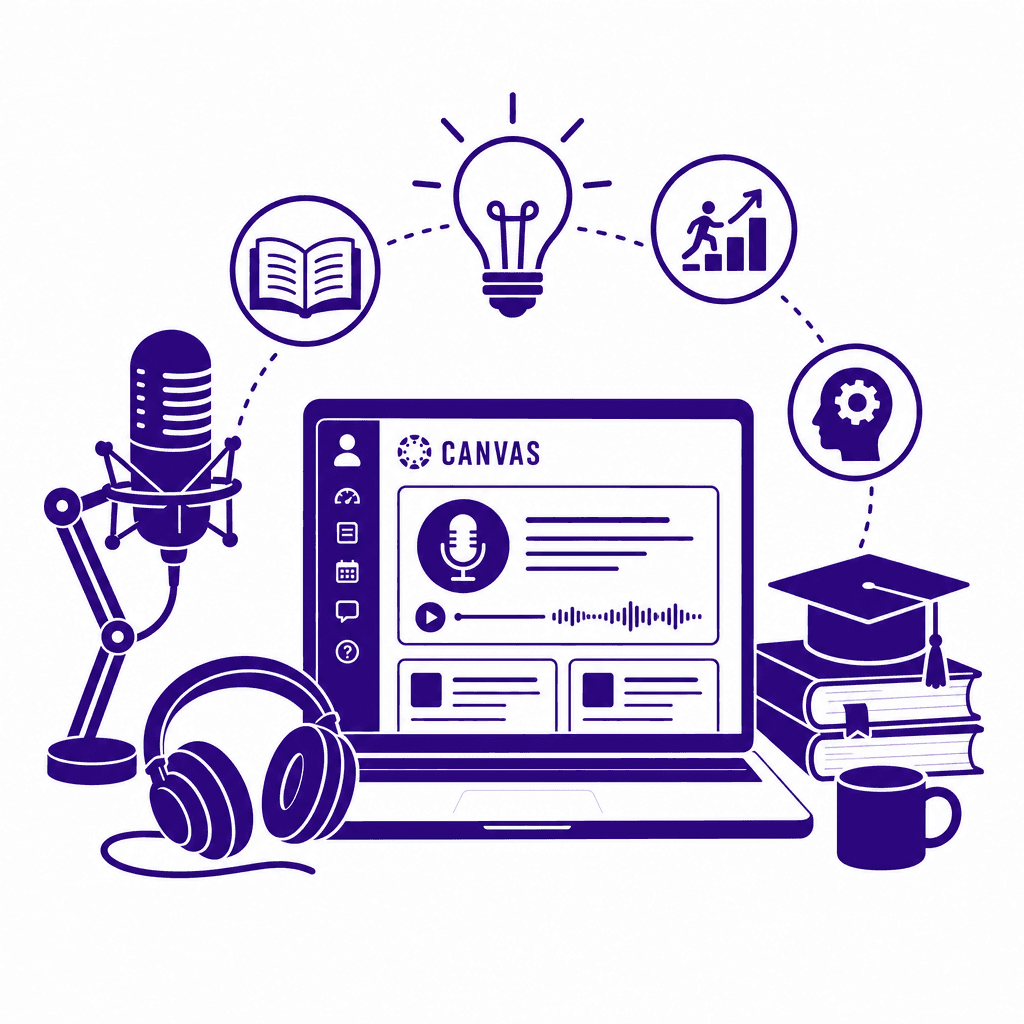
As educational environments evolve, podcasts have emerged as a compelling medium for audio learning. This article delves into how instructional designers and educators can effectively integrate podcasts into Canvas LMS, aiming to enhance skill development, foster critical thinking, and engage learners through innovative audio content.
Understanding the Power of Podcasts in Education
Podcasts hold immense potential to enhance the educational landscape, but their effectiveness hinges on alignment with specific learning objectives. Within the Canvas LMS framework, educators should begin by identifying course goals and the desired skills students need to develop. This involves a thorough analysis of the curriculum, learning outcomes, and potential gaps that podcasts could effectively address. Once educators identify requisite skills, they can strategically select podcasts that directly support those objectives. For instance, in a marketing course, a podcast focused on consumer behavior can foster critical thinking about real-world applications. Educators can create an outline that includes key themes from the podcast, discussion questions, and assignments that prompt students to engage with the material actively. Moreover, it's crucial to consider diverse subject areas. In a science curriculum, podcasts discussing environmental issues might complement a unit on sustainability, while history teachers might seek out programs that explore specific events or eras in depth. By integrating carefully selected audio resources aligned with clear objectives, instructors can build cohesive, immersive learning experiences that resonate with various learning styles. Ultimately, the synergy between podcasts and targeted learning outcomes will enrich the educational journey within the Canvas LMS.
Aligning Podcasts with Learning Objectives
Aligning podcast content with specific learning objectives is crucial for maximizing the educational potential of audio learning within the Canvas LMS framework. Educators should begin by clearly defining their course goals and the skills they aim to develop in students. This process involves identifying core competencies and desired learning outcomes, which can serve as a framework for selecting relevant podcasts. To effectively match podcasts to these objectives, educators should engage in a systematic approach. Start by mapping each podcast episode to specific skills or knowledge areas. For instance, a podcast on ethical decision-making in business can align with objectives pertaining to critical thinking and ethics in a business course. Use a simple alignment matrix to visualize connections between course goals and podcast topics. Consider the nuances of different subjects. In science, podcasts that discuss recent research can foster analytical skills, while literature podcasts can enhance interpretative skills and cultural awareness. By employing this aligned strategy, instructors can create a cohesive learning experience where podcast content not only engages students but also unequivocally supports their desired learning outcomes, enhancing both skill development and critical thinking within the Canvas LMS environment.
Curating Podcasts for Skill Development
Curating a library of relevant podcasts for skill development requires a strategic approach that enhances the overall learning experience within Canvas LMS. When selecting podcasts, educators should consider several criteria to ensure the content is credible, relevant, and engaging. **Credibility** is paramount; educators should choose podcasts that feature knowledgeable hosts or experts in the field. This helps to instill trust in the information provided. **Relevance** to the specific skills being targeted is equally crucial. It's beneficial to align podcast topics with the course objectives, similar to the previous chapter's emphasis on alignment, but with a focus on skill development. **Engagement factors** should also guide selection. Feedback from students or a pre-assessment of interest levels can provide insight into what types of content resonate with your audience. Additionally, the length and format of the podcasts can affect engagement—shorter, well-structured episodes tend to hold listeners’ attention better. Once podcasts are selected, educators can **organize** them effectively within Canvas. Creating a dedicated podcast library in a module or a page, segmented by skill areas, can facilitate navigation. Using tags or keywords will enable learners to easily identify relevant content, fostering an immersive audio learning environment that enhances skill acquisition.
Designing Canvas Activities Around Podcasts
Creating engaging Canvas activities around podcasts can significantly enhance learning outcomes by fostering critical thinking and application of skills. One effective strategy is to implement interactive assignments that encourage active participation. For instance, educators can assign students to listen to a selected podcast and create a brief audio reflection, summarizing key points while sharing personal insights and connections to course material. This activity not only reinforces comprehension but also hones students' ability to articulate thoughts verbally. Discussion prompts can further deepen engagement. For example, after a podcast on leadership, educators might ask students to identify a leadership style they resonate with and discuss how this style influences their experiences. Such prompts encourage learners to connect theory with practice, stimulating rich conversation and peer learning. Critical thinking exercises can also be woven into the fabric of podcast assignments. Educators might ask students to critique a podcast episode, analyzing arguments presented and evaluating the evidence used. This process sharpens analytical skills and helps students develop a discerning ear for quality content. By designing activities that utilize podcasts as a dynamic resource, instructors can create a more immersive and skill-focused learning environment within Canvas, promoting a deeper engagement with the material and fellow learners.
Assessing Learner Outcomes and Feedback
Incorporating podcasts into the Canvas LMS requires careful assessment of learner outcomes to ensure that educational objectives are met. One effective method is through formative assessments, which can take various forms, such as surveys, reflective journals, or quizzes shortly after podcast listening. These assessments provide immediate feedback on learners' comprehension and can help refine podcast selections and activity design. For instance, if learners score low on a quiz related to a podcast segment, instructional designers can revisit that content and adjust the associated Canvas activities to target specific misunderstandings. Summative assessments are also crucial in evaluating long-term skill development. These might include culminating projects or presentations where learners apply concepts from the podcasts. Moreover, gathering feedback through discussion boards or peer reviews within Canvas can foster richer engagement and insights into podcast impact. Encouraging learners to share their feedback on podcast relevance and clarity helps educators refine future content. Ultimately, using a blend of these assessment strategies not only enhances the integration of podcasts in Canvas LMS but also fosters an iterative improvement process, ensuring that each learner can build critical skills effectively and meaningfully.
Future Trends in Audio Learning and Educational Integration
As we look toward the future of audio learning, the integration of innovative technologies will profoundly shape the role of podcasts in education, particularly within platforms like Canvas LMS. The evolution of podcast content delivery is anticipated to undergo significant transformation, with advancements in artificial intelligence (AI) paving the way for personalized listening experiences. AI can analyze individual learner behaviors and preferences, curating podcast episodes tailored to their specific needs, thereby promoting more effective skill development. Moreover, emerging technologies such as voice recognition and natural language processing can enhance engagement, allowing learners to interact with podcast content in more dynamic ways. Imagine a scenario where students can ask questions in real-time during a podcast, receiving tailored answers that deepen their understanding of the subject matter. This interactive approach fosters critical thinking and enables learners to actively participate in their learning journey rather than passively absorbing information. Furthermore, the proliferation of immersive audio experiences, including augmented reality (AR) and virtual reality (VR), could lead to podcast formats that integrate additional sensory stimuli, allowing learners to engage with content on multiple levels. By embracing these innovations, educators can leverage podcasts not only as supplemental resources but as integral components of curriculum design, ultimately creating a richer, more engaging learning environment that transcends traditional methods.
Conclusions
Integrating podcasts into Canvas LMS offers a unique opportunity for skill development and learner engagement. By carefully curating and designing activities around audio content, educators can create a dynamic educational experience that enhances critical thinking and fosters a deeper understanding of subjects, paving the way for progressive instructional practices.
Understanding the Power of Podcasts in Education
Podcasts hold immense potential to enhance the educational landscape, but their effectiveness hinges on alignment with specific learning objectives. Within the Canvas LMS framework, educators should begin by identifying course goals and the desired skills students need to develop. This involves a thorough analysis of the curriculum, learning outcomes, and potential gaps that podcasts could effectively address. Once educators identify requisite skills, they can strategically select podcasts that directly support those objectives. For instance, in a marketing course, a podcast focused on consumer behavior can foster critical thinking about real-world applications. Educators can create an outline that includes key themes from the podcast, discussion questions, and assignments that prompt students to engage with the material actively. Moreover, it's crucial to consider diverse subject areas. In a science curriculum, podcasts discussing environmental issues might complement a unit on sustainability, while history teachers might seek out programs that explore specific events or eras in depth. By integrating carefully selected audio resources aligned with clear objectives, instructors can build cohesive, immersive learning experiences that resonate with various learning styles. Ultimately, the synergy between podcasts and targeted learning outcomes will enrich the educational journey within the Canvas LMS.
Aligning Podcasts with Learning Objectives
Aligning podcast content with specific learning objectives is crucial for maximizing the educational potential of audio learning within the Canvas LMS framework. Educators should begin by clearly defining their course goals and the skills they aim to develop in students. This process involves identifying core competencies and desired learning outcomes, which can serve as a framework for selecting relevant podcasts. To effectively match podcasts to these objectives, educators should engage in a systematic approach. Start by mapping each podcast episode to specific skills or knowledge areas. For instance, a podcast on ethical decision-making in business can align with objectives pertaining to critical thinking and ethics in a business course. Use a simple alignment matrix to visualize connections between course goals and podcast topics. Consider the nuances of different subjects. In science, podcasts that discuss recent research can foster analytical skills, while literature podcasts can enhance interpretative skills and cultural awareness. By employing this aligned strategy, instructors can create a cohesive learning experience where podcast content not only engages students but also unequivocally supports their desired learning outcomes, enhancing both skill development and critical thinking within the Canvas LMS environment.
Curating Podcasts for Skill Development
Curating a library of relevant podcasts for skill development requires a strategic approach that enhances the overall learning experience within Canvas LMS. When selecting podcasts, educators should consider several criteria to ensure the content is credible, relevant, and engaging. **Credibility** is paramount; educators should choose podcasts that feature knowledgeable hosts or experts in the field. This helps to instill trust in the information provided. **Relevance** to the specific skills being targeted is equally crucial. It's beneficial to align podcast topics with the course objectives, similar to the previous chapter's emphasis on alignment, but with a focus on skill development. **Engagement factors** should also guide selection. Feedback from students or a pre-assessment of interest levels can provide insight into what types of content resonate with your audience. Additionally, the length and format of the podcasts can affect engagement—shorter, well-structured episodes tend to hold listeners’ attention better. Once podcasts are selected, educators can **organize** them effectively within Canvas. Creating a dedicated podcast library in a module or a page, segmented by skill areas, can facilitate navigation. Using tags or keywords will enable learners to easily identify relevant content, fostering an immersive audio learning environment that enhances skill acquisition.
Designing Canvas Activities Around Podcasts
Creating engaging Canvas activities around podcasts can significantly enhance learning outcomes by fostering critical thinking and application of skills. One effective strategy is to implement interactive assignments that encourage active participation. For instance, educators can assign students to listen to a selected podcast and create a brief audio reflection, summarizing key points while sharing personal insights and connections to course material. This activity not only reinforces comprehension but also hones students' ability to articulate thoughts verbally. Discussion prompts can further deepen engagement. For example, after a podcast on leadership, educators might ask students to identify a leadership style they resonate with and discuss how this style influences their experiences. Such prompts encourage learners to connect theory with practice, stimulating rich conversation and peer learning. Critical thinking exercises can also be woven into the fabric of podcast assignments. Educators might ask students to critique a podcast episode, analyzing arguments presented and evaluating the evidence used. This process sharpens analytical skills and helps students develop a discerning ear for quality content. By designing activities that utilize podcasts as a dynamic resource, instructors can create a more immersive and skill-focused learning environment within Canvas, promoting a deeper engagement with the material and fellow learners.
Assessing Learner Outcomes and Feedback
Incorporating podcasts into the Canvas LMS requires careful assessment of learner outcomes to ensure that educational objectives are met. One effective method is through formative assessments, which can take various forms, such as surveys, reflective journals, or quizzes shortly after podcast listening. These assessments provide immediate feedback on learners' comprehension and can help refine podcast selections and activity design. For instance, if learners score low on a quiz related to a podcast segment, instructional designers can revisit that content and adjust the associated Canvas activities to target specific misunderstandings. Summative assessments are also crucial in evaluating long-term skill development. These might include culminating projects or presentations where learners apply concepts from the podcasts. Moreover, gathering feedback through discussion boards or peer reviews within Canvas can foster richer engagement and insights into podcast impact. Encouraging learners to share their feedback on podcast relevance and clarity helps educators refine future content. Ultimately, using a blend of these assessment strategies not only enhances the integration of podcasts in Canvas LMS but also fosters an iterative improvement process, ensuring that each learner can build critical skills effectively and meaningfully.
Future Trends in Audio Learning and Educational Integration
As we look toward the future of audio learning, the integration of innovative technologies will profoundly shape the role of podcasts in education, particularly within platforms like Canvas LMS. The evolution of podcast content delivery is anticipated to undergo significant transformation, with advancements in artificial intelligence (AI) paving the way for personalized listening experiences. AI can analyze individual learner behaviors and preferences, curating podcast episodes tailored to their specific needs, thereby promoting more effective skill development. Moreover, emerging technologies such as voice recognition and natural language processing can enhance engagement, allowing learners to interact with podcast content in more dynamic ways. Imagine a scenario where students can ask questions in real-time during a podcast, receiving tailored answers that deepen their understanding of the subject matter. This interactive approach fosters critical thinking and enables learners to actively participate in their learning journey rather than passively absorbing information. Furthermore, the proliferation of immersive audio experiences, including augmented reality (AR) and virtual reality (VR), could lead to podcast formats that integrate additional sensory stimuli, allowing learners to engage with content on multiple levels. By embracing these innovations, educators can leverage podcasts not only as supplemental resources but as integral components of curriculum design, ultimately creating a richer, more engaging learning environment that transcends traditional methods.
Conclusions
Integrating podcasts into Canvas LMS offers a unique opportunity for skill development and learner engagement. By carefully curating and designing activities around audio content, educators can create a dynamic educational experience that enhances critical thinking and fosters a deeper understanding of subjects, paving the way for progressive instructional practices.