
Streamlining AI Content Management in Canvas: A Lifecycle Approach for Educators
Explore practical strategies for integrating, maintaining, and updating AI-generated course content within Canvas LMS, ensuring relevance and quality across semesters. Learn to design efficient workflows that prevent content decay and support continuous improvement in AI-enhanced learning environments.
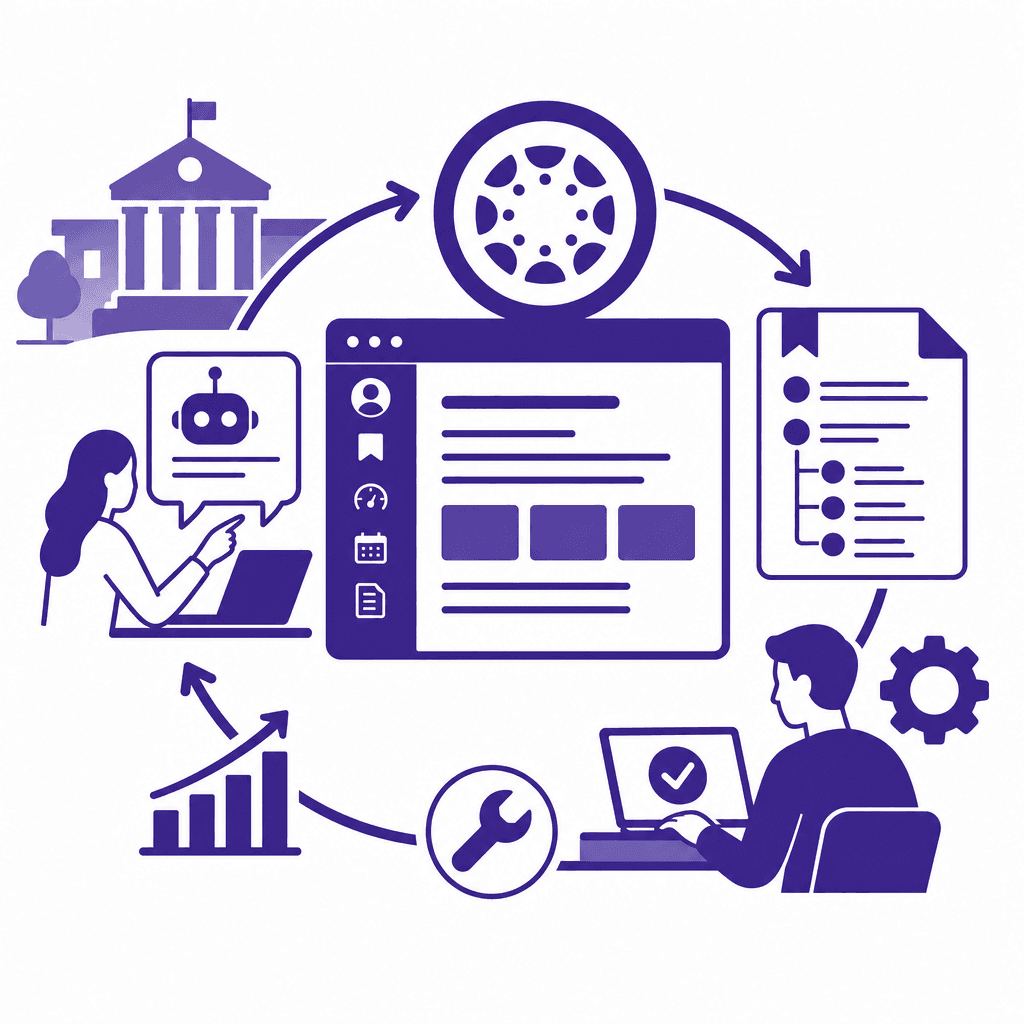
As educators increasingly integrate AI technology into their teaching practices, it becomes essential to manage the generated content effectively within Learning Management Systems like Canvas. This article explores comprehensive strategies that ensure seamless integration, maintenance, and continuous improvement of AI-generated course materials to enhance educational outcomes and promote a lifecycle approach.
Understanding AI in Education
AI plays a transformative role in education, introducing innovative methodologies that enhance both teaching and learning experiences. One of its most significant benefits is the ability to offer personalized learning paths. Through data analysis, AI can adapt course materials to meet individual student needs, identifying gaps in knowledge and suggesting tailored resources. This personalization fosters a more engaging learning environment, as students feel more connected and invested in their educational journeys. Moreover, AI automates administrative tasks, such as grading and attendance tracking, freeing up valuable time for educators to focus on pedagogy and student interaction. This efficiency ensures that instructors can devote more energy to improving classroom dynamics and providing support where it matters most. The automation of routine tasks also leads to consistency in performance assessment, enhancing the reliability of student evaluations. As AI-generated content becomes integral to the curriculum, it requires careful consideration in content management and instructional design. Educators must leverage AI tools that facilitate the seamless integration of these materials, ensuring they remain current and relevant. In doing so, AI supports educators in the creation and maintenance of dynamic learning experiences that promote continuous improvement and adaptability in their teaching methodologies.
Navigating Canvas LMS for Content Management
Canvas LMS serves as a robust platform for educators aiming to manage course content efficiently, especially when integrating AI-generated materials. With its intuitive interface and versatile feature set, Canvas allows users to create, store, and systematically organize course content with ease. Educators can begin by utilizing the “Modules” feature to structure their course content hierarchically, enabling them to connect lectures, readings, and assignments within a cohesive learning pathway. Content can be uploaded directly to Canvas from various file formats, and educators can utilize the integrated Rich Content Editor to create engaging, multimedia-rich learning materials. The inclusion of Accessibility Checker ensures that AI-generated content meets diverse learner needs, highlighting the importance of maintaining high quality across all materials. Moreover, the integration of third-party tools through LTI (Learning Tools Interoperability) facilitates the seamless addition of AI applications, unlocking expanded functionalities for content management. By leveraging these tools, educators can automate updates on course materials and collaborate with peers more effectively, resulting in a streamlined workflow that fosters continuous enhancement of the educational experience within the Canvas LMS environment.
Integrating AI-Generated Content into Courses
Integrating AI-generated content into existing courses requires a strategic approach that aligns with educational objectives and enhances the learning experience. Educators should begin by establishing clear learning outcomes that guide the content selection process. When evaluating AI-generated materials, consider criteria such as accuracy, relevance, engagement level, and accessibility. Use rubrics that compare AI content against these standards to ensure it meets the necessary educational framework. Within the Canvas LMS, effective integration of AI-generated content can be achieved through modular course design. Break down course materials into smaller, manageable units, enabling easier insertion of AI resources where applicable. Utilize tools like Canvas Pages or Modules to organize and contextualize this AI content, enhancing students’ navigation and comprehension. Engage students in the evaluation process of AI-generated content. This not only fosters critical thinking but provides insights into how well the material resonates with learners. Implement feedback mechanisms, such as surveys or discussion boards, to continuously gauge content effectiveness. By thoughtfully integrating AI resources into a cohesive course structure within Canvas, educators can enrich the educational experience while maintaining alignment with established pedagogical goals.
Establishing Efficient Workflow Processes
Establishing efficient workflow processes for managing AI-generated content is crucial for educators aiming to enhance the learning experience while maintaining content quality in Canvas LMS. A structured workflow not only ensures smooth operations but also facilitates robust collaboration among educators and departmental teams. To design an effective workflow, begin by establishing clear approval processes for new AI-generated materials. Designate a review committee that comprises faculty members with expertise in curriculum design and subject matter. This team can evaluate the relevance and accuracy of content before it enters the course environment. Regular updating of materials is essential in keeping content fresh and aligned with current educational standards. Schedule periodic reviews and encourage faculty to collaborate on updates, fostering a culture of teamwork. Utilizing tools within Canvas, such as version control, can simplify the archiving of outdated content, allowing educators to track changes over time and revert if necessary. Implementing these workflows not only streamlines operations but builds a repository of high-quality resources that evolve alongside pedagogical practices, ensuring lasting engagement and learning effectiveness throughout course lifecycles.
Maintaining Course Content Quality
Maintaining course content quality in an AI-enhanced educational environment is not just an option; it is a necessity. Regular updates and assessments of AI-generated materials ensure that content remains relevant and engaging for students over time. An effective strategy for ongoing course maintenance involves creating a timetable for content review, ideally aligned with the semester schedule, to systematically evaluate each component of the course. To gather constructive feedback, educators can leverage surveys and focus groups with students and faculty. These methods allow for a wealth of qualitative and quantitative insights that can guide content revisions. Encouraging open discussions about AI-generated resources can prompt students to share their experiences and perspectives, revealing gaps in understanding that can be addressed in future iterations. In addition to direct feedback, analytics tools integrated within Canvas LMS should be utilized to track student engagement and performance metrics. Identifying patterns or declines in student interaction with AI-generated content provides critical information for timely updates. Facilitating a cycle of assessment, feedback collection, and iterative updating will not only enhance content quality and relevance but also cultivate a responsive learning environment that meets the evolving needs of both educators and learners.
Facilitating Continuous Improvement in Learning Environments
As educators integrate AI into their teaching practices, the focus must shift toward fostering a culture of continuous improvement within AI-enhanced learning environments. Professional development plays a pivotal role in this process, equipping educators with the skills and knowledge needed to adapt to new technologies and methodologies. Through targeted training sessions and collaborative workshops, educators can share experiences and strategies for effectively incorporating AI-generated content into their courses. Encouraging a growth mindset among faculty is essential. This can be achieved by promoting an environment that values experimentation, feedback, and iterative learning. When educators feel supported in trying new approaches, they are more likely to innovate in their course design and engage students more actively. Moreover, institutional frameworks should promote adaptability by providing access to resources and networking opportunities that facilitate ongoing collaboration. This ensures that educators can stay abreast of the latest developments in AI technology and instructional design. Creating forums for open dialogue around challenges and successes in AI integration will further enhance this culture. Celebrating small wins and sharing best practices will propel a shared commitment to refining educational materials, thereby affirming the value of continuous improvement in learning environments.
Conclusions
In summary, adapting AI content management strategies within Canvas is crucial for maintaining the quality and relevance of educational materials. By implementing efficient workflows and embracing a lifecycle approach, educators can foster continuous improvement, ensuring AI-enhanced learning environments contribute positively to student success. The commitment to updating content promotes a responsive and engaging educational experience.
Understanding AI in Education
AI plays a transformative role in education, introducing innovative methodologies that enhance both teaching and learning experiences. One of its most significant benefits is the ability to offer personalized learning paths. Through data analysis, AI can adapt course materials to meet individual student needs, identifying gaps in knowledge and suggesting tailored resources. This personalization fosters a more engaging learning environment, as students feel more connected and invested in their educational journeys. Moreover, AI automates administrative tasks, such as grading and attendance tracking, freeing up valuable time for educators to focus on pedagogy and student interaction. This efficiency ensures that instructors can devote more energy to improving classroom dynamics and providing support where it matters most. The automation of routine tasks also leads to consistency in performance assessment, enhancing the reliability of student evaluations. As AI-generated content becomes integral to the curriculum, it requires careful consideration in content management and instructional design. Educators must leverage AI tools that facilitate the seamless integration of these materials, ensuring they remain current and relevant. In doing so, AI supports educators in the creation and maintenance of dynamic learning experiences that promote continuous improvement and adaptability in their teaching methodologies.
Navigating Canvas LMS for Content Management
Canvas LMS serves as a robust platform for educators aiming to manage course content efficiently, especially when integrating AI-generated materials. With its intuitive interface and versatile feature set, Canvas allows users to create, store, and systematically organize course content with ease. Educators can begin by utilizing the “Modules” feature to structure their course content hierarchically, enabling them to connect lectures, readings, and assignments within a cohesive learning pathway. Content can be uploaded directly to Canvas from various file formats, and educators can utilize the integrated Rich Content Editor to create engaging, multimedia-rich learning materials. The inclusion of Accessibility Checker ensures that AI-generated content meets diverse learner needs, highlighting the importance of maintaining high quality across all materials. Moreover, the integration of third-party tools through LTI (Learning Tools Interoperability) facilitates the seamless addition of AI applications, unlocking expanded functionalities for content management. By leveraging these tools, educators can automate updates on course materials and collaborate with peers more effectively, resulting in a streamlined workflow that fosters continuous enhancement of the educational experience within the Canvas LMS environment.
Integrating AI-Generated Content into Courses
Integrating AI-generated content into existing courses requires a strategic approach that aligns with educational objectives and enhances the learning experience. Educators should begin by establishing clear learning outcomes that guide the content selection process. When evaluating AI-generated materials, consider criteria such as accuracy, relevance, engagement level, and accessibility. Use rubrics that compare AI content against these standards to ensure it meets the necessary educational framework. Within the Canvas LMS, effective integration of AI-generated content can be achieved through modular course design. Break down course materials into smaller, manageable units, enabling easier insertion of AI resources where applicable. Utilize tools like Canvas Pages or Modules to organize and contextualize this AI content, enhancing students’ navigation and comprehension. Engage students in the evaluation process of AI-generated content. This not only fosters critical thinking but provides insights into how well the material resonates with learners. Implement feedback mechanisms, such as surveys or discussion boards, to continuously gauge content effectiveness. By thoughtfully integrating AI resources into a cohesive course structure within Canvas, educators can enrich the educational experience while maintaining alignment with established pedagogical goals.
Establishing Efficient Workflow Processes
Establishing efficient workflow processes for managing AI-generated content is crucial for educators aiming to enhance the learning experience while maintaining content quality in Canvas LMS. A structured workflow not only ensures smooth operations but also facilitates robust collaboration among educators and departmental teams. To design an effective workflow, begin by establishing clear approval processes for new AI-generated materials. Designate a review committee that comprises faculty members with expertise in curriculum design and subject matter. This team can evaluate the relevance and accuracy of content before it enters the course environment. Regular updating of materials is essential in keeping content fresh and aligned with current educational standards. Schedule periodic reviews and encourage faculty to collaborate on updates, fostering a culture of teamwork. Utilizing tools within Canvas, such as version control, can simplify the archiving of outdated content, allowing educators to track changes over time and revert if necessary. Implementing these workflows not only streamlines operations but builds a repository of high-quality resources that evolve alongside pedagogical practices, ensuring lasting engagement and learning effectiveness throughout course lifecycles.
Maintaining Course Content Quality
Maintaining course content quality in an AI-enhanced educational environment is not just an option; it is a necessity. Regular updates and assessments of AI-generated materials ensure that content remains relevant and engaging for students over time. An effective strategy for ongoing course maintenance involves creating a timetable for content review, ideally aligned with the semester schedule, to systematically evaluate each component of the course. To gather constructive feedback, educators can leverage surveys and focus groups with students and faculty. These methods allow for a wealth of qualitative and quantitative insights that can guide content revisions. Encouraging open discussions about AI-generated resources can prompt students to share their experiences and perspectives, revealing gaps in understanding that can be addressed in future iterations. In addition to direct feedback, analytics tools integrated within Canvas LMS should be utilized to track student engagement and performance metrics. Identifying patterns or declines in student interaction with AI-generated content provides critical information for timely updates. Facilitating a cycle of assessment, feedback collection, and iterative updating will not only enhance content quality and relevance but also cultivate a responsive learning environment that meets the evolving needs of both educators and learners.
Facilitating Continuous Improvement in Learning Environments
As educators integrate AI into their teaching practices, the focus must shift toward fostering a culture of continuous improvement within AI-enhanced learning environments. Professional development plays a pivotal role in this process, equipping educators with the skills and knowledge needed to adapt to new technologies and methodologies. Through targeted training sessions and collaborative workshops, educators can share experiences and strategies for effectively incorporating AI-generated content into their courses. Encouraging a growth mindset among faculty is essential. This can be achieved by promoting an environment that values experimentation, feedback, and iterative learning. When educators feel supported in trying new approaches, they are more likely to innovate in their course design and engage students more actively. Moreover, institutional frameworks should promote adaptability by providing access to resources and networking opportunities that facilitate ongoing collaboration. This ensures that educators can stay abreast of the latest developments in AI technology and instructional design. Creating forums for open dialogue around challenges and successes in AI integration will further enhance this culture. Celebrating small wins and sharing best practices will propel a shared commitment to refining educational materials, thereby affirming the value of continuous improvement in learning environments.
Conclusions
In summary, adapting AI content management strategies within Canvas is crucial for maintaining the quality and relevance of educational materials. By implementing efficient workflows and embracing a lifecycle approach, educators can foster continuous improvement, ensuring AI-enhanced learning environments contribute positively to student success. The commitment to updating content promotes a responsive and engaging educational experience.