
Streamlining AI Course Content Creation in Canvas Leveraging Partner Tools for Unified Authoring
This article provides a practical guide for educators and instructional designers on how to integrate and utilize emerging AI authoring tools within the Canvas LMS. By exploring new partner integrations, readers will learn strategies to create consistent, high-quality course content more efficiently, moving from disconnected AI tools to a unified content development workflow directly within their Canvas environment.
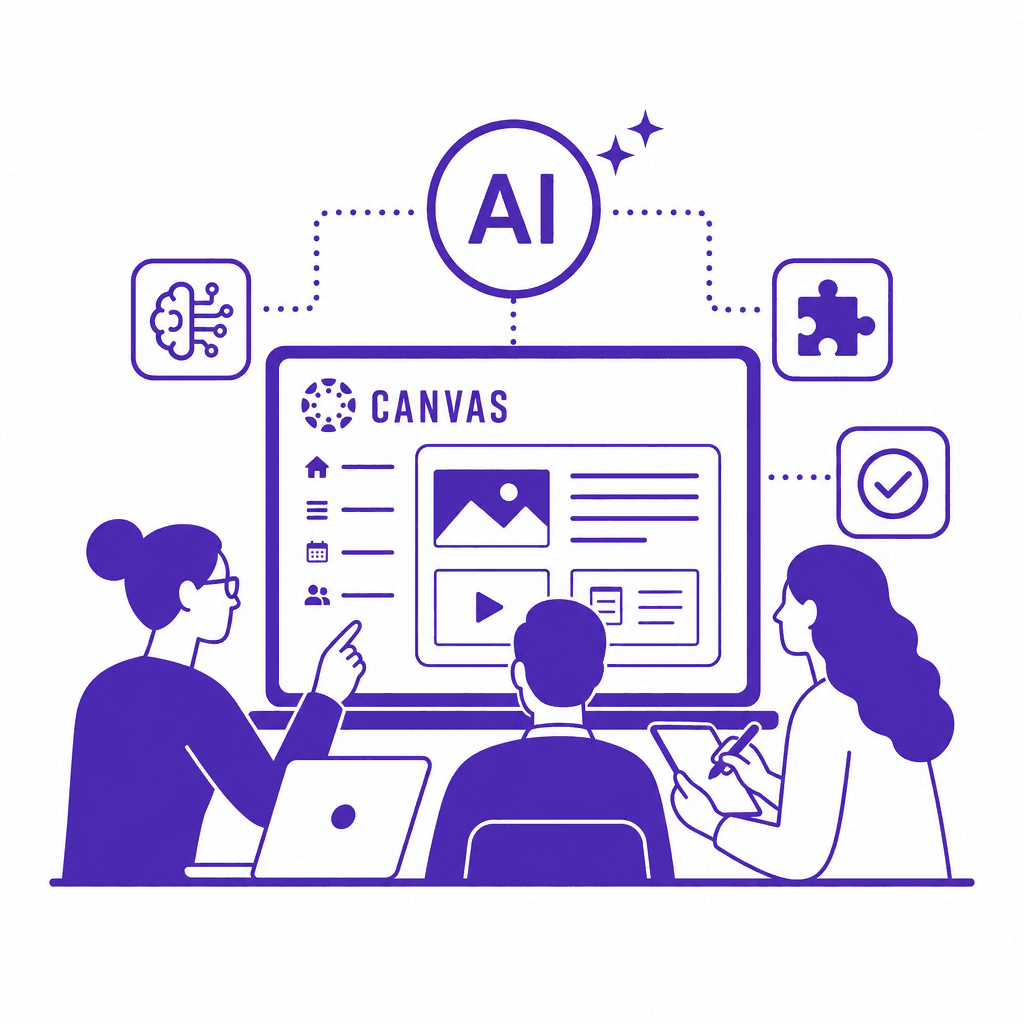
The integration of AI in educational technology presents a transformative opportunity for course development in platforms like Canvas LMS. This article guides educators and instructional designers on harnessing advanced AI authoring tools through Canvas' partner integrations. By focusing on unified authoring methods, we aim to enhance the quality and consistency of course content while streamlining the development process.
Understanding Canvas LMS and Its Ecosystem
Canvas LMS is a powerful learning management system that provides educators with a versatile platform for course development. Its key features include a user-friendly interface, robust assessment tools, and flexibility to support various instructional methods. With functionalities such as drag-and-drop course creation, multimedia integration, and advanced analytics, Canvas allows educators to design rich learning experiences tailored to diverse learner needs. Beyond its core features, Canvas boasts an extensive ecosystem of third-party integrations that enhance its capabilities. These integrations facilitate seamless connections with various educational technology (edtech) tools, allowing educators to augment their courses with additional resources and functionalities. For instance, many institutions utilize AI-driven applications which can automate grading, provide personalized feedback, and generate engaging content directly within the Canvas environment. Instructional design plays a critical role in leveraging these capabilities effectively. Developed courses based on sound pedagogical principles not only increase learner engagement but also lead to improved success rates. By aligning AI tools within Canvas’s framework and employing strong instructional strategies, educators can create a cohesive and high-quality learning experience that meets the evolving demands of today’s educational landscape.
The Rise of AI in Education
The emergence of artificial intelligence in educational contexts represents a transformative shift, particularly in content creation. AI tools are revolutionizing the way educators and instructional designers approach course development within platforms like Canvas LMS. These tools leverage natural language processing and machine learning to create high-quality, engaging materials tailored to diverse learner needs. The benefits of AI in content creation are significant. For example, AI-driven platforms can quickly generate quizzes, interactive exercises, and even provide personalized feedback to students. This rapid content development facilitates a more engaging learning experience compared to traditional authoring methods, which often require extensive manual effort and time. With AI, educators can focus on pedagogical strategies rather than getting bogged down in resource-heavy processes. Educators can access a variety of AI tools ranging from content generation software to adaptive learning technologies, each designed to enhance instructional design. By employing these tools within the Canvas ecosystem, educators can ensure that their course materials are not only consistent and high-quality but also dynamically engage learners. This alignment of AI capabilities with Canvas enhances educational effectiveness, paving the way for a new era of unified authoring that reflects the interconnectedness of teaching and learning in the digital age.
Exploring Partner Integrations for Unified Authoring
Within the Canvas LMS ecosystem, several partner integrations are emerging as essential tools for facilitating AI-driven content development. These integrations play a vital role in creating a cohesive authoring experience, allowing educators and instructional designers to streamline their workflows significantly. Notable tools like Quizlet and Canva offer unique functionalities that can be seamlessly embedded into Canvas. For instance, Quizlet’s AI capabilities can enhance assessment creation by providing adaptive learning resources that respond to student interactions, making it easier to generate quizzes tailored to individual learning paths. Similarly, Canva integrates design tools that empower educators to create visually appealing course materials directly within the platform, minimizing the need to toggle between design applications and Canvas. By leveraging these integrations, educators can develop high-quality course content that maintains consistency across various modules. The unified authoring approach is instrumental in mitigating the challenges of managing multiple platforms, allowing for a more fluid creation process. This efficiency not only saves time but also enriches the learning experience, making content creation in Canvas a more intuitive and accessible task for all users involved.
Strategies for Implementing AI Tools in Course Development
To effectively implement AI tools in course development, educators and instructional designers must adopt a strategic approach. First, selecting the right AI tools is crucial. Evaluate tools based on their compatibility with the Canvas LMS and how they enhance your existing workflows. Look for features like natural language processing, content customization, and collaborative capabilities that align with your instructional goals.
Next, ensure that the AI-generated content aligns with your learning objectives. Establish clear parameters for the type of content needed, and use these as guidelines when configuring AI tools. Collaboratively work with colleagues to create a shared understanding of desired outcomes, which can also inform the parameters set within the AI tools.
Avoid common pitfalls by engaging in iterative testing of the tools before full-scale implementation. This includes pilot runs with small groups to gather feedback on usability and content quality. Additionally, maintain a holistic perspective by integrating feedback mechanisms that allow for ongoing improvement of AI-generated content. Regularly revisiting and refining your strategies will ensure that the integration of AI tools not only enhances course development but also delivers a consistent educational experience within the Canvas environment.
Ensuring Consistency and Quality in Course Content
Ensuring consistency and quality in course content created using AI tools is crucial for meeting institutional standards and effectively addressing learner needs. To achieve this, educators should consider implementing structured templates across their courses. Templates can guide content formulation, ensuring that each course module adheres to the same design and pedagogical principles. By providing a consistent framework, educators can maintain a unified look and feel throughout their courses while also streamlining the authoring process.
In addition to templates, establishing clear guidelines for content creation is essential. These guidelines should encompass tone, style, and educational standards relevant to the institution. By defining what constitutes quality content, educators empower AI tools to produce material that aligns with these parameters. This may include character limits for readability, preferred formats for assignments, and clarity in learning objectives.
Feedback mechanisms are another vital component. Regular reviews by peers or instructional designers can identify areas for improvement and ensure that the use of AI tools does not compromise content quality. Utilizing rubrics can streamline this process, enabling educators to provide structured feedback that fosters continual refinement and enhances the learning experience for students.
Future Trends in AI and Instructional Design
As we contemplate the future of AI in instructional design and course content creation, it becomes essential to address not only the innovations that AI promises but also the ethical considerations and evolving roles of educators in this landscape. Advancements in AI will likely lead to more sophisticated tools that can analyze learner data, adapt content in real-time, and provide personalized learning experiences at scale. Such capabilities present an opportunity for educators to focus more on pedagogical strategies rather than rote content creation. However, as instructional designers integrate these advanced tools, they must navigate ethical questions surrounding data privacy, algorithmic bias, and the potential for over-reliance on technology. Educators will increasingly transition from traditional roles to that of facilitators or curators, guiding students in a technology-enhanced learning environment. To thrive in this evolving setting, continuous professional development will become paramount. Educators must engage in ongoing training to keep pace with AI advancements and ethical standards, ensuring not only effective integration of AI tools but also adherence to pedagogical best practices. By fostering a culture of adaptive learning and ethical consideration, institutions can better prepare educators to harness AI's power responsibly.
Conclusions
In conclusion, embracing AI tools within the Canvas LMS can significantly enhance course content creation efficiency and quality. By integrating these advanced technologies and establishing a unified workflow, educators can focus more on pedagogy and less on procedural tasks, ultimately enriching the learning experience for students.