
Uncovering Shadow AI in Canvas
Many educators and students are informally using AI tools alongside Canvas. This 'shadow AI' can reveal unmet needs and innovation opportunities. This article provides practical strategies for Canvas administrators and instructional designers to identify shadow AI usage, understand its motivations, and leverage these insights to inform official Canvas integrations, tool adoption, and AI policy development, ensuring a more responsive and effective learning environment.
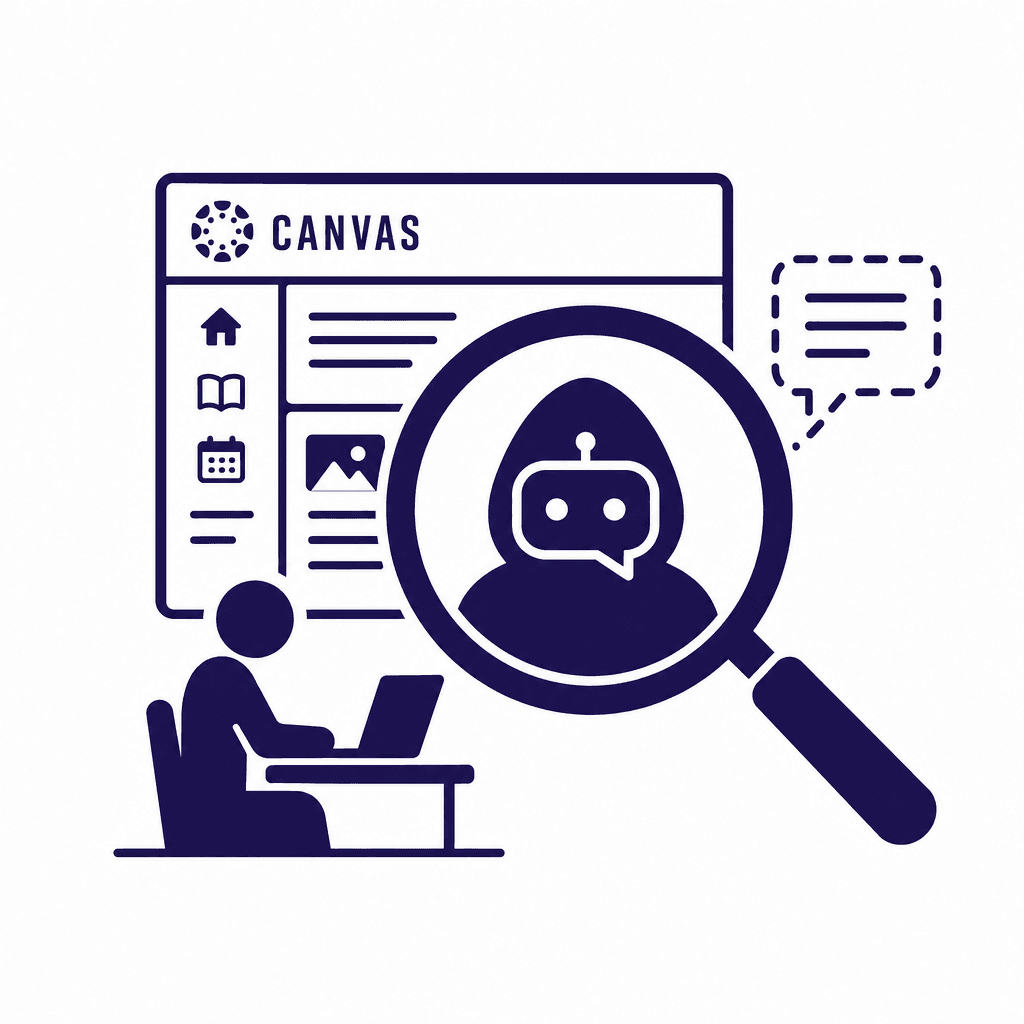
The emergence of AI tools in education has led to significant shadow usage alongside established learning management systems like Canvas. This article delves into the concept of shadow AI, highlighting its implications and offering actionable strategies for administrators and instructional designers. Understanding this informal tool usage can inform better decisions around policy, tool adoption, and integration with Canvas.
Understanding Shadow AI
Understanding Shadow AI: Explore the concept of shadow AI in educational settings, explaining its origins and significance. Discuss how unofficial tools are being used by educators and students outside sanctioned platforms, and what this means for teaching and learning. Highlight potential benefits and challenges associated with such usage. In the educational landscape, shadow AI represents the unauthorized integration of artificial intelligence tools into teaching and learning processes. As educators and students seek enhanced engagement and efficiency, they often turn to unofficial tools that lack institutional endorsement. This trend has emerged from the rapid evolution of AI technologies and the growing demand for personalized learning experiences. The significance of shadow AI lies in its potential to illuminate unmet needs within academic environments. Unofficial tools such as AI-driven tutoring apps, automated grading systems, and content generators are increasingly common. While these tools can enhance learning by offering tailored support and increasing productivity, they also pose significant challenges. Issues such as data security, inconsistent quality, and lack of alignment with curricula can jeopardize the integrity of educational experiences. Moreover, shadow AI reveals cultural shifts in how technology is perceived within the classroom, urging stakeholders to rethink traditional frameworks of tool adoption and integration. Understanding these dynamics can shape the future of educational technology and policy development, ultimately fostering a more responsive learning atmosphere.
Identifying Shadow AI in Canvas
To effectively identify shadow AI tools within the Canvas LMS, administrators can employ a range of practical methods that focus on user behaviors, feedback mechanisms, and data analytics. First, analyzing user behavior through Canvas analytics can reveal patterns indicative of unofficial tool usage. For instance, monitoring login frequencies and session durations might uncover anomalies that suggest reliance on third-party AI tools for specific tasks. Secondly, administrators should implement regular feedback channels like surveys and interviews targeting both educators and students. Questions about their experiences with Canvas can shed light on any AI tools they've incorporated. Consider asking users to list tools they find helpful and rate their overall satisfaction with Canvas functionalities. Additionally, conducting assessments through anonymous questionnaires can facilitate openness, enabling users to share insights on any shadow AI tools they currently use without fear of reprimand. Consider utilizing focus groups to discuss specific challenges and needs in their learning environments. By leveraging these methods, Canvas administrators can gain a comprehensive understanding of shadow AI prevalence, informing future integrations and AI policy development.
Motivations Behind Shadow AI Usage
The motivations driving educators and students to adopt shadow AI tools largely stem from perceived deficiencies in official platforms like Canvas. Many users find that the built-in functionalities do not sufficiently meet their needs, prompting them to seek out alternative solutions that offer more potent or tailored features. For instance, an instructor may turn to a third-party AI tool to automate grading, believing that it will save time and provide more detailed feedback than Canvas’s current capabilities. Additionally, the desire for enhanced functionality drives adoption. Users often feel constrained by the limitations of official tools, leading them to explore unofficial options that provide advanced analytics or better integration with other applications. A case study highlights a university where faculty adopted an AI-driven content creation tool that allowed for more dynamic course materials, addressing a perceived inadequacy in Canvas's content management abilities. Finally, the pursuit of personalized learning experiences motivates users to turn to shadow AI. Students increasingly prefer tools that adapt to their individual learning styles, leading them to use AI platforms that offer tailored feedback and resources. By understanding these motivations, Canvas administrators can better align their offerings with user needs, paving the way for improved functionality and satisfaction within the official platform.
Leveraging Insights for Official Integrations
As institutions seek to enhance the educational experience, leveraging insights from shadow AI usage becomes crucial for effective integration. Canvas administrators can capitalize on the motivations for using unofficial tools by systematically gathering data on their prevalence and functionality within the educational ecosystem. This begins with establishing channels for open dialogue with educators and students, encouraging them to share their experiences with these tools. Regular surveys, focus groups, and informal feedback sessions can provide rich qualitative and quantitative insights about the needs and preferences of users. Once the data is collected, administrators should prioritize collaboration with key stakeholders, including faculty, IT departments, and educational technologists, to analyze findings and identify common themes. By understanding which unofficial tools resonate most with users, administrators can champion integrations that align with institutional goals and enhance the Canvas experience. Additionally, piloting these tools within a controlled environment can generate further insights and build a case for wider adoption. Aligning the chosen tools with institutional policies ensures that innovations are compliant and sustainable. Providing a framework for evaluating the effectiveness of these unofficial tools will support strategic decision-making, paving the way for a more responsive and effective learning environment that meets the evolving needs of educators and students alike.
Developing AI Policy for Educational Institutions
The emergence of shadow AI highlights the need for educational institutions to establish comprehensive AI policies that address the realities of unofficial tool usage. These policies must prioritize stakeholder engagement, ensuring that educators, students, and IT professionals collaboratively contribute to the policy development process. Engaging a diverse group allows for a more nuanced understanding of the motivations behind shadow AI adoption and offers a wealth of perspectives on ethical considerations. Ethical guidelines should be a cornerstone of any AI policy, addressing data privacy, equity, and access. Institutions must provide clarity on how AI tools can be utilized responsibly, aiming to mitigate potential biases and ensure adherence to legal standards. It's essential to define clear expectations regarding acceptable use and to communicate the consequences of violations transparently. Regular monitoring is crucial to support AI tool integration in classrooms. Institutions should create feedback mechanisms to assess the efficacy and impact of approved tools while remaining responsive to emerging needs. By establishing a framework for ongoing evaluation and updates to the policy, educational institutions can create a supportive ecosystem that not only embraces innovation but also safeguards the integrity and equity of the learning environment.
Enhancing the Learning Environment
Recognizing and addressing shadow AI usage within the Canvas Learning Management System can profoundly improve educational experiences for both students and educators. By tapping into the insights gained from unofficial AI tools, administrators and instructional designers can enhance the platform's capabilities. These insights reveal unmet needs, highlight innovative solutions, and encourage collaboration among users. Acknowledging shadow AI provides a unique opportunity to align the technological landscape with the authentic requirements of the learning community. Continuous feedback plays a critical role in this dynamic process. Establishing clear communication channels where educators and students can share their experiences with both Canvas and AI tools allows for an ongoing cycle of improvement. Regular surveys and focus groups can capture real-time data on tool effectiveness, leading to informed decisions about potential official tool integrations. To foster a responsive Canvas ecosystem, institutions should adopt a proactive EdTech strategy that embraces experimentation and adaptability. Recommendations include: - Creating a dedicated task force for AI integration within the LMS. - Hosting workshops to educate users about safe and effective AI tool usage. - Developing resources that guide the evaluation and adoption of unofficial tools. By nurturing a culture of innovation and collaboration, educational institutions can ensure that the learning environment remains relevant and engaging.
Conclusions
In conclusion, recognizing and analyzing shadow AI within educational environments can provide invaluable insights into users' needs and preferences. By strategically addressing these unmet needs, Canvas administrators can enhance the overall learning experience. The integration of feedback from shadow AI use will inform future developments, resulting in a more responsive and effective educational technology strategy.
Understanding Shadow AI
Understanding Shadow AI: Explore the concept of shadow AI in educational settings, explaining its origins and significance. Discuss how unofficial tools are being used by educators and students outside sanctioned platforms, and what this means for teaching and learning. Highlight potential benefits and challenges associated with such usage. In the educational landscape, shadow AI represents the unauthorized integration of artificial intelligence tools into teaching and learning processes. As educators and students seek enhanced engagement and efficiency, they often turn to unofficial tools that lack institutional endorsement. This trend has emerged from the rapid evolution of AI technologies and the growing demand for personalized learning experiences. The significance of shadow AI lies in its potential to illuminate unmet needs within academic environments. Unofficial tools such as AI-driven tutoring apps, automated grading systems, and content generators are increasingly common. While these tools can enhance learning by offering tailored support and increasing productivity, they also pose significant challenges. Issues such as data security, inconsistent quality, and lack of alignment with curricula can jeopardize the integrity of educational experiences. Moreover, shadow AI reveals cultural shifts in how technology is perceived within the classroom, urging stakeholders to rethink traditional frameworks of tool adoption and integration. Understanding these dynamics can shape the future of educational technology and policy development, ultimately fostering a more responsive learning atmosphere.
Identifying Shadow AI in Canvas
To effectively identify shadow AI tools within the Canvas LMS, administrators can employ a range of practical methods that focus on user behaviors, feedback mechanisms, and data analytics. First, analyzing user behavior through Canvas analytics can reveal patterns indicative of unofficial tool usage. For instance, monitoring login frequencies and session durations might uncover anomalies that suggest reliance on third-party AI tools for specific tasks. Secondly, administrators should implement regular feedback channels like surveys and interviews targeting both educators and students. Questions about their experiences with Canvas can shed light on any AI tools they've incorporated. Consider asking users to list tools they find helpful and rate their overall satisfaction with Canvas functionalities. Additionally, conducting assessments through anonymous questionnaires can facilitate openness, enabling users to share insights on any shadow AI tools they currently use without fear of reprimand. Consider utilizing focus groups to discuss specific challenges and needs in their learning environments. By leveraging these methods, Canvas administrators can gain a comprehensive understanding of shadow AI prevalence, informing future integrations and AI policy development.
Motivations Behind Shadow AI Usage
The motivations driving educators and students to adopt shadow AI tools largely stem from perceived deficiencies in official platforms like Canvas. Many users find that the built-in functionalities do not sufficiently meet their needs, prompting them to seek out alternative solutions that offer more potent or tailored features. For instance, an instructor may turn to a third-party AI tool to automate grading, believing that it will save time and provide more detailed feedback than Canvas’s current capabilities. Additionally, the desire for enhanced functionality drives adoption. Users often feel constrained by the limitations of official tools, leading them to explore unofficial options that provide advanced analytics or better integration with other applications. A case study highlights a university where faculty adopted an AI-driven content creation tool that allowed for more dynamic course materials, addressing a perceived inadequacy in Canvas's content management abilities. Finally, the pursuit of personalized learning experiences motivates users to turn to shadow AI. Students increasingly prefer tools that adapt to their individual learning styles, leading them to use AI platforms that offer tailored feedback and resources. By understanding these motivations, Canvas administrators can better align their offerings with user needs, paving the way for improved functionality and satisfaction within the official platform.
Leveraging Insights for Official Integrations
As institutions seek to enhance the educational experience, leveraging insights from shadow AI usage becomes crucial for effective integration. Canvas administrators can capitalize on the motivations for using unofficial tools by systematically gathering data on their prevalence and functionality within the educational ecosystem. This begins with establishing channels for open dialogue with educators and students, encouraging them to share their experiences with these tools. Regular surveys, focus groups, and informal feedback sessions can provide rich qualitative and quantitative insights about the needs and preferences of users. Once the data is collected, administrators should prioritize collaboration with key stakeholders, including faculty, IT departments, and educational technologists, to analyze findings and identify common themes. By understanding which unofficial tools resonate most with users, administrators can champion integrations that align with institutional goals and enhance the Canvas experience. Additionally, piloting these tools within a controlled environment can generate further insights and build a case for wider adoption. Aligning the chosen tools with institutional policies ensures that innovations are compliant and sustainable. Providing a framework for evaluating the effectiveness of these unofficial tools will support strategic decision-making, paving the way for a more responsive and effective learning environment that meets the evolving needs of educators and students alike.
Developing AI Policy for Educational Institutions
The emergence of shadow AI highlights the need for educational institutions to establish comprehensive AI policies that address the realities of unofficial tool usage. These policies must prioritize stakeholder engagement, ensuring that educators, students, and IT professionals collaboratively contribute to the policy development process. Engaging a diverse group allows for a more nuanced understanding of the motivations behind shadow AI adoption and offers a wealth of perspectives on ethical considerations. Ethical guidelines should be a cornerstone of any AI policy, addressing data privacy, equity, and access. Institutions must provide clarity on how AI tools can be utilized responsibly, aiming to mitigate potential biases and ensure adherence to legal standards. It's essential to define clear expectations regarding acceptable use and to communicate the consequences of violations transparently. Regular monitoring is crucial to support AI tool integration in classrooms. Institutions should create feedback mechanisms to assess the efficacy and impact of approved tools while remaining responsive to emerging needs. By establishing a framework for ongoing evaluation and updates to the policy, educational institutions can create a supportive ecosystem that not only embraces innovation but also safeguards the integrity and equity of the learning environment.
Enhancing the Learning Environment
Recognizing and addressing shadow AI usage within the Canvas Learning Management System can profoundly improve educational experiences for both students and educators. By tapping into the insights gained from unofficial AI tools, administrators and instructional designers can enhance the platform's capabilities. These insights reveal unmet needs, highlight innovative solutions, and encourage collaboration among users. Acknowledging shadow AI provides a unique opportunity to align the technological landscape with the authentic requirements of the learning community. Continuous feedback plays a critical role in this dynamic process. Establishing clear communication channels where educators and students can share their experiences with both Canvas and AI tools allows for an ongoing cycle of improvement. Regular surveys and focus groups can capture real-time data on tool effectiveness, leading to informed decisions about potential official tool integrations. To foster a responsive Canvas ecosystem, institutions should adopt a proactive EdTech strategy that embraces experimentation and adaptability. Recommendations include: - Creating a dedicated task force for AI integration within the LMS. - Hosting workshops to educate users about safe and effective AI tool usage. - Developing resources that guide the evaluation and adoption of unofficial tools. By nurturing a culture of innovation and collaboration, educational institutions can ensure that the learning environment remains relevant and engaging.
Conclusions
In conclusion, recognizing and analyzing shadow AI within educational environments can provide invaluable insights into users' needs and preferences. By strategically addressing these unmet needs, Canvas administrators can enhance the overall learning experience. The integration of feedback from shadow AI use will inform future developments, resulting in a more responsive and effective educational technology strategy.