
Weaving Narratives into Canvas: Engaging Learners Through Storytelling
Explore how educators and instructional designers can integrate effective storytelling techniques into Canvas courses to enhance learner engagement, improve comprehension, and create memorable learning experiences. This guide will cover practical strategies for identifying narrative opportunities, structuring content using storytelling arcs, and leveraging Canvas features to deliver compelling learning stories.
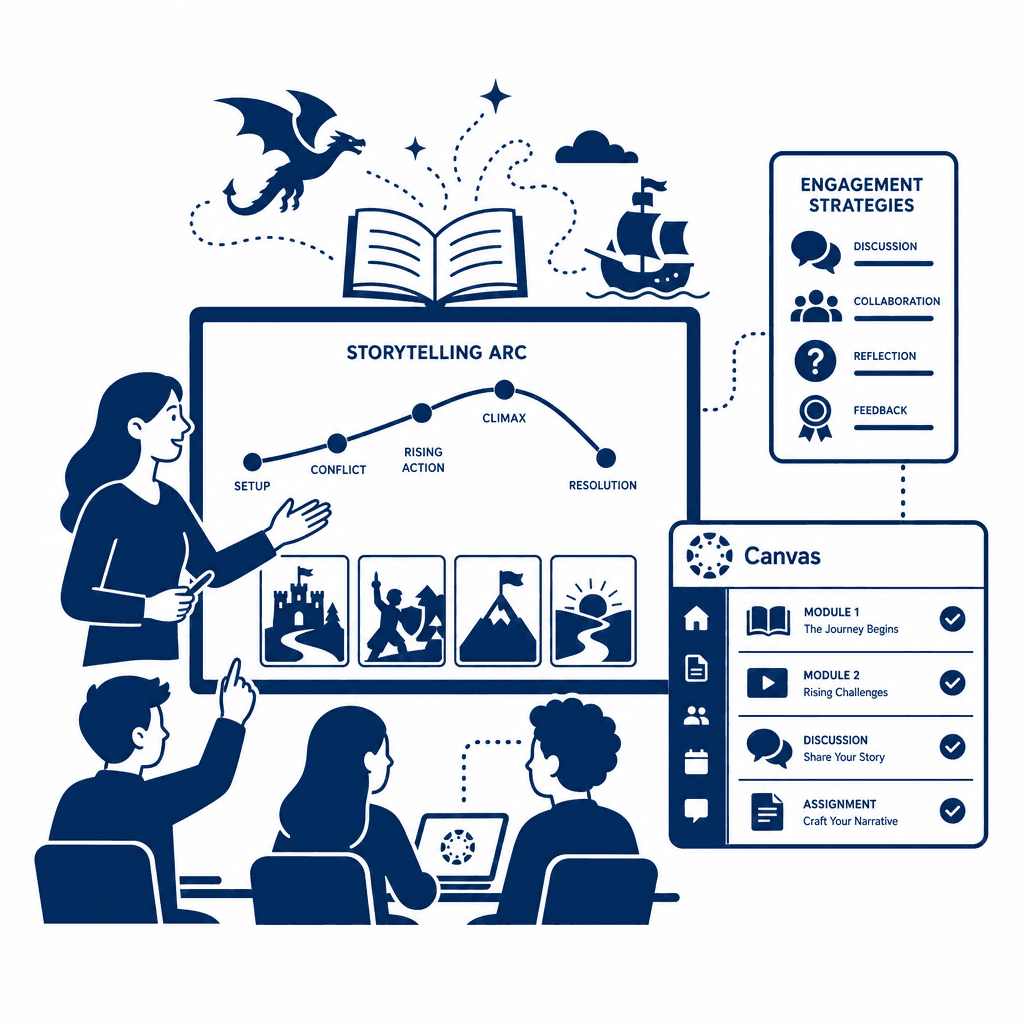
Incorporating storytelling into educational practices enriches learner engagement and enhances comprehension. This article delves into how educators can effectively weave narratives into Canvas course design, employing impactful storytelling techniques that resonate with students. By exploring practical strategies, we aim to empower instructors to create compelling learning experiences that stay with students long after the course ends.
The Power of Storytelling in Education
Storytelling serves as a bridge linking individuals through shared experiences, making it a vital method of communication, especially in education. With its roots deeply embedded in human culture, storytelling has permeated various contexts, enriching the learning experience by making abstract concepts tangible and relatable. Educators can harness the power of narrative to foster deeper engagement and comprehension. Research indicates that stories activate multiple regions of the brain, enhancing memory retention by providing emotional contexts that mere facts cannot achieve. For instance, a compelling historical narrative allows students to connect emotionally with events, fostering empathy and a lasting intellectual grasp of the material. Consider a biology class utilizing a story of a real-life scientist facing ethical dilemmas in their research. This approach not only imparts knowledge but also creates an emotional hook that resonates with learners on a personal level. Similarly, narratives about community challenges or success stories in mathematics can transform sterile data into impactful life lessons. Such narratives not only enhance understanding but also encourage students to envision themselves within those contexts, strengthening their commitment to the learning process and promoting long-term retention of knowledge.
Identifying Narrative Opportunities in Canvas
Recognizing narrative opportunities in Canvas requires a thoughtful analysis of course content and objectives. Educators can start by reviewing existing materials for inherent stories, be it through case studies, historical events, or example scenarios. Consider key topics where storytelling can illustrate complex ideas, making them more accessible and relatable. Identify areas where learners might struggle with abstract concepts and explore how a narrative could clarify those points. To enhance engagement, educators can map course objectives to storytelling elements. For instance, if a course goal is to understand the practical applications of a concept, a well-structured narrative from a real-world professional can provide context and foster connection. Integrating personal anecdotes can also humanize content, bridging the gap between theory and experiential learning. Moreover, utilizing Canvas tools can facilitate this process. Making use of discussion boards for students to share their stories related to course themes, or employing multimedia elements like videos to depict narratives vividly, can create immersive experiences. By recognizing these narrative opportunities, educators not only enrich content but also foster an environment of shared learning and active participation.
Structuring Content with Storytelling Arcs
To create an engaging learning journey, educators should structure course content using storytelling arcs, incorporating essential elements such as introduction, rising action, climax, falling action, and resolution. These components not only build a narrative framework but also enhance learners' emotional connection with the material. The **introduction** sets the stage, presenting key concepts and outlining the course objectives. This element draws learners in, offering a sense of purpose and direction. Following this, the **rising action** involves branching into various topics, creating a sense of tension and anticipation. By presenting challenges or problems related to the subject, educators can stimulate curiosity and encourage deeper exploration. The **climax** represents the pinnacle of the course content, where critical learning outcomes are tackled, and the most complex ideas are introduced. This peak experience cultivates a sense of achievement as students navigate through the material. The **falling action** involves reflecting on lessons learned and connecting ideas back to real-world applications. Finally, the **resolution** ties up the narrative, summarizing key takeaways and solidifying knowledge retention. By thoughtfully arranging course modules along this narrative arc, educators can ensure a coherent, engaging experience that holds students' interest throughout the course. This structure allows learners to invest emotionally, facilitating improved comprehension and retention of course content.
Leveraging Canvas Features for Compelling Learning Stories
To create engaging learning stories within the Canvas platform, educators can utilize a range of powerful features designed to foster interactivity and connection. **Multimedia integration** is one of the most compelling tools available. By incorporating videos, animations, audio clips, and images, instructors can illustrate the narrative vividly, capturing students’ attention and enhancing comprehension. For instance, a video introduction can set the stage for a module, while images can help depict key moments of the story, adding emotional depth. **Discussion boards** in Canvas offer another layer of engagement, allowing learners to react, share interpretations, and dive deeper into the narrative. Educators can prompt discussions by posing questions related to the narrative’s themes or character challenges, encouraging students to explore diverse perspectives and further their understanding of the course material. **Quizzes** can be effectively transformed into narrative-driven assessments. By framing quiz questions around the story’s plot, educators not only evaluate comprehension but also maintain the narrative thread, allowing students to feel part of the unfolding story. For example, after a module on a historical event, quiz questions that ask learners to reflect on characters' motives deepen their connection to the material. When these Canvas features are employed thoughtfully, they allow educators to craft rich and immersive storytelling experiences that make learning both memorable and impactful.
Crafting Educational Narratives: Practical Strategies
Crafting compelling educational narratives requires a deep understanding of your audience and their unique backgrounds. Start by analyzing the demographics of your learners—consider factors like age, cultural context, and prior knowledge. This insight will enable you to tailor your stories in a way that resonates emotionally and intellectually. Utilize familiar themes, relatable characters, and real-world scenarios to forge connections with students, making the content more engaging and meaningful. As you craft these narratives, focus on clarity. Ensure that each story is structured logically, following a narrative arc that guides learners through the content—beginning with a hook, building tension or conflict, and culminating in resolution. This progression keeps students invested in the learning journey. Feedback plays a crucial role in refining your narratives. Encourage students to share their thoughts on the stories presented. This iterative process will help you adjust elements that may not resonate or clarify points that may be misunderstood. By continually refining your storytelling approach based on learner feedback, your educational narratives will remain relevant, impactful, and continuously engaging, thus enhancing the overall learning experience in your Canvas courses.
Assessing the Impact of Storytelling on Learner Engagement
Assessing the effectiveness of storytelling in Canvas courses requires a thoughtful approach, utilizing various assessment techniques to capture learner engagement and satisfaction. Surveys and feedback forms designed specifically to question students about their narrative experiences can provide valuable insights. For instance, asking learners to reflect on how the storytelling elements impacted their understanding or retention of material can quantify the emotional and intellectual engagement fostered by narratives. Performance metrics offer another layer of evaluation; tracking completion rates, participation in discussion forums, and assessment scores can help correlate storytelling with academic success. Analyzing data before and after the introduction of storytelling techniques reveals shifts in engagement levels, indicating the impact of narrative on learning outcomes. Case studies abound, demonstrating successful applications of storytelling in diverse educational settings. One notable example showed a 30% increase in course retention rates when storytelling was integrated into content delivery, with students reporting higher levels of satisfaction and motivation. Such findings affirm that when narratives are embedded effectively within the course structure, they not only captivate learners but also enhance comprehension and foster a more dynamic learning environment. Thus, continual assessment of storytelling's impact can guide instructional strategies and content creation in Canvas courses.
Conclusions
By integrating storytelling within Canvas course design, educators can substantially enhance learner engagement and retention. This guide outlined strategic approaches to utilize narratives effectively, fostering memorable educational encounters. Embracing these techniques not only transforms content into captivating journeys but also nurtures a deeper connection between learners and the material, paving the way for impactful education.
The Power of Storytelling in Education
Storytelling serves as a bridge linking individuals through shared experiences, making it a vital method of communication, especially in education. With its roots deeply embedded in human culture, storytelling has permeated various contexts, enriching the learning experience by making abstract concepts tangible and relatable. Educators can harness the power of narrative to foster deeper engagement and comprehension. Research indicates that stories activate multiple regions of the brain, enhancing memory retention by providing emotional contexts that mere facts cannot achieve. For instance, a compelling historical narrative allows students to connect emotionally with events, fostering empathy and a lasting intellectual grasp of the material. Consider a biology class utilizing a story of a real-life scientist facing ethical dilemmas in their research. This approach not only imparts knowledge but also creates an emotional hook that resonates with learners on a personal level. Similarly, narratives about community challenges or success stories in mathematics can transform sterile data into impactful life lessons. Such narratives not only enhance understanding but also encourage students to envision themselves within those contexts, strengthening their commitment to the learning process and promoting long-term retention of knowledge.
Identifying Narrative Opportunities in Canvas
Recognizing narrative opportunities in Canvas requires a thoughtful analysis of course content and objectives. Educators can start by reviewing existing materials for inherent stories, be it through case studies, historical events, or example scenarios. Consider key topics where storytelling can illustrate complex ideas, making them more accessible and relatable. Identify areas where learners might struggle with abstract concepts and explore how a narrative could clarify those points. To enhance engagement, educators can map course objectives to storytelling elements. For instance, if a course goal is to understand the practical applications of a concept, a well-structured narrative from a real-world professional can provide context and foster connection. Integrating personal anecdotes can also humanize content, bridging the gap between theory and experiential learning. Moreover, utilizing Canvas tools can facilitate this process. Making use of discussion boards for students to share their stories related to course themes, or employing multimedia elements like videos to depict narratives vividly, can create immersive experiences. By recognizing these narrative opportunities, educators not only enrich content but also foster an environment of shared learning and active participation.
Structuring Content with Storytelling Arcs
To create an engaging learning journey, educators should structure course content using storytelling arcs, incorporating essential elements such as introduction, rising action, climax, falling action, and resolution. These components not only build a narrative framework but also enhance learners' emotional connection with the material. The **introduction** sets the stage, presenting key concepts and outlining the course objectives. This element draws learners in, offering a sense of purpose and direction. Following this, the **rising action** involves branching into various topics, creating a sense of tension and anticipation. By presenting challenges or problems related to the subject, educators can stimulate curiosity and encourage deeper exploration. The **climax** represents the pinnacle of the course content, where critical learning outcomes are tackled, and the most complex ideas are introduced. This peak experience cultivates a sense of achievement as students navigate through the material. The **falling action** involves reflecting on lessons learned and connecting ideas back to real-world applications. Finally, the **resolution** ties up the narrative, summarizing key takeaways and solidifying knowledge retention. By thoughtfully arranging course modules along this narrative arc, educators can ensure a coherent, engaging experience that holds students' interest throughout the course. This structure allows learners to invest emotionally, facilitating improved comprehension and retention of course content.
Leveraging Canvas Features for Compelling Learning Stories
To create engaging learning stories within the Canvas platform, educators can utilize a range of powerful features designed to foster interactivity and connection. **Multimedia integration** is one of the most compelling tools available. By incorporating videos, animations, audio clips, and images, instructors can illustrate the narrative vividly, capturing students’ attention and enhancing comprehension. For instance, a video introduction can set the stage for a module, while images can help depict key moments of the story, adding emotional depth. **Discussion boards** in Canvas offer another layer of engagement, allowing learners to react, share interpretations, and dive deeper into the narrative. Educators can prompt discussions by posing questions related to the narrative’s themes or character challenges, encouraging students to explore diverse perspectives and further their understanding of the course material. **Quizzes** can be effectively transformed into narrative-driven assessments. By framing quiz questions around the story’s plot, educators not only evaluate comprehension but also maintain the narrative thread, allowing students to feel part of the unfolding story. For example, after a module on a historical event, quiz questions that ask learners to reflect on characters' motives deepen their connection to the material. When these Canvas features are employed thoughtfully, they allow educators to craft rich and immersive storytelling experiences that make learning both memorable and impactful.
Crafting Educational Narratives: Practical Strategies
Crafting compelling educational narratives requires a deep understanding of your audience and their unique backgrounds. Start by analyzing the demographics of your learners—consider factors like age, cultural context, and prior knowledge. This insight will enable you to tailor your stories in a way that resonates emotionally and intellectually. Utilize familiar themes, relatable characters, and real-world scenarios to forge connections with students, making the content more engaging and meaningful. As you craft these narratives, focus on clarity. Ensure that each story is structured logically, following a narrative arc that guides learners through the content—beginning with a hook, building tension or conflict, and culminating in resolution. This progression keeps students invested in the learning journey. Feedback plays a crucial role in refining your narratives. Encourage students to share their thoughts on the stories presented. This iterative process will help you adjust elements that may not resonate or clarify points that may be misunderstood. By continually refining your storytelling approach based on learner feedback, your educational narratives will remain relevant, impactful, and continuously engaging, thus enhancing the overall learning experience in your Canvas courses.
Assessing the Impact of Storytelling on Learner Engagement
Assessing the effectiveness of storytelling in Canvas courses requires a thoughtful approach, utilizing various assessment techniques to capture learner engagement and satisfaction. Surveys and feedback forms designed specifically to question students about their narrative experiences can provide valuable insights. For instance, asking learners to reflect on how the storytelling elements impacted their understanding or retention of material can quantify the emotional and intellectual engagement fostered by narratives. Performance metrics offer another layer of evaluation; tracking completion rates, participation in discussion forums, and assessment scores can help correlate storytelling with academic success. Analyzing data before and after the introduction of storytelling techniques reveals shifts in engagement levels, indicating the impact of narrative on learning outcomes. Case studies abound, demonstrating successful applications of storytelling in diverse educational settings. One notable example showed a 30% increase in course retention rates when storytelling was integrated into content delivery, with students reporting higher levels of satisfaction and motivation. Such findings affirm that when narratives are embedded effectively within the course structure, they not only captivate learners but also enhance comprehension and foster a more dynamic learning environment. Thus, continual assessment of storytelling's impact can guide instructional strategies and content creation in Canvas courses.
Conclusions
By integrating storytelling within Canvas course design, educators can substantially enhance learner engagement and retention. This guide outlined strategic approaches to utilize narratives effectively, fostering memorable educational encounters. Embracing these techniques not only transforms content into captivating journeys but also nurtures a deeper connection between learners and the material, paving the way for impactful education.